I’m Back

Leave a comment

After 5 weeks on holidays we have returned home. The change in weather has been quite a shock to the system. After 5 weeks in Europe where the temperatures were mostly below freezing we have come back to a heatwave in the middle of an Australian summer.

The risk of bushfire is ever-present in these conditions and unfortunately disaster befell a small community quite close to where we live while we were away. This weekend and next week are extreme fire danger conditions with a total fire ban across the entire state where we live.

While I had a pretty fair idea of my evacuation strategy, we decided to be a bit more proactive with our plans.

This is what we did:

Identify what we would take if we needed to leave
Prioritise immediate ‘grab and go’ stuff
Add things if time permitted
Locate as much as possible together in an easily accessible spot
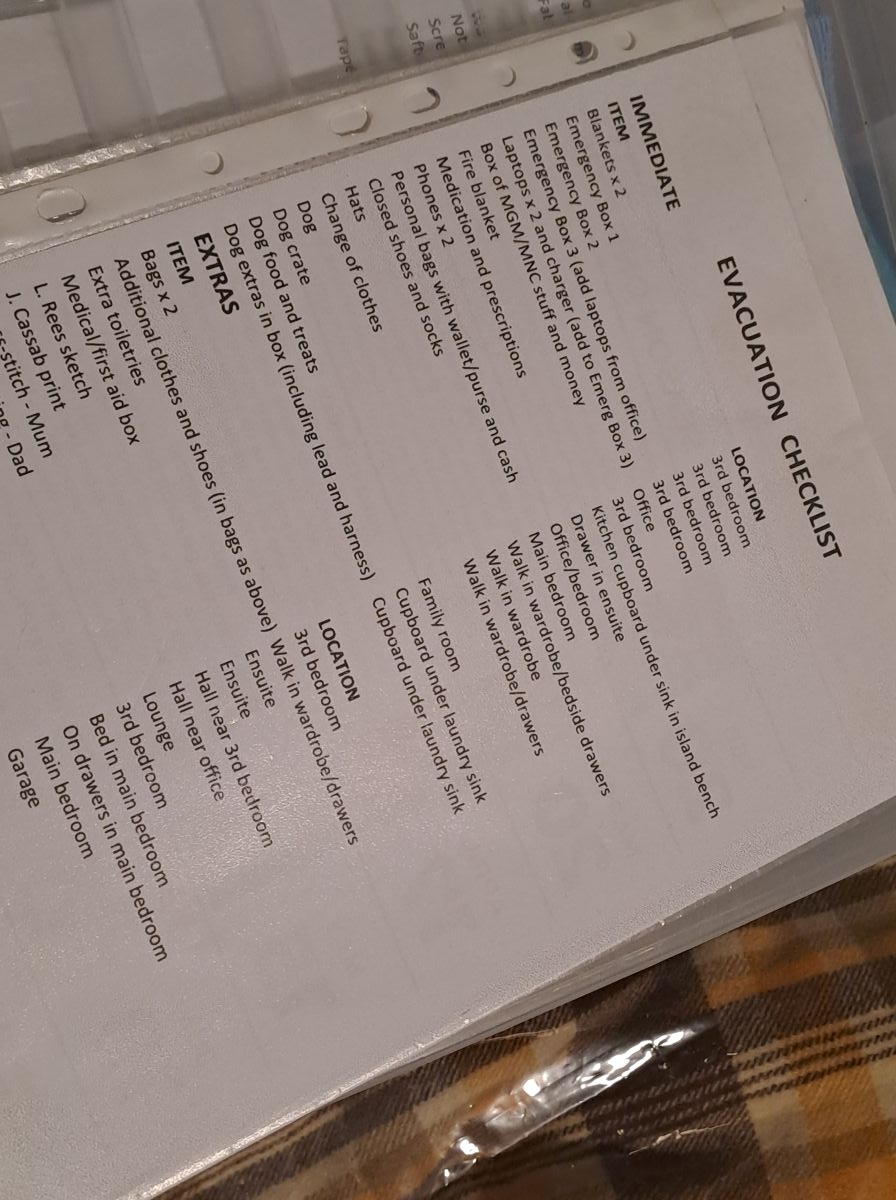
Create checklists so that you are not relying on memory in a time of high stress

Ready to go.

Checklists

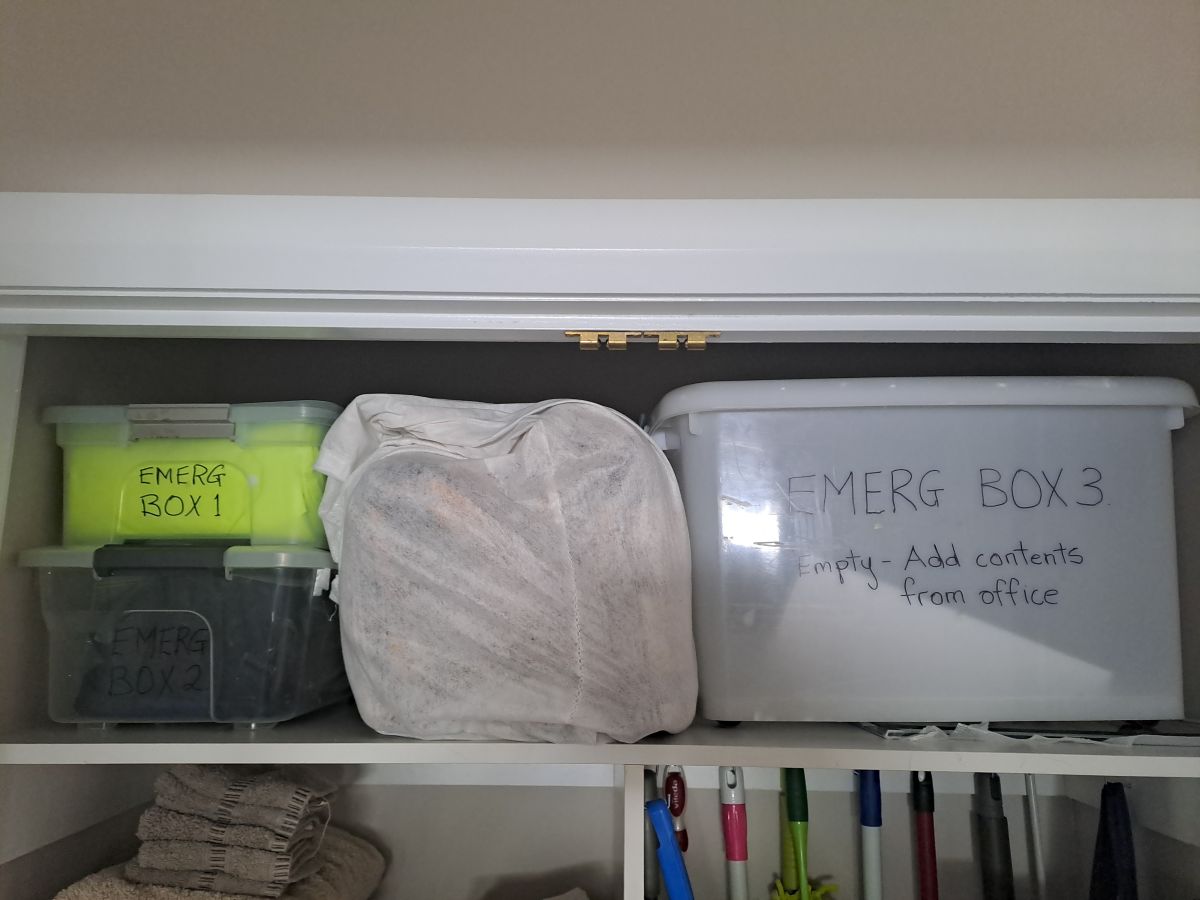
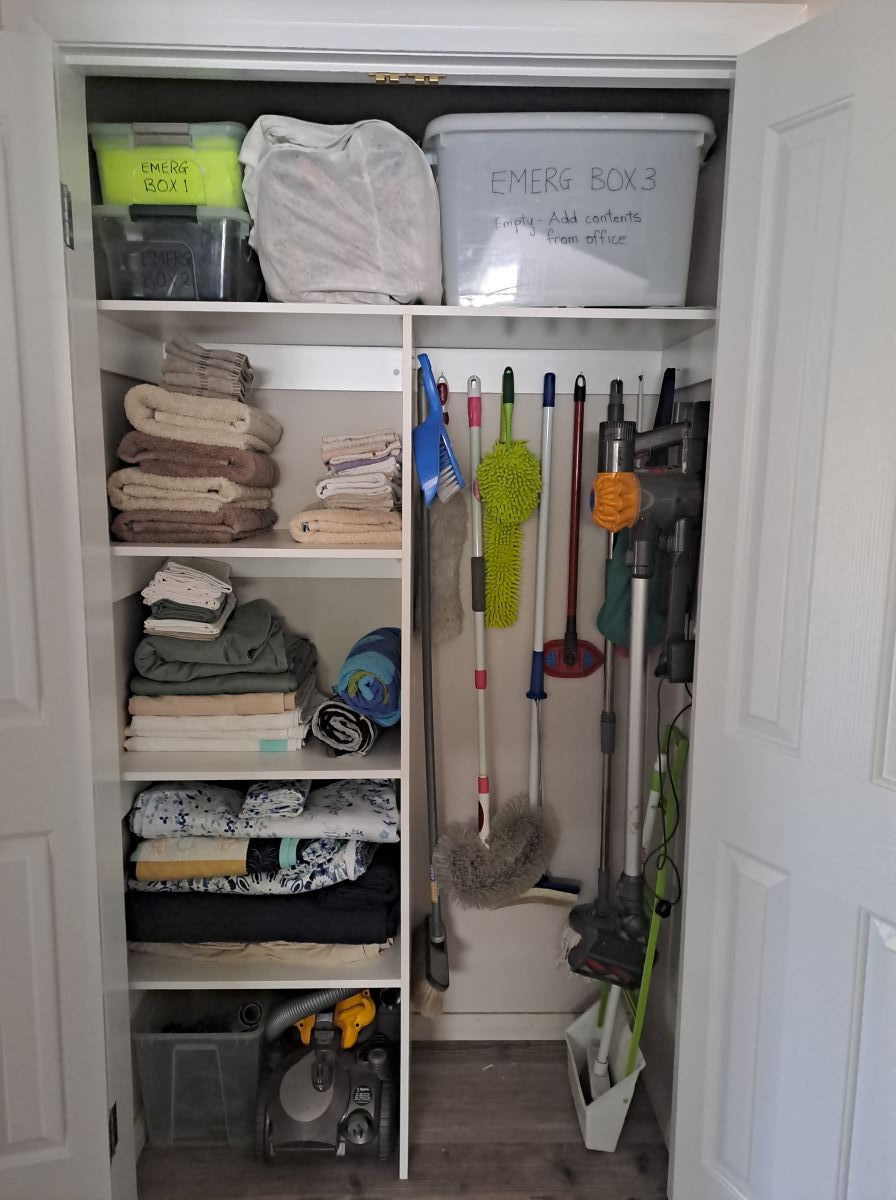
There are a few things that we would need to add but most of what we would take is set aside in the spare bedroom. It will remain like this for the next couple of months. Even after that most of it will not all be dismantled but stored in the top of the linen cupboard and reviewed well before next summer.

The other question is when do you leave and where do you go. The general guidance from the authorities here in Australia that it is best to leave early. As for where, it really depends on where the risk is coming from. It is important to be prepared to amend your plans as required.

In line with the theme of this blog, my task today was made considerably easier because my home is mostly decluttered and organised. I know what we have and where it is located.

Are you in a fire-prone area? What about other natural disasters? Do you have an evacuation plan?

Big Weather

Leave a comment

Did you watch the latest offering from Craig Reucassel on the ABC last night? It is ‘Big Weather (and how to survive it) and if you missed it you can watch on iview. Last night was the first episode of a 3-part series.

Watching this was a reminder to check our preparedness for a range of scenarios. Last summer was a wake-up call for me because although I have always considered myself to be reasonably prepared for most situations, bushfires had never really been a consideration. This was due to our location, however, the summer of 2019-2020 changed my perception of that as the affected areas were unprecendented in both location and scale.

For the first time in our lives, GMan and made and articulated a clear bushfire evacuation plan last year. You can read about it here. While bushfire is certainly not the only severe weather risk, it is probably the one most likely to put you in the position of potentially having to make a split second decision to leave.

Emergency planning for severe weather or other events should really fall into 2 categories.

  • Evacuation – this is primarily due to destruction, or potential destruction of property. Examples include bushfire, storm damage or unwanted/unexpected incursion.
  • Self-reliance – total or partial isolation. Possible reasons include pandemic, other illness or weather events which isolate your property from some or all services (flood, fire or storm damage).

There are 3 possible responses when presented with the need for emergency planning.

  • Ignore – simply believing that ‘it will never happen to me’. After the past 12 months, this is a foolish and totally inappropriate response.
  • Inertia – being overwhelmed by the enormity of possible scenarios.
  • Logical action – regardless of how prepared you are or not, starting to take incremental steps to improve your overall preparedness.

Everyone will have different needs and priorities but there are plenty of checklists and hints online. Reading and considering these could be an excellent first step in developing your personalised plan. The Australian Red Cross one looks like a good place to start.

An emergency evacuation plan and kit does not need to be complicated or impact significantly on your day-to-day living arrangements. In fact, the more simple it is, the easier and more likely it is that you are going to be able to implement it effectively if required.

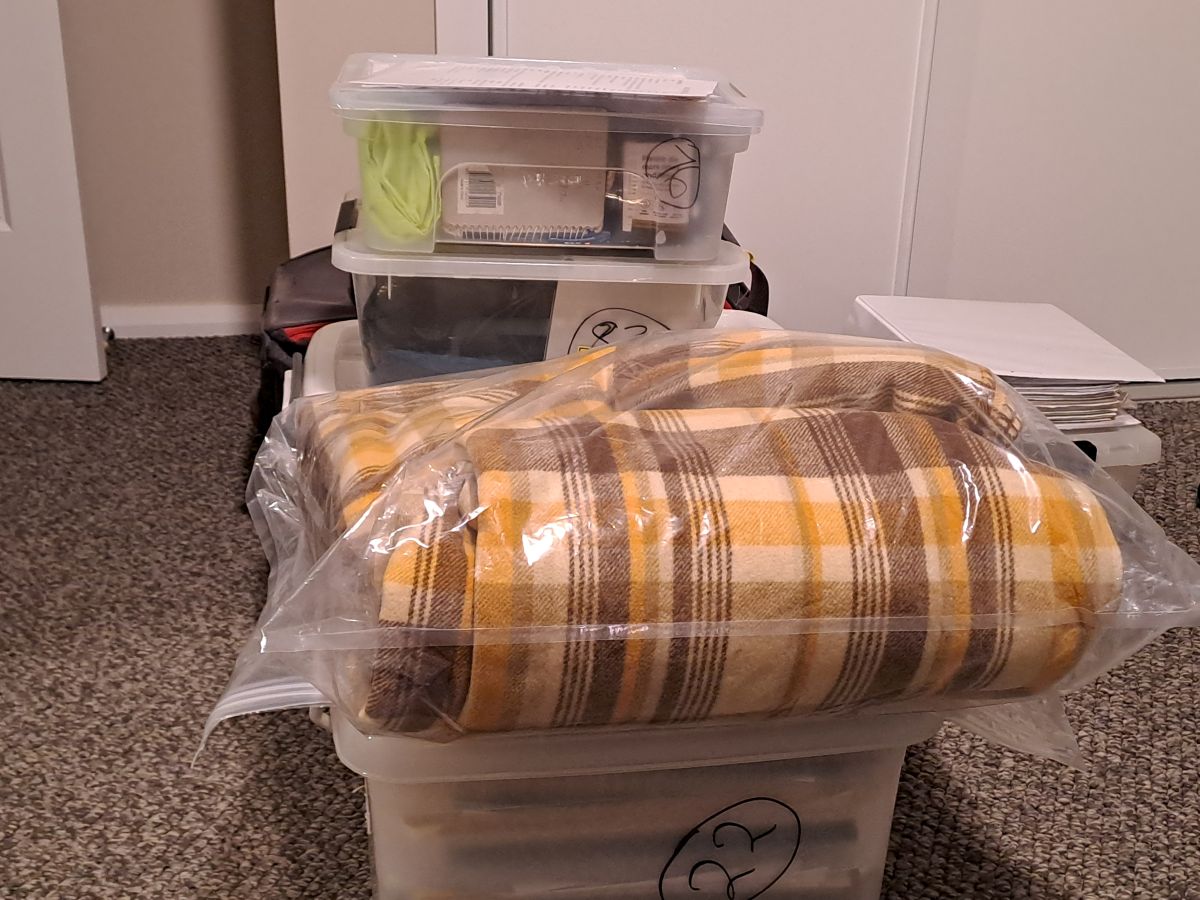
This is ours.

One plastic crate and two sturdy plastic bags. Our household is two able-bodied adults so we could literally grab this and make one trip to the car then leave.

One bag holds the feather doona and the other has a woolen blanket with space to quickly add a spare set of clothes for each of us – long pants, long-sleeved top, socks and closed shoes. The plastic crate includes a box of important documents as well as the list of items to add before leaving and a notebook and pen. The list is the afore-mentioned clothes, medications, toiletries, wallets, car keys, laptop, phones and chargers. A second list is a reminder of extra things we have identified that we would pack if we had some extra warning time (more than 10 minutes).

Do you have a plan? When did you last review it? Is it still fit for purpose?

I am interested to hear your thoughts.
What to Take?

Leave a comment

I know that 2 weeks have passed since my last post as I have been occupied with various activities both at home and elsewhere.  However, I will save those stories for another day.

Although we live in a semi-rural area, bushfire has not ever been regarded as a high risk due to being in a high rainfall area (1800mm or 72 inches is our average annual rainfall) with relatively high humidity and a generally temperate climate.  This has changed over the 14 years that we have lived here with longer dry spells, periods of low humidity and an increasing number of days over 30C and even over 35C.

We have been watching the increasing fire emergency with concern for the residents who have been impacted.  Yesterday the emergency came too close to home.  An uncontained bushfire was burning a mere 10 kms (as the crow flies) from our home.  It was posing a threat to properties to the point where people in the immediate area were readying themselves to leave.  The threat has eased today but we are mindful that things can change very quickly.

2019-11-10 01

GMan and I have made a physical list of what we would take/do if we needed to leave the property.  It is in 3 parts:

1. What we would grab if we had to leave with virtually no warning.

Clothes – long-sleeved top, long pants, closed shoes and socks
Wallet/purse and car keys
Laptop, charger and external hard drive
Phones and chargers
Documents (passports, certificates etc) which are all stored together and easy to grab
Medications and prescriptions – I now have 2 weeks worth stored together

2. What to do before we leave.

Shut all windows and doors
Turn off gas cyclinders
Open chicken run

3. Additional items if we had a little extra time to plan.

More clothes
Woollen blankets
Feather doona
Jewellery
Contents of single-drawer filing cabinet
Box of family history documents
Camera
A couple of items of value
Some non-perishable food
Chickens  (in a large cardboard box)

The overwhelming majority of things on these lists are based on practical considerations rather than any sentimentality.  Decluttering over a number of years has allowed me to look rationally at what is really important when the chips are down.

I hope I never have to action these lists but the way things are changing I can no longer leave things to chance.

Please have a plan, stay safe and remember, that above all – it is only stuff.  Your life is paramount.

Make & Mend – Cot Quilt

2 Comments

As promised here is another of the things I have been working on.

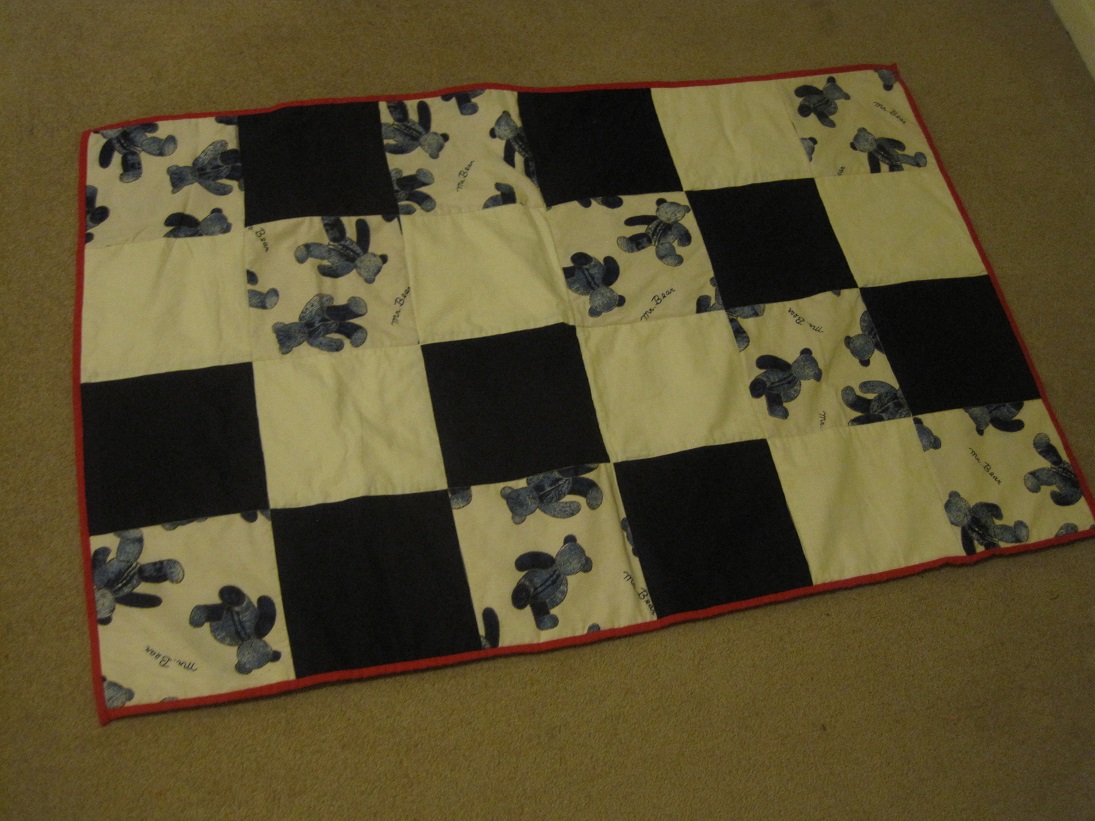
On one of my many attempts to sort/tidy/declutter my sewing room I found some offcuts of material.  It is calico with blue teddy bears.  I also had some plain calico.

Material
With no-one particular in mind I decided to make a quilt.  I discovered that I could make enough blocks to make a cot quilt if I added some plain navy blocks.

Patchwork quilt top
The batting and backing were added and the quilting was a simple ‘stitch in the ditch’ where the blocks were joined.

Then it just sat waiting to be bound and finished.  I finally got inspired and completed the quilt.  Handsewing the binding took a little time but I set myself a goal to get it done and here is the finished product.

Cot quilt
I am planning to send it to a friend whose patchwork group are busily making quilts for those who lost their homes in the recent NSW bushfires.  I hope it will help a family in need.

I am very gradually decluttering my sewing room.  It is a gradual process because I do not want to get rid of stuff but rather to use it up.  I plan to make things from the fabric that I have and donate them through various avenues so that others can benefit.