Today I have decided to dip my toe in and join the monthly diary started by Christine over at Slow Living Essentials. The idea is to post a round up of the slow living activities for the month based on nine categories. I have watched with interest and think that this idea will link in nicely with many of my own ideals and goals. Although Christine lives in Victoria, Australia I actually discovered her blog through Heidi’s slow living posts over at Lightly Crunchy. Heidi is in Ontario, Canada – what a small world our online community is!
Here are the Slow Living categories:
{Nourish} We eat largely unprocessed foods. I eat a gluten and grain-free diet for my health. I have been doing this for 6 months and am reaping the benefits. Here is my ‘cereal’ recipe.

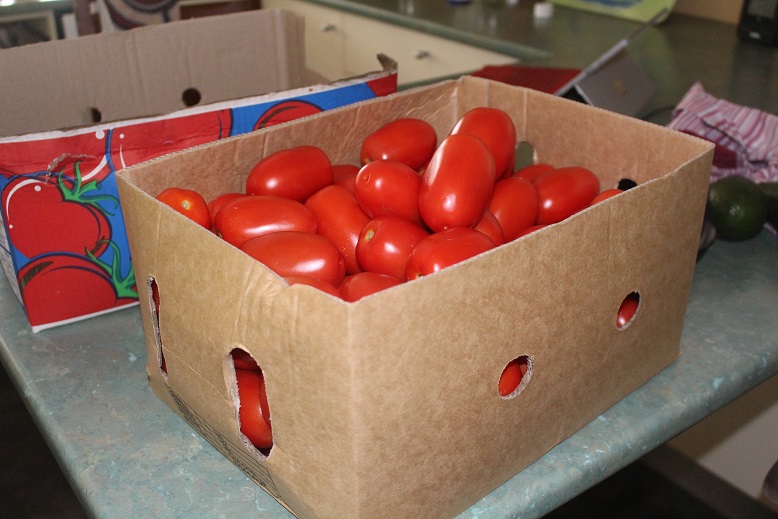
{Prepare} A bumper tomato crop from several varieties gave me ample opportunity to save for later.

I made tomato sauce and tomato paste.

In the dying days of the month, I decided that I couldn’t bear to lose the 4kg of tomatoes that had been frozen and were rapidly thawing due to loss of power for 2 days. Using the gas cooktop, I boiled them up and reduced the liquid then bottled and preserved them using a hot water bath.

I needed to be a little inventive as I normally sterilise my bottling jars and lids in the oven at 140C. This time I boiled the jars and utensils. Finally, I used the same water for the hot water bath. Remember, I had to haul the water in a bucket from the tank at the back of our block.
We also prepared for, and survived, the wild weather from ex Tropical Cyclone Oswald (hurricane).
{Reduce} We repainted the old star pickets to re-use in the fencing project. You can’t see them here – the timber corner and bracing posts are new.

{Green} The timber chairs and table are sparkling after being polished. I use some vegetable oil with a little lemon essential oil on a soft rag to dust and polish all of the timber furniture.

{Grow} The tomatoes grew in abundance as did cucumbers. Due to a warm, dry summer (until the last week) we managed to successfully grow cantaloupe and capsicums (red peppers). The next month will be clearing and resting the beds ready for sowing again in March, weather permitting.

{Create} My sewing machine has been out of action (and, boy have I missed it)! I have been doing some hand sewing – mending a couple of items for Missy.
{Discover} I have indulged in some fiction this month. I bought the entire ‘Anne of Green Gables’ series for my Kindle. It was only a couple of dollars and will provide hours of reading. I did not read the books when I was young, although I did watch the videos when my daughters had them.

{Enhance} We swapped a cantaloupe for 2 small pumpkins with a neighbour. Also, checked to see how neighbours were going during the storms and flooding.

I also gave away 75 novels on Freecycle. The recipient was a co-ordinator for the Lifeline Bookfest so that is where they will be going. I feel like that is giving several times over. 🙂 They were ones that we now also have on our Kindles. We are enjoying the space, too.
{Enjoy} I introduced my granddaughters to live theatre.

Miss O and I went to see Chitty Chitty Bang Bang in Sydney and I took Izz to see Hairy McLary, based on the books by Lynley Dodd.

I hope you have enjoyed reading my first month of slow living as much as I have writing it. Looking back back over a whole month and what you have done is really worthwhile. I plan to continue this segment for the entire year. There are lots more blogs participating so it would be great if you check them out as well.


 organised castle