Decluttering 101

7 Comments

I have been decluttering for over 10 years now but I am not really sure when I started.  In fact, I had never even heard of the word until, perhaps 5 years ago and the concept of minimalism only entered my consciousness even more recently.

There are as many ways to approach decluttering as there are people on the planet.

I have heard of instances where people have decluttered their whole home in a weekend.  They ordered a skip, almost stripped their home bare and threw the excess in the skip.  I do not know what their long-term success rate was like but I suspect that it was a bit like a crash diet. The rebound effect brings you back to the same point as where you started or worse.

The slow and steady approach is my way and it also fits with my philosophy of minimising waste and making do with what I have.  I had numerous mini bottles of shampoo, conditioner and moisturiser from hotel visits.  I have gradually used them up until they are all gone.

I have no doubt that the key to successfully decluttering your home is to stop bringing more stuff into it.  Unless you can get rid of the endless stream of possessions coming in, nothing is achieved.  It is time to alter your mindset and cease the constant inflow.

Although I do not write regularly about what I have decluttered, rarely a day goes by without me moving something out. It may be physical items or even that very insidious junk – digital clutter.  When was the last time you checked your email inbox?  Is it overflowing with offers, freebies and emails that you haven’t even read?  Get set with the delete and unsubscribe functions!

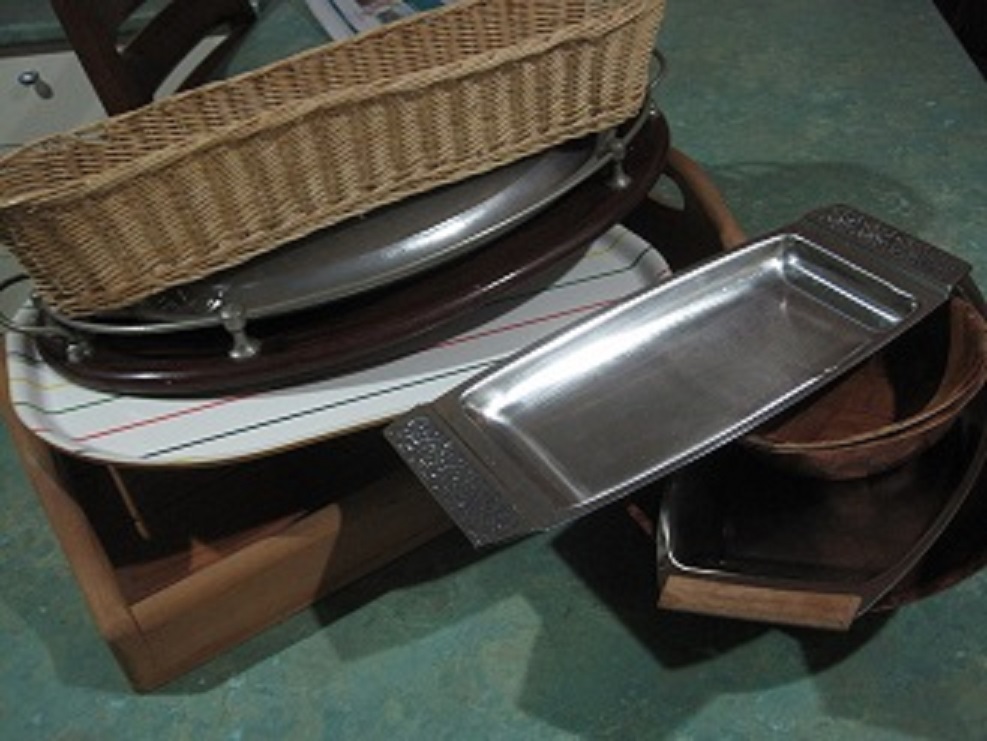
Here are some of the things that I have re-homed recently.

Large chest of drawers – sold on Gumtree
2 suitcases – given away via Freecycle
Mirror in frame – given away via Freecycle
2 zips – sent to a friend
Paper napkins – sent in response to an online request
3 men’s polo shirts – given to op shop
Skirt and 2 tops – given to op shop
4 cookbooks – given to op shop

What have you decluttered recently?
Downsizing the Drawers

6 Comments

Last week I showed you some of our furniture restoration projects.  Like everything we do they did not come to fruition quickly.  In fact, The Duke found the receipt for the new hardware for the drawers which was dated May 2012!!

The drawers are finally finished (apart from the mirror) and have been moved into our bedroom.

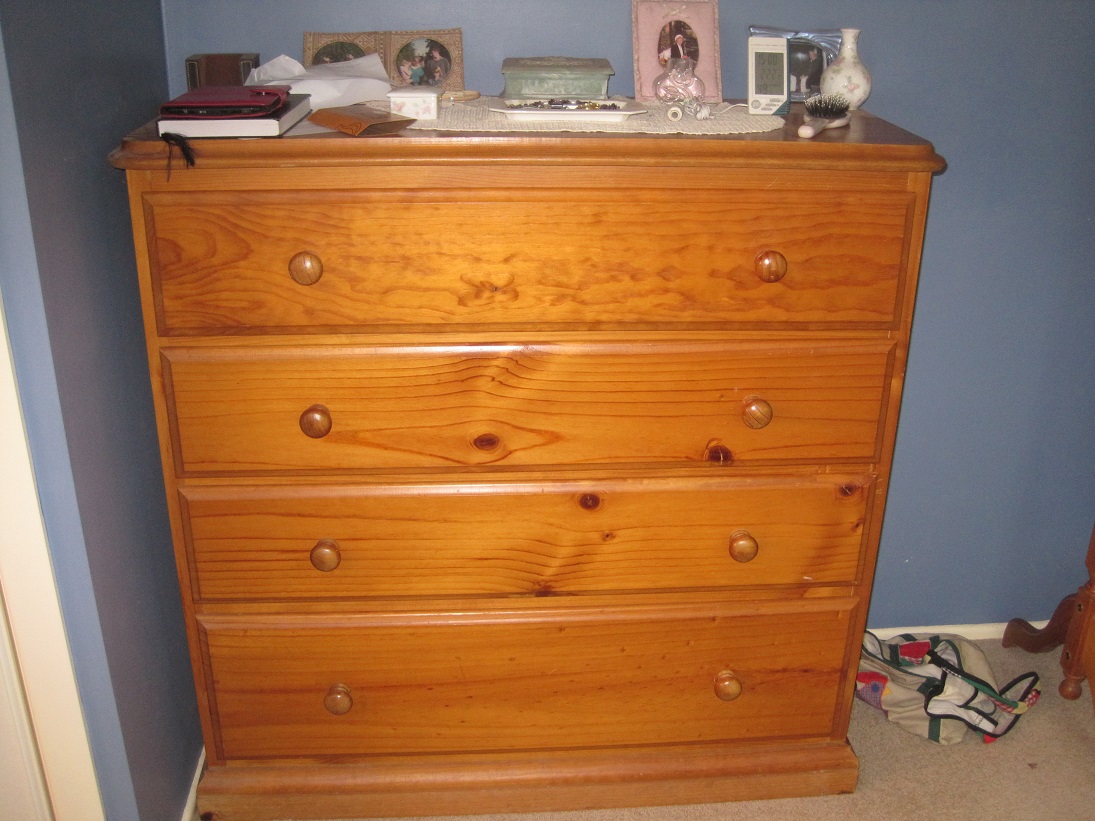
This is what they have replaced.

Chest of drawers
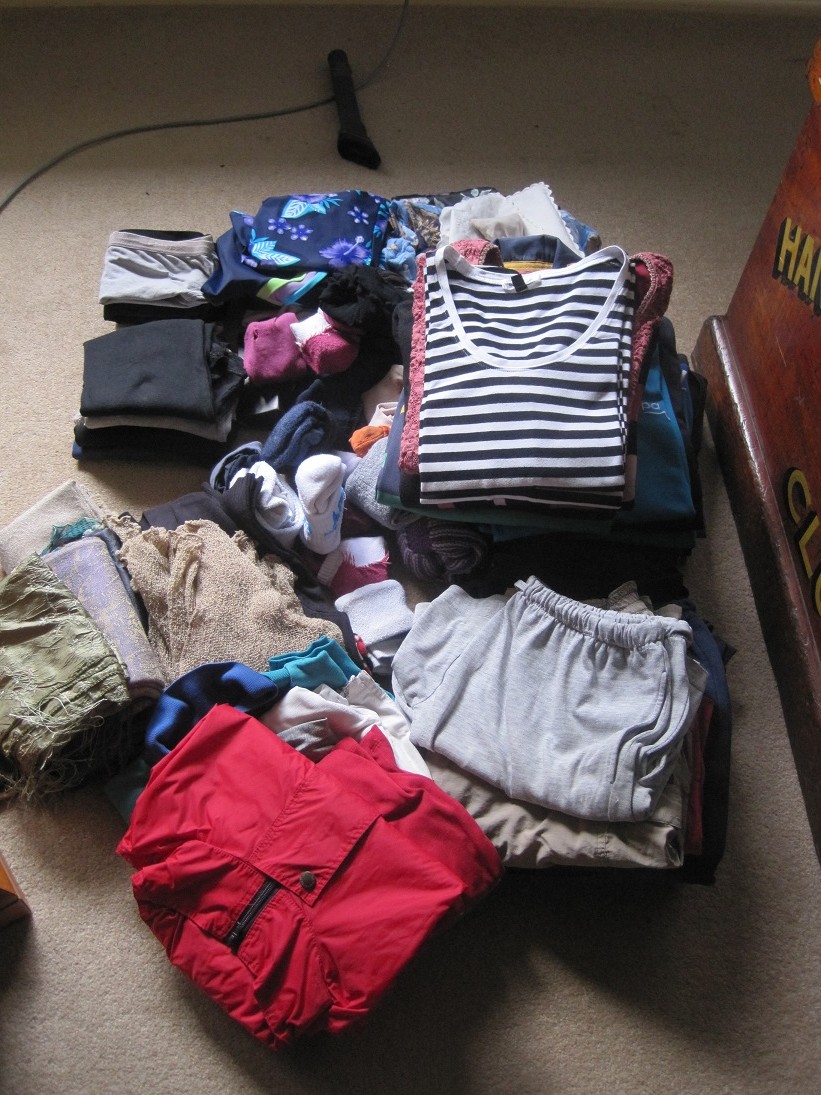
The first step was to remove the contents from the existing chest of drawers.
As per any good decluttering guide, the first step is to remove everything from its existing location.  Even though it was completely necessary to do it in this instance,it is certainly sobering to see the entire contents piled on the floor.  I was amazed at the things that I ‘found’ that had not been worn for some time.  After carefully sorting the items I managed to toss 2 pairs of socks  and an old t-shirt.  There probably should have been more but it is a case of small steps.

My clothes
I also removed the drawer liners and cut the pieces to size to re-use in the new drawers.

Drawer liners
It took a bit of judicious re-arranging but the clothes all fitted in.  This was mainly because the drawers in the new dressing table are somewhat deeper than in the previous chest of drawers even though there are less drawers.

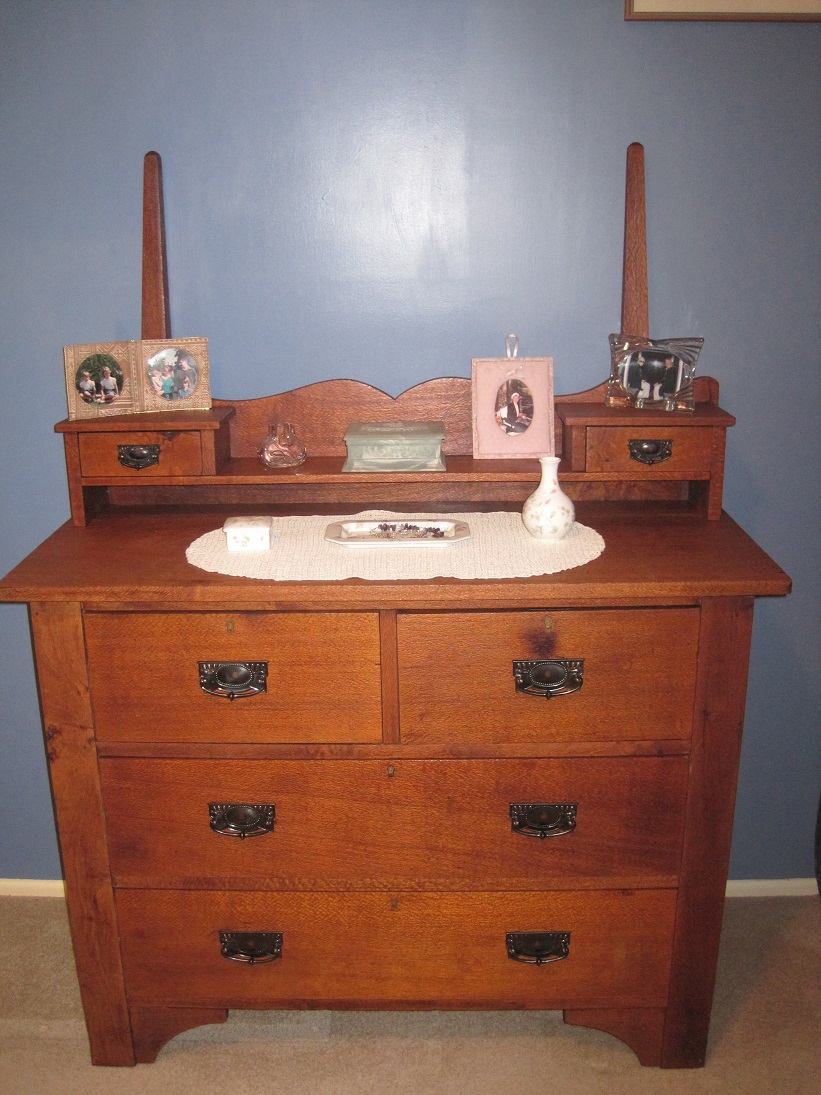
Dressing table
This is my new dressing table/clothes storage which is silky oak timber.  The silky oak tree is native to the local area in which we live.  We bought this about 2 years ago and The Duke stripped all of the paint from it, sanded and stained the piece of furniture.  All of the drawer handles are new reproductions of a style similar to what would have been on the drawers originally.  All that is left to do is to get a new mirror cut and place in the oval frame which will be suspended between the 2 timber uprights that you can see in the photo.  We are taking the old mirror to town tomorrow to get it done.

I am really pleased with how this has turned out.  There is a huge degree of satisfaction in restoring old pieces of furniture and bringing them back to life.

Culling the Cookbooks

6 Comments

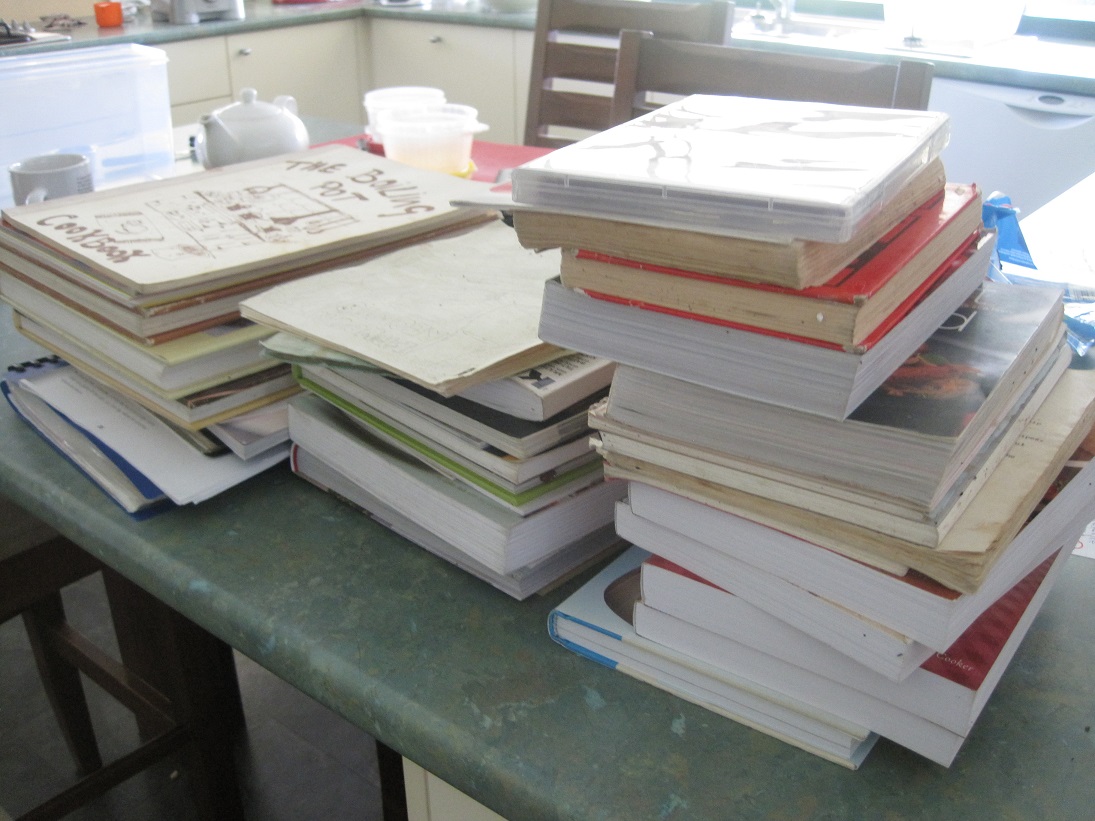
Today I decided that it was time to bite the bullet and seriously consider what cookbooks I really needed to keep.  I did not have a large collection but I knew that there were some that had survived previous attempts to reduce the collection.

CookbooksI did not photograph the shelf before I removed all of the books but here they all are on the kitchen bench.

I sorted through and recycled lots of loose sheets of paper – scribbled recipes or ripped out of magazines.  If I had not made them up till now it is unlikely that I will.  Most did not fit with our current eating plan which is mostly gluten-free.  Quite a number of the books were very easy to let go of as they were quite dated and the recipes are simply not to our taste any more.

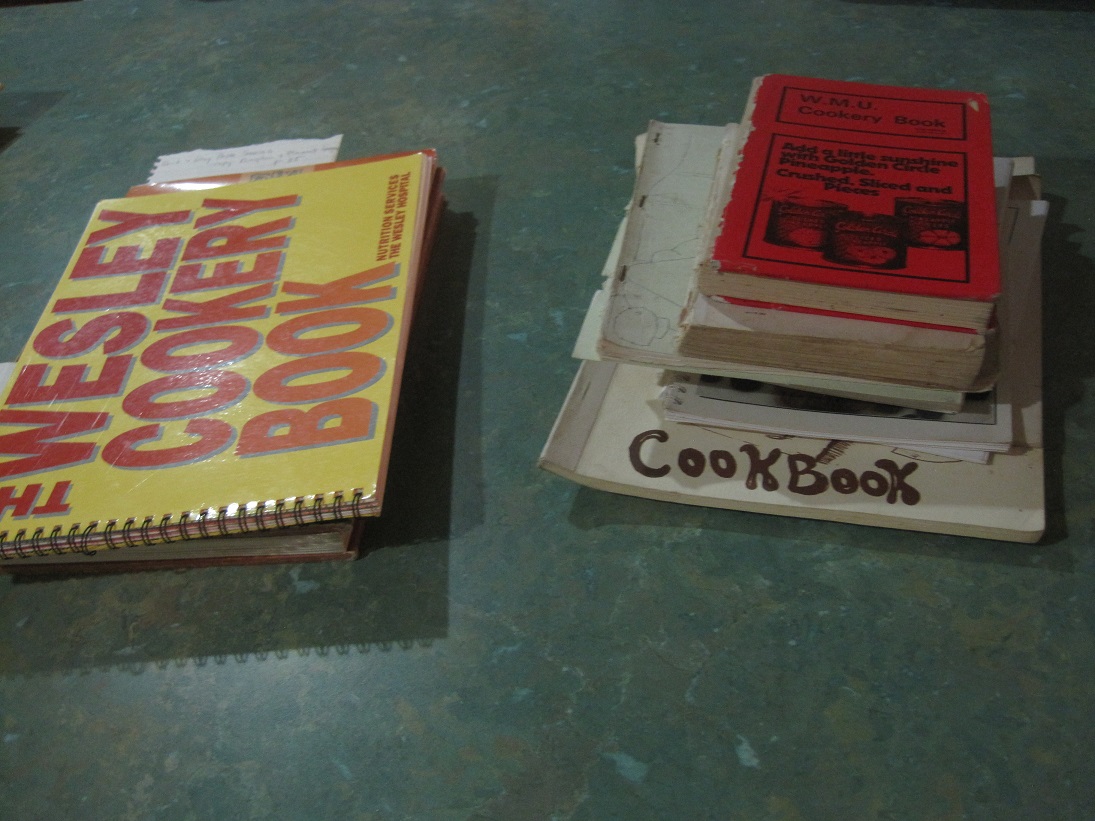
Ready to go
The pile on the right are ready for the op shop bag.  The 3 books on the left each have 1 or 2 recipes which I would like to try, so rather than keeping the whole book, I am going to type them into my recipe file on the computer and then the books will be added to the op shop pile.

I keep two binders with plastic sleeves which are for loose recipe sheets but even these had go a bit out of hand so I spent some time refiling them into the plastic sleeves.

The remaining cookbooks have been returned to the shelf.

Cookbook shelf
Some of these books have barely been opened, let alone actually used so I have promised myself that I will use them.  In order to achieve my goal, I am going through each book and making a list of the recipes that I would like to try and the relevant page number.  I plan to create a spreadsheet of all of the recipes with a reference back to where I can find it.  Today I went through 4 of the books but still have quite a number to go.  It will be an ongoing project.

The Duke suggested that I just scan the recipes that I want to keep and then get rid of the books completely.  That may be an option for the future but at the moment my goal is to actually try out some of the recipes instead of having a shelf full of books that I do not use.

I have a new cookbook on my Christmas wishlist.  It is a gluten-free cookbook.  I have made a couple of recipes from it and if the rest are as good it will be a worthy addition to my pared-down bookshelf.

Make & Mend – Cot Quilt

2 Comments

As promised here is another of the things I have been working on.

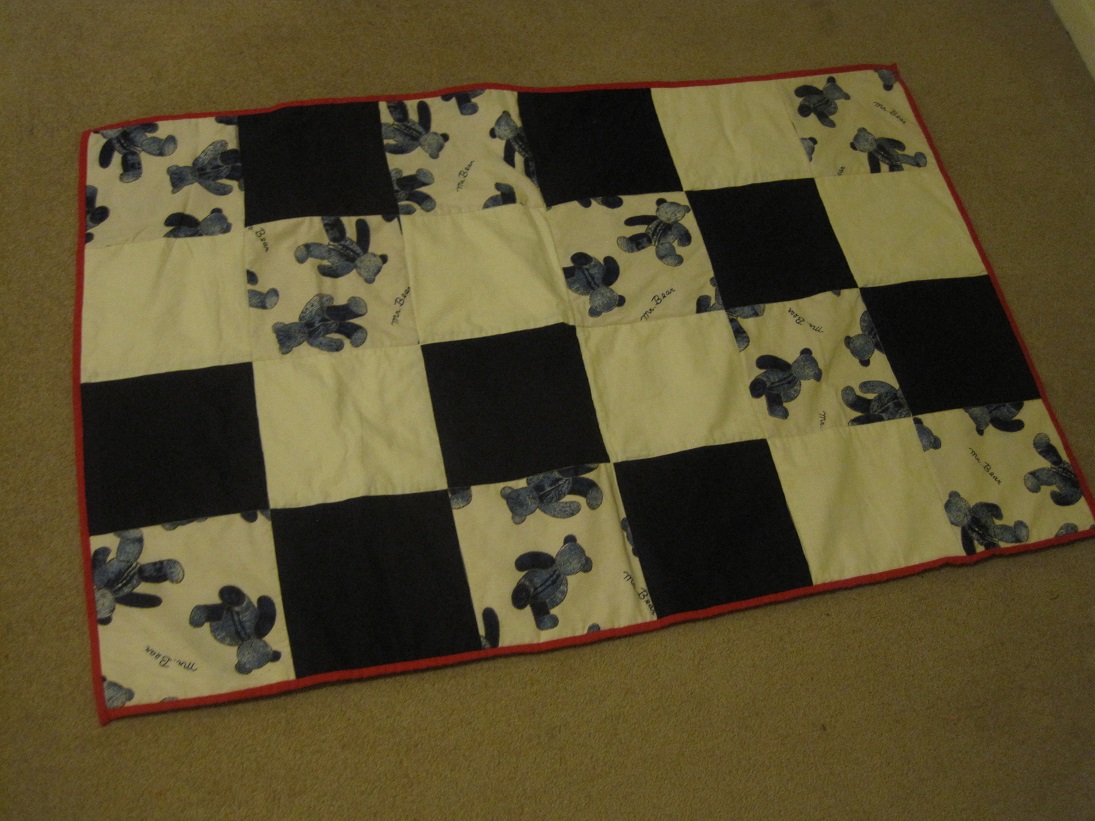
On one of my many attempts to sort/tidy/declutter my sewing room I found some offcuts of material.  It is calico with blue teddy bears.  I also had some plain calico.

Material
With no-one particular in mind I decided to make a quilt.  I discovered that I could make enough blocks to make a cot quilt if I added some plain navy blocks.

Patchwork quilt top
The batting and backing were added and the quilting was a simple ‘stitch in the ditch’ where the blocks were joined.

Then it just sat waiting to be bound and finished.  I finally got inspired and completed the quilt.  Handsewing the binding took a little time but I set myself a goal to get it done and here is the finished product.

Cot quilt
I am planning to send it to a friend whose patchwork group are busily making quilts for those who lost their homes in the recent NSW bushfires.  I hope it will help a family in need.

I am very gradually decluttering my sewing room.  It is a gradual process because I do not want to get rid of stuff but rather to use it up.  I plan to make things from the fabric that I have and donate them through various avenues so that others can benefit.

STREAMLINE – Everyday Maintenance

3 Comments

After you have worked through all of the other steps in the ‘STREAMLINE’ process, it is important not to lapse back into old ways.  Just like changing eating (or any other) habits, if your version of minimalism is to be successful it needs to be an ongoing process.  You will have to work at it constantly and be vigilant at every turn.  Clutter in all its forms is insidious and will soon overwhelm you if you do not have strategies in place to stop it at the door, the mailbox and even your email inbox.

Well-meaning friends and relatives may feel sorry for you when they see your empty spaces and want to give you stuff to fill the gaps.

You did not set out to create a cluttered, over-burdened life – it just happened.  So, it could easily happen again.

“No, thank you” is one of the most powerful things you can say in your quest to keep your stuff at the level which suits you best.  Whether it is a freebie bag at a conference, a loyalty card from a store, a copy of recipe or your great aunt’s tea-set – if it does not fit your goals you can politely refuse the offer.

Dining table

I have refused, decluttered and minimised for several years and still know that there is more to go.  I keep a bag/box in the spare room and as I find things to go they are moved to the box which then goes to the op shop when it is full.  Sometimes it takes ages to gather enough to send off and other times there is a flurry of activity and I take several bags in one weekend.  Having a dedicated receptacle for things that are to be re-homed helps me to keep focused.

I hope you have enjoyed this series and would strongly recommend reading “The Joy of Less” by Francine Jay for more inspiration.  Please share your thoughts on decluttering and minimalism in general and as well as your personal achievements.

STREAMLINE – Narrow it Down

Leave a comment

This is where it starts to get really challenging.  Now we need to ask ourselves the question, “What is the minimum that I need to live?”  Francine notes that you do not need to worry that you will be expected to sleep on the floor or live in a tent but you do need to challenge yourself.  It is not enough to wave your magic wand and say that you need everything that you have.

There is no magic number of items or even a formula that you can apply.  Everyone’s ‘enough’ is different.  It can depend on your location, family, children, hobbies, upbringing and experiences.

Embracing minimalism is a personal choice.  It is not about depriving yourself but giving yourself the freedom to live and enjoy the moment.  There is a liberating lightness which comes from letting go of possessions so take the time to look around you and decide what you can live without.

Contents of cupboard

Some of things you could consider when attempting to narrow down your possessions:

  • Duplicates – these are easy – you don’t really need 2 (or more) do you?
  • Sentimental stuff – Francine suggests ‘minituarising’ as a way of dealing with these – an example could be a place card, photo, swatch of dress fabric and a dried flower from the bouquet all in a simple frame as a wedding memento rather than keeping a wedding dress and all the trimmings.
  • Digitising – scanned photos in files on the computer rather than shelves full of albums that gather dust.  If the digitised files are well catalogued they are actually more accessible than hard copies.  You can also keep back-ups in different locations in case of disaster.

I do not purport to be perfect in any of these ways but am certainly working on it.  What about you?

STREAMLINE – If One Comes In, One Goes Out

4 Comments

This is a fairly simple strategy – for every item that you welcome into your home another one needs to leave.  Whilst this strategy will not turn you into a minimalist overnight, it will certainly maintain the status quo.

One of the most popular applications of the ‘one in, one out’ rule is clothes.  Buy a new shirt and then choose one that you can move on.  If you are having trouble letting one go, perhaps it is time to ask yourself why you bought the new shirt in the first place.  Did you really need it?  The last time I looked, we can only wear one shirt at a time so why do we need a wardrobe bulging with clothes?

Appliances are another area where we can tend to buy a new version yet retain the old one.  It is usually consigned to the back of the cupboard or the garage ‘just in case’.  Just in case the bright new shiny one breaks down?  Do we really buy things expecting them to fail?  If the previous one needed replacing it is time for it to go.

We recently purchased a new refrigerator.  After a considerable time spent looking and debating the various options available this is the one we bought.

RefrigeratorOf course, there was the question of what to do with the old one.  The Duke briefly canvassed the option of keeping it downstairs as a ‘beer fridge’ but we realised that it was completely unnecessary and would use up space and electricity.  I advertised it on Freecycle and am pleased to say that it has gone to a young couple who were trying to set up a home with very little in the way of resources.

Old refrigerator

Most of us live in relative affluence and virtually everything we buy is an upgrade/replacement/newer version of something we already own.  Therefore, there will be something to move out of your home.  If the previous item was broken it should be consigned to the rubbish/recycling.  If it is still functional someone else may benefit from having it.  No-one benefits from it being stashed away to deteriorate in your garage or basement.

As an aside, I find this principle of ‘one in, one out’ a fantastic disincentive to shop.  “Why spend my hard-earned cash on something when I have a perfectly good one at home?” is the question I often ask myself.

How effective are you at ‘one in, one out’?

STREAMLINE – Limits

5 Comments

In years gone by our stuff was limited to a large degree by the availability and cost of most items.  Goods were generally produced locally and in a relatively labour-intensive manner.  Disposable incomes were less and stuff cost more when compared to incomes.  Global manufacturing and transport, cheap labour and distribution have meant that there is a seemingly endless supply of stuff for you to purchase at your local shopping mall.

Since the natural limits of accessibility and affordability have been removed, it is up to us to take control or we will end up drowning in our stuff.  The ultimate limit is the size of your home; you can fit a lot more in a 2 storey, 4 bedroom family home than a studio apartment.  However, even this does not deter some people as evidenced by the burgeoning industry of off-site storage facilities.

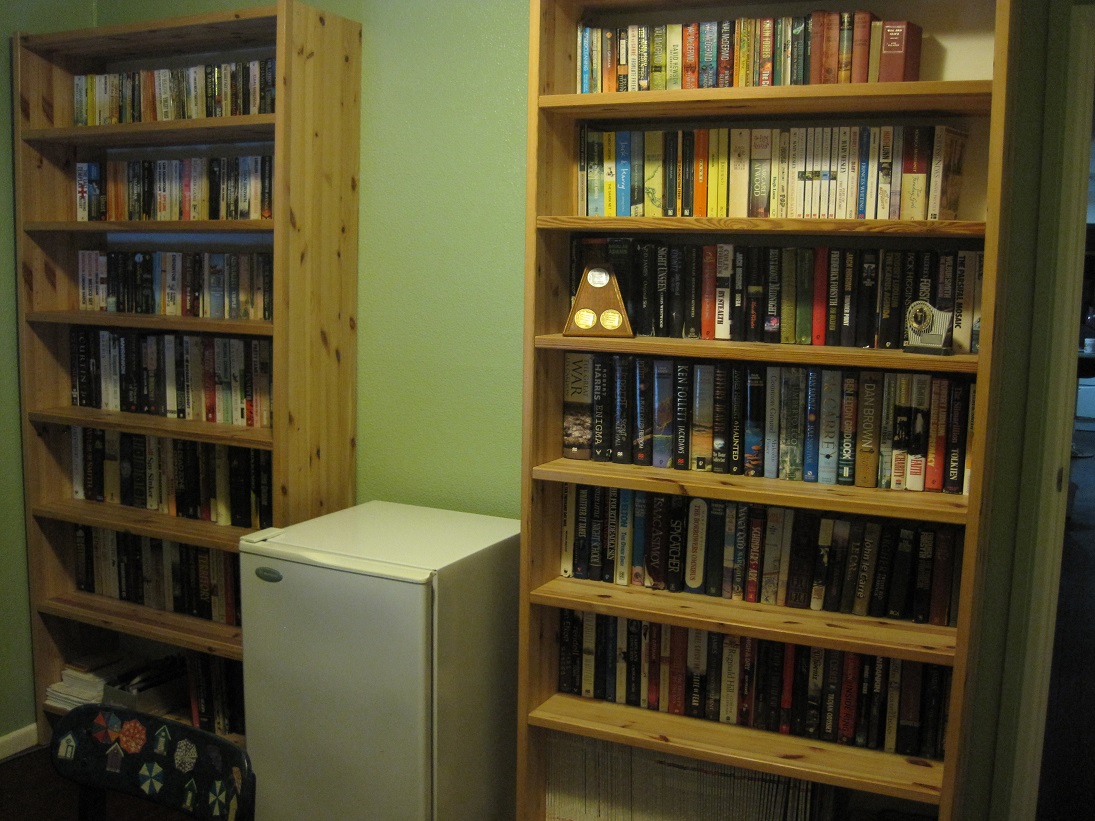
You can easily apply limits to things like your books by simply choosing not to have the shelves overflowing.  As you buy or acquire new books, make space for them by moving others along.  We all have books that we are not sure why we are keeping them.  Will you read them again?  No?  Time to go.  This way you will eventually end up with a selection of books that you really love and are proud to have on your shelves.

Bookshelves
Perhaps you can choose an arbitrary number such as 20 DVDs, 10 t-shirts or 6 champagne flutes.  Make sure that you don’t simply choose a number that allows you to maintain the status quo.  It needs to be challenging yet achievable as well as pertinent to your unique situation.

No matter what the item, you need to ask yourself the question, “Do I really need x of this item?”  Nothing needs to be immune from this process – lipsticks, plates, socks, CDs, towels, candles and cookbooks are all fair game.

Linen cupboard
Once you set limits on your stuff and force yourself to choose, you will naturally choose ‘the best’.  How you make that choice is a personal decision but making the choice means that you consider the merit of each piece carefully and you will appreciate its worth to you and your life.  The stuff that makes the cut will have an opportunity to shine in the decluttered environment.

It is not only physical stuff that you can set limits on.  You can set limits on your participation in events.  For example, you may decide that you will only spend one night a week playing sport, therefore you will choose the one you enjoy most.  This may give you a chance to excel rather than putting in a mediocre performance in 3 different sports on 3 different nights of the week.  You may choose to limit your association with people who do not enhance your life.

Limits can be seen as restrictive but the limits you set on your stuff will actually be liberating as you are the one making the choices.  Don’t let your stuff rule you and your life.

STREAMLINE – Modules

3 Comments

Today I want to share the next step in the ‘Streamline’ process that is outlined the book, “The Joy of Less”.

Make-up module

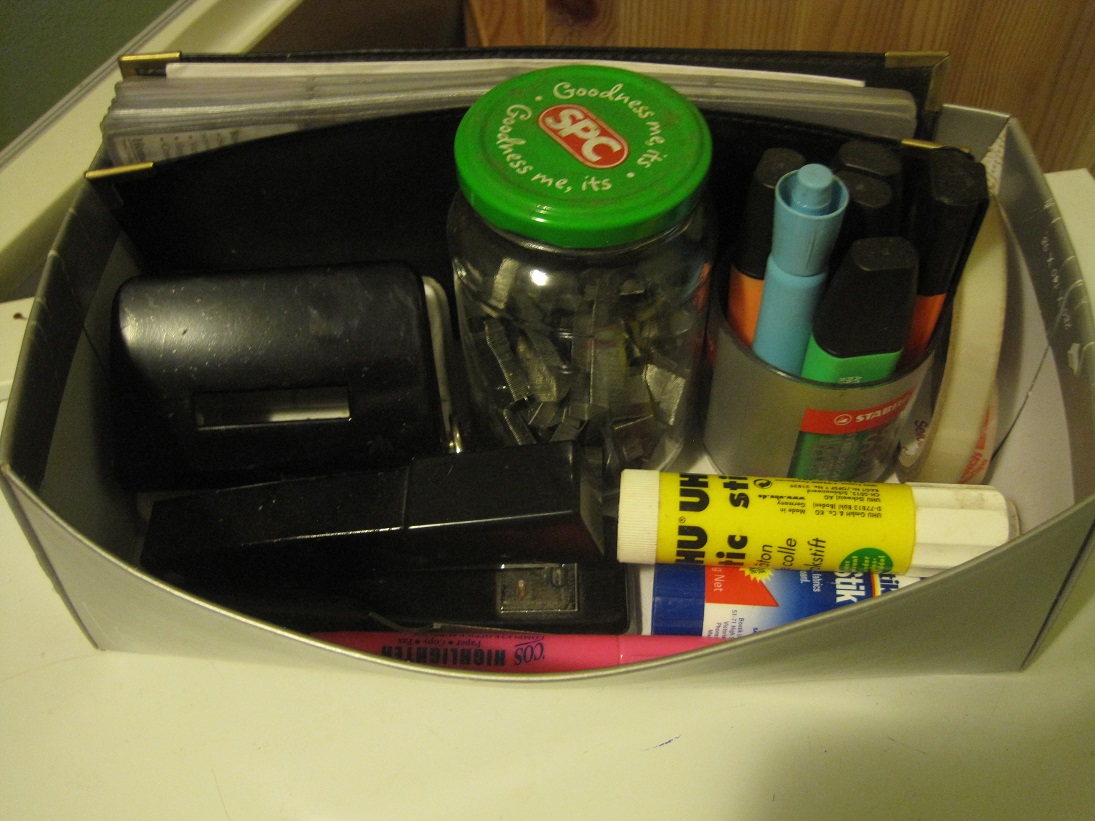
The concept of modules is that like things are kept together but more than that, it is about creating a group of items required for a particular task or activity.  It could be keeping your knitting needles, wool and pattern all together in one basket so that you can pick up your knitting at any time and know that it is all there.  Perhaps, creating a bill-paying station where you have all of the items required such as pens, stapler, filing box etc.

By keeping like items together this method helps you to identify where you have an unnecessary duplication of items.  An example is pens:  If you have them lying around on various desks, drawers, kitchen bench, side tables etc it is difficult to understand just how many there are.  Gather them up, check to see which ones don’t work (there will be some),and place them all together.  So, do you really need 57 pens?  They last for ages and you probably have more than a lifetime’s supply!  Choose the best 10, keep them together in a convenient and confined spot.  47 pens that have been lying around the house as clutter are gone!!

Once you start thinking in terms of modules you can apply the principle to almost anything in and around your home.

On the weekend, The Duke and I spent quite a bit of time decluttering, sorting and organising the workshop.  It is definitely a work in progress but now we can actually see some of the half-finished projects that had been buried under other things, completely forgotten or simply unable to be worked on due to the clutter on the workbench.  Much of what we did was putting like with like.  There were pieces of baling twine which we keep for various odd jobs.  It seemed like everywhere I turned there was another bit of baling twine but they are now all together in one plastic bag and easy to find when we need a piece.

We have almost finished demolishing the old chicken run and this has entailed removing the side of the woodshed which was adjacent to the run.  The woodshed will remain and a new side panel built to keep the weather out and the wood dry.  This has prompted us to look critically at all of the various piles of wood – everything from tree branches to leftover material from previous building projects.  We are attempting to get all of the suitable firewood in one place in the woodshed so that we can easily access it when needed in the winter months.  One day the firewood ‘module’ will be complete!

The wood is currently in piles to be cut for firewood, stored for future projects or simply of no use and needs to be re-homed or dumped.

Modules create efficiency and also limits.  Whilst the STREAMLINE process is most definitely NOT about rushing out and buying a whole lot of pretty boxes to stash your stuff in, it does help to be able to physically contain your identified ‘modules’.

Stationery module

You probably have ‘modules’ that work for you but that you have not even described as such.  Please share your idea and what works for you.

LIMITS is the next in the series and follows on very neatly from today’s topic.

STREAMLINE – All Surfaces Clear

2 Comments

Today’s gem from Francine is pretty simple to say but not quite so easy to achieve.  Keep all surfaces clear.  Clear surfaces provide us with possibilities.  Somewhere to eat your dinner, prepare a meal, pay bills or simply to sleep.

She also reminds us that surfaces are not for storage.  If you have too much stuff for your available storage spaces perhaps it is time to let some it go.

This is one area with which I have had partial success.  For instance, my dining table always is clear apart from a doyley and vase which provide a decorative element.  I am also pretty good at keeping the vanity bench in the bathroom as well as the laundry bench clear.

Dining table

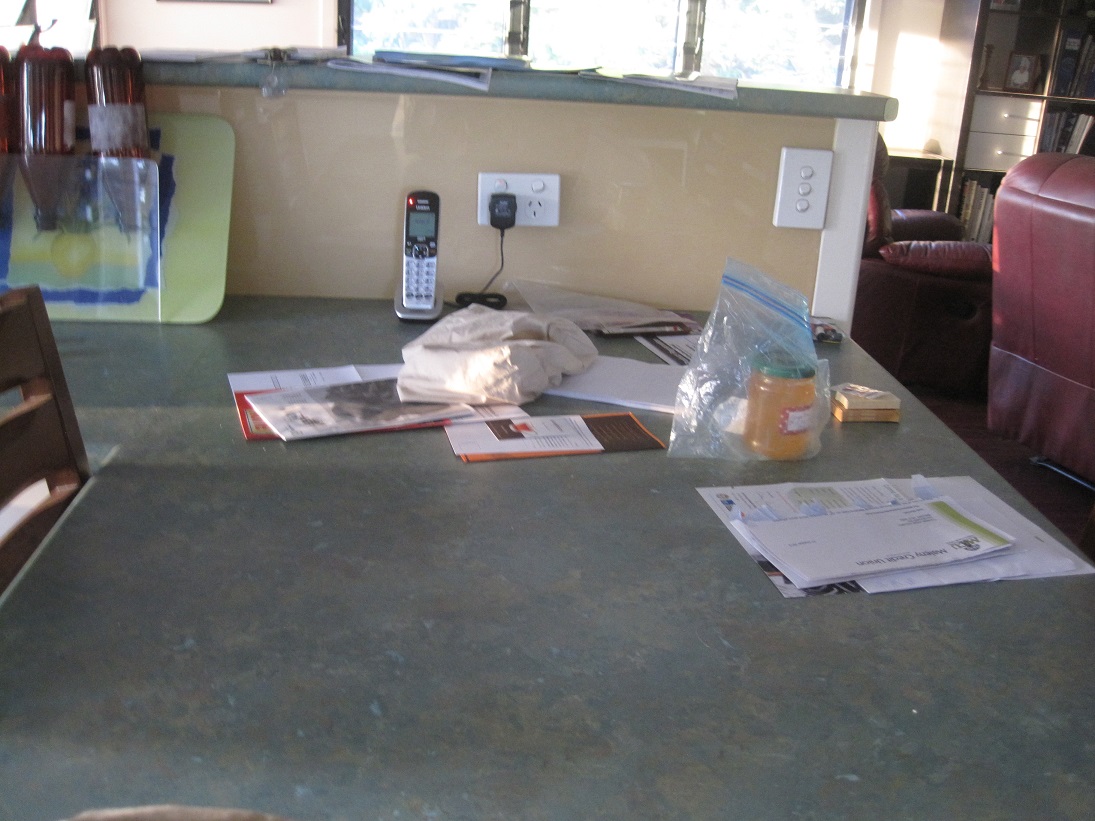
The study desk is generally a failure and the kitchen benches range from good to bad depending on the day of the week and work in progress.

Kitchen bench

It takes time and effort to achieve the state of a completely clear surface.  Like all changes you need to start small.  Don’t expect to turn the study desk which is overflowing with stuff into a minimalist’s paradise overnight.  If you have sufficient storage in the bathroom, I think the vanity bench is a great place to start.

The dining table is also a good one to tackle because anything that is on here is definitely in the wrong place – a dining table is to sit at to eat a meal.  Since most of us eat 3 meals a day there are plenty of opportunities to make sure that it is clean, clear and ready for use.  Since it is also a public part of your home everyone will benefit from it being clear and ready to use for its designated purpose.

Please let me know – do you have any constantly clear surfaces of which you are particularly proud?  What are the areas that seem to defeat you?

Tomorrow we will move on to something a bit more interesting than my kitchen bench.  Modules – containing what you have.  It is definitely a new twist on rushing out and buying containers to store your stuff.