Black Friday Blackout

Leave a comment

In a retail shopping context, Black Friday refers to the Friday after Thanksgiving (4th Thursday in November) in the United States.

Although Thanksgiving is not a traditional celebration in Australia the last 10 years has seen a steady rise in Black Friday sales. This has been strongly driven by online retailers but everyone seems to be keen to get in on the act. What was originally one day of concentrated sales hype has now been extended to include Cyber Monday.

The avalanche of Black Friday emails is astounding. The first one arrived on 3rd November – a full 3 weeks before the traditional Black Friday sales. At first it was a trickle of emails but in the past week has become an absolute flood. They all just go straight to the trash folder as soon as I see them but if I was interested I could have bought anything and everything from travel insurance, stationery, books, ink cartridges, cruises, phones, electronics, holidays, wine, fabrics, magazines, flights, overseas currency, menswear, outdoor equipment, magazines, event tickets, personal care and food.

Anyway, they can send as many emails as they like, Black Friday or otherwise, but we spend our money when and where we choose and not as a result of mega-amounts of advertising about what we supposedly need to make our lives complete.

The ‘cost of living crisis’ is headline news almost every day but I wonder how many will succumb to the Black Friday sales pitch for stuff that they almost certainly do not need to be buying.

Here is a timely reminder from an old blog post – almost 9 years ago. As relevant as ever.

Wardrobe Wins

2 Comments

Yesterday we headed out and about with a bit of a plan which included visiting a specific op shop in a small town some distance from us. It had been specifically recommended so I was keen to see for myself.

The pricing was very modest and I bought 3 summer tops. It is the middle of winter here but I regard this as forward planning because it will definitely be hot in 6 months time.

This sheer floaty top will need a camisole underneath it.

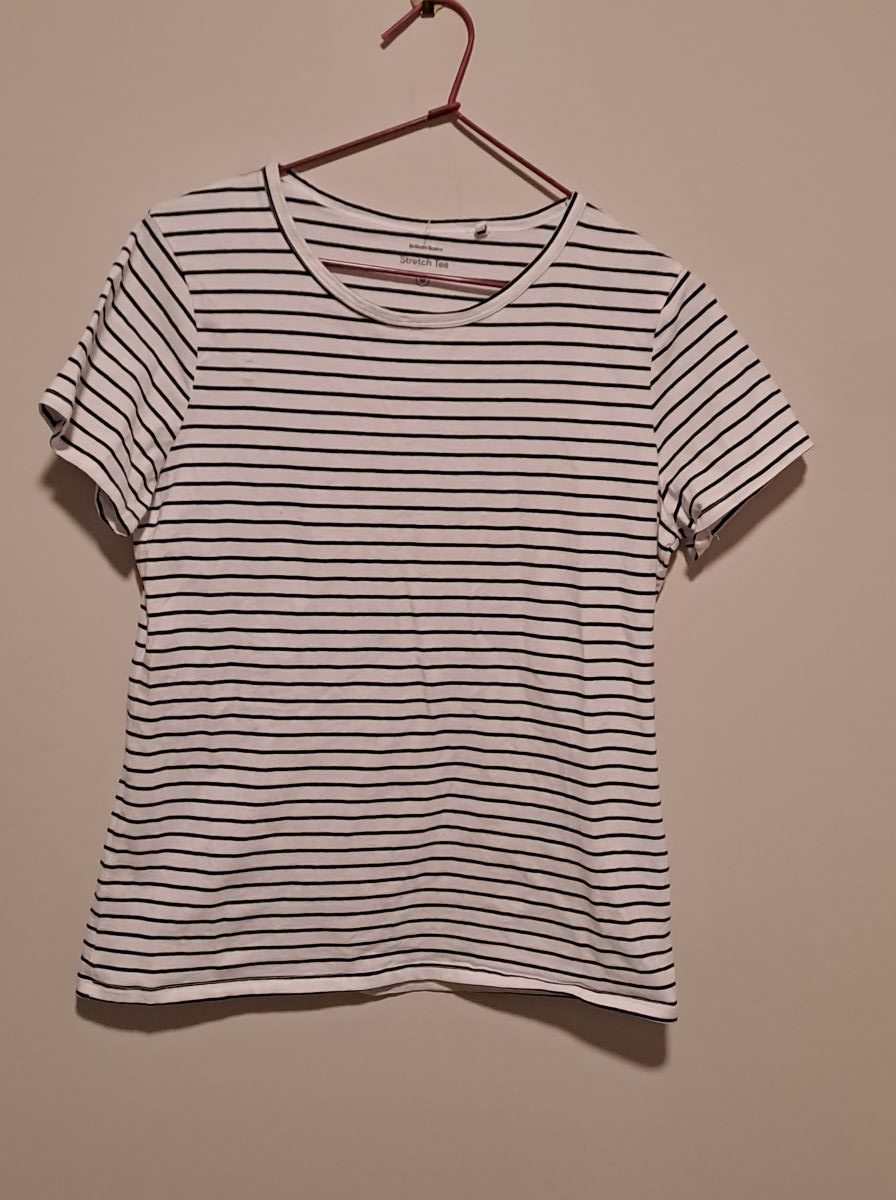
A girl can’t have too many navy/white striped tops. (In my opinion). These tshirt tops appear to be unworn or only very lightly worn. I will shorten the navy one a little bit.

I could not believe my luck as these tops were $2 each! It is almost impossible to get anything for $2 these days in an op shop.

Later in the day I spotted another op shop near the supermarket. Once again, I was in luck.

I had been on the lookout for another vest and spotted this one for $4. The zip does not work but I am not too worried as I generally wear a vest like this unzipped. However, I do plan to buy a new zip and replace it to restore this lovely vest to full functionality.

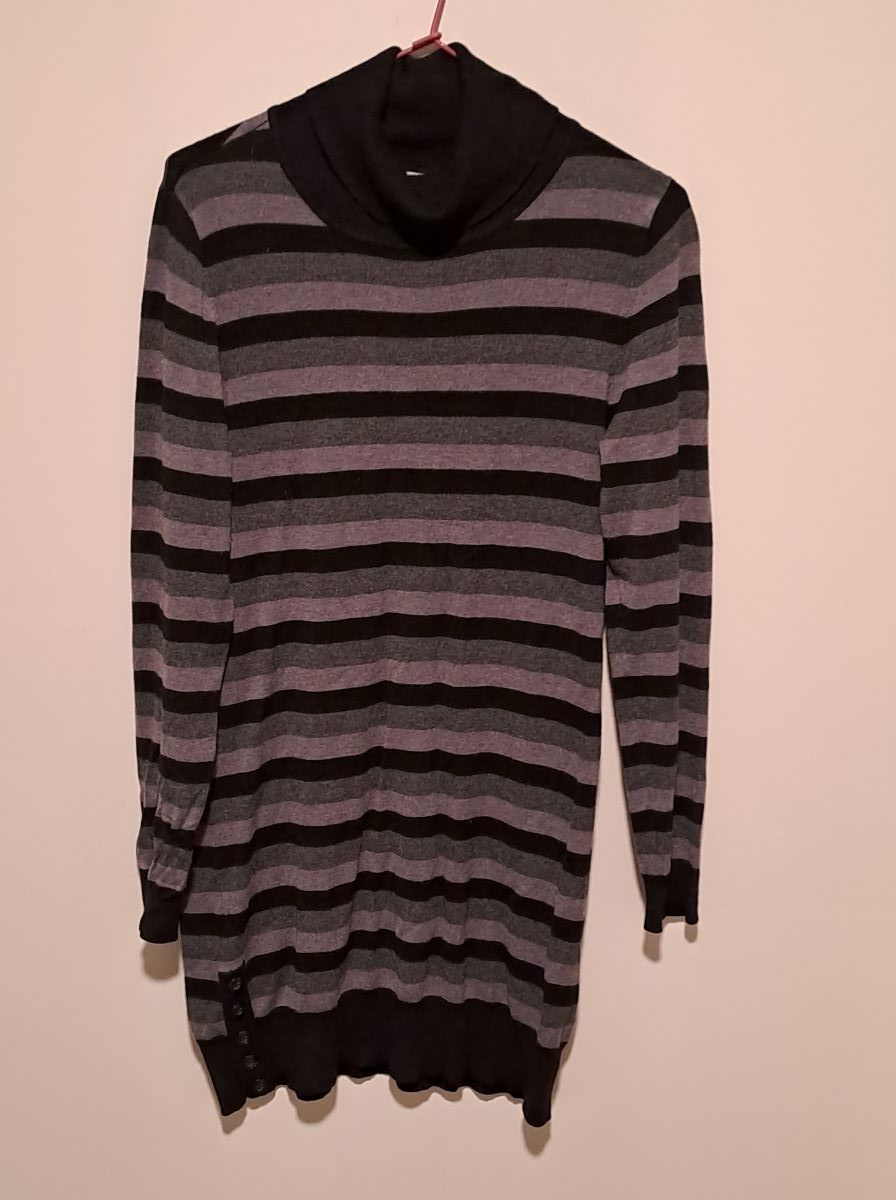
My final find was this knit ‘dress’. It is a synthetic mix and quite fine but will be perfect with a layer of thermals underneath and teamed with tights, boots and a scarf.

I scored all of these additions for the amazing total of $15.

However, it is not all about the money. My prime reason for op shopping is to minimise my use of new resources. It is scary to see the amount of clothes and other textiles which end up in landfill and this was what drove my decision to limit, and preferably eliminate, my reliance on new clothes. My exceptions are underwear, socks and shoes.

I set myself a challenge in November 2018 that I would not buy any new clothes from retail outlets for 5 years. It seemed outrageous and probably unachievable but I was determined to give it a go.

I only have 4 months to go. So, how I am I going? I have bought 1 dress and a scarf (in February 2021) brand new to wear to a wedding. The scarf went to an op shop after a couple of wears as I realised it had been an impulse buy and was not really going to have a long-term place in my wardrobe. The dress was a bargain – reduced from $179 to $21!! I have worn in many times since the wedding, including to my mother’s funeral, as it is very versatile.

My wardrobe has altered significantly in nearly 5 years and I have achieved that through buying pre-loved items in op shops as well as higher-end recycle boutiques. Some have appeared to be brand-new and it is even more important than ever to save these items from ending up in landfill. It has been a continual evolution as I moved from full-time work to retirement and again as we moved from Queensland to Victoria.

Safely Salvaged

Leave a comment

I seem to have been gripped by a level of inertia which has been difficult to shake. I suppose you could call it writer’s block. I have plenty of material for blog posts but have simply not had the will or focus to actually write and publish them. Part of the problem has been the heavy focus on our upcoming federal government elections on Saturday. The other has been the weather. The rain was relentless for several days and even when it was not raining the humidity was 100%. Today was a little better but a return of the heavy rain is forecast for the next 3 days with a high likelihood of greater than 100mm (4 inches) over the weekend.

Anyway, enough of excuses and back to the title.

Today I want to address textile waste – garments, household linens and unused fabric.

As with anything, the best actions we can take to minimise waste are:

  1. Buy only what we actually need.
  2. Buy secondhand where possible.
  3. Take care of what we have to increase its longevity.
  4. Repair or upcycle if applicable.
  5. Ensure it is disposed of or recycled responsibly at the end of its useful life.

Most of us at some time have donated to or shopped at op shops but do you have any idea of what happens with the donations before they make it into the shop for sale?

Donations are received, sorted, priced and made available for sale. Many op shops are overwhelmed by donations and sadly, a portion of what is donated ends up as landfill. Donated items may be unsuitable, dangerous, damaged, soiled or otherwise unacceptable.

I routinely receive donated textiles which are otherwise destined for landfill and our local Boomerang Bags group are often able to use some of the fabric for making reusable bags.

However, sometimes I am surprised by some of what I receive. Remember, op shops do not provide a laundry service so it is make sure that your donations are in a state which is saleable. It is even a good idea to fold garments so that the volunteers can easily identify them as clean and cared-for clothing.

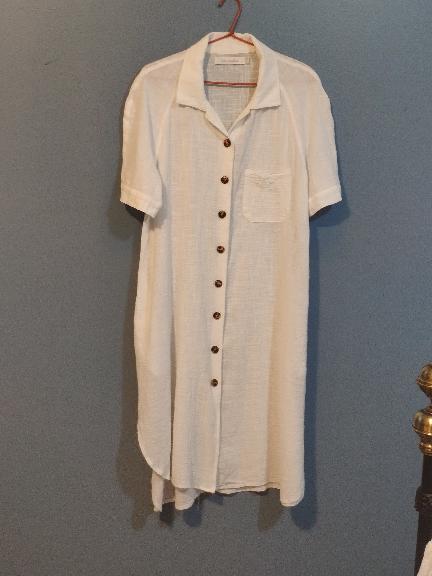
Today I soaked and laundered these three dresses which were in the last bundle saved from landfill. I can only only surmise that at least 2 of them had been deemed unacceptable due to the fact that they had not been laundered prior to donation.

They are all natural fibres (cotton and linen) and in good condition.

I have now sold 2 of them and the funds received have been donated to our local Waste Action group.

We should all do everything we can to ensure that we minimise what ends up in landfill.

Buy Nothing November – An Update

Leave a comment

It is nearly 2 weeks since I first posted about Buy Nothing November. You can read the first instalment here.

Since then we have bought 2 more physical items which have come into our home. The first is a rat trap which fairly self-explanatory and does not need a photo.

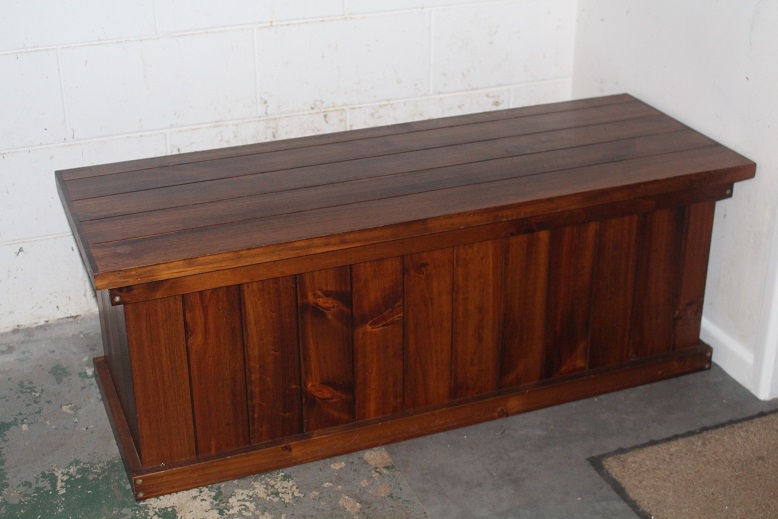
The second item is a timber storage box. I had been perusing secondhand sites for a few weeks as I was looking for a seat for my mini-mudroom. That is probably too grand a description as it is actually a corner of the workshop near the entrance to the house via the internal staircase. Anyway, I turned my attention from benches to storage boxes and found this timber box in a neighbouring town for $50. The storage space which a box affords is an added bonus to the original purpose of providing seating.

I will provide a final update at the end of the month.

Buy Nothing November

Leave a comment

As per the title, it is Buy Nothing November. Have you heard of it? It is the pushback against the mega-retailing phenomenon known as Black Friday.

Black Friday (the day following Thanksgiving in the United States) sales started to become popularised as a day for retail sales in the 1980s. This insidious spread of rampant consumerism has now spread its tentacles to the UK and Australia as well as other places of which I am unware. Of course, online retailing has jumped on the bandwagon in a huge way, too.

I found out about Buy Nothing November via The Story of Stuff on Facebook. Their actual post is copied below.

The Story of Stuff Project 

Welcome to #BuyNothingNovember! For years, the Story of Stuff Project has been actively promoting Buy Nothing Day, the alternative to Black Friday. But the holiday season, in general, has an outsized impact on the planet, so this year we’re expanding the call-to-action for the entire month of November. Throughout this month, we will be sharing facts and figures about the link between consumerism and climate change, and the ecological crisis at large. Refusing to buy new, nonessential goods is a direct-action protest against the corporate conglomerates who are destroying our home. Apple, Amazon, Coca-Cola — these companies are only allowed to be so large because we give them permission, with our dollar. It’s time we show them who is really in charge here. #BuyNothingNew

We generally keep our buying of stuff to a minimum and are certainly not enticed by the crazy Black Friday sales. I had no prior knowledge of this particular month and we track all of our spending so it is going to be quite easy to see what stuff we actually buy during November.

One third of the month is almost gone so it is probably time to review what stuff we have bought.

I am not including groceries and fuel which are both consumables nor ‘experiences’ such as gym fees, dining out and entrance to entertainment venues.

We have purchased and brought 3 things into our home. They are:

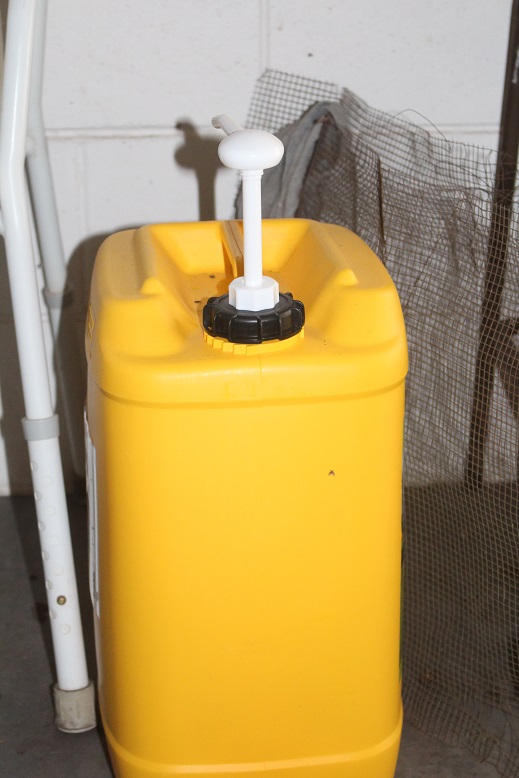
A pump for a 20 litre drum of chemical. It took a bit of research to find where we could source one but we succeeded.

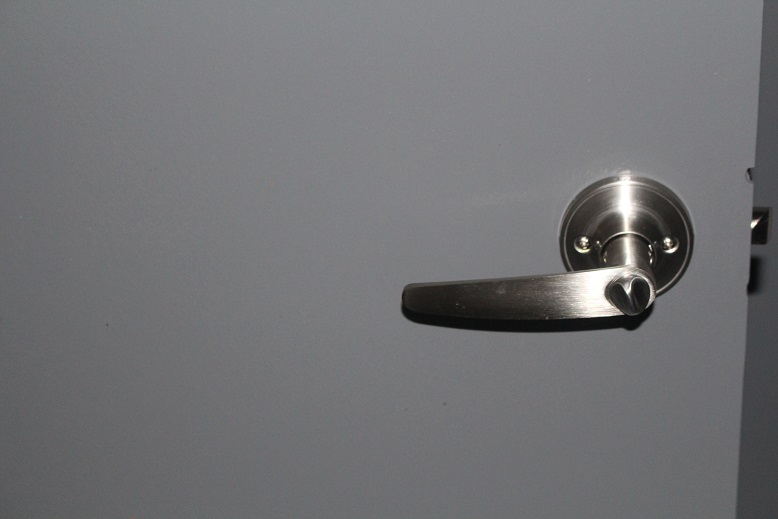
A new lockable door handle for the freshly painted door between the garage and the workshop area.

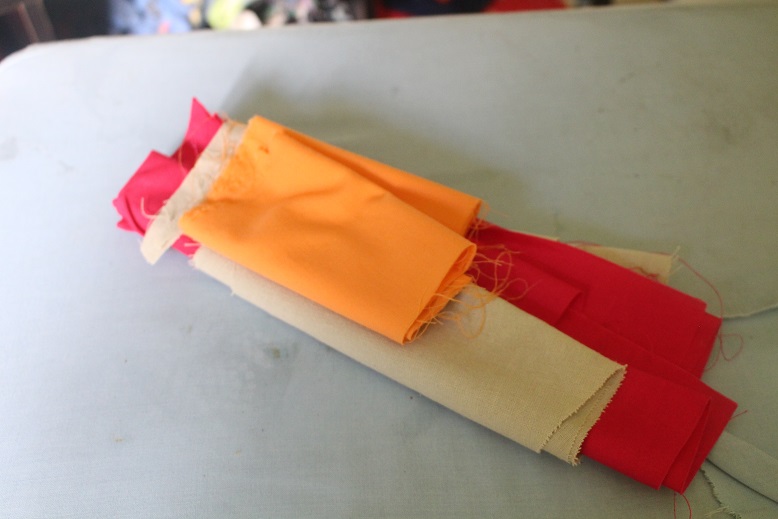
A small bundle of fabric from the thrift shop. I have already used most of the orange fabric and the remainder will be used up as I continue making Boomerang bags.

I am pretty pleased when I consider how little ‘stuff’ we buy.

Upcycled Packaging

Leave a comment

My last couple of posts have focused on avoiding packaging when grocery shopping. While avoiding packaging and waste is ideal, we still need to consider all potential waste and whether there are other options for it.

Upcycling is one of the strategies for removing items from the waste and recycling stream.

I would not buy Pancake Shaker mix but I ended up with a container of it which had come from my mother’s pantry. I decided to use it rather than waste perfectly good food but was then left with an empty plastic container.

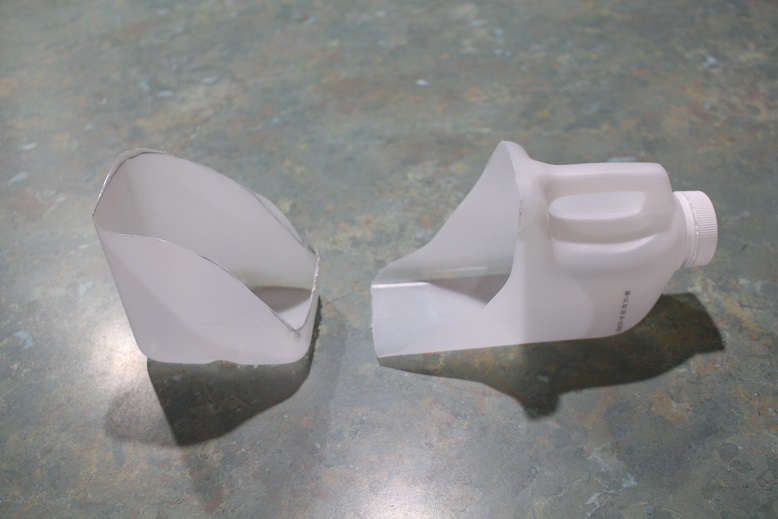
I decided to cut it down to make a scoop.

After marking the proposed cutting line with a felt-tip pen I then carefully cut it with a Stanley knife. These are the 2 pieces I ended up with.

The offcut will go in the recycling and the scoop will be handy for GMan when measuring our flour during his breadmaking adventures.

There are many opportunities to reuse or upcycle all sorts of packaging. Do you have any examples?

Shopping and Sad

4 Comments


We live in a semi-rural area which is about 30 minutes drive to the Sunshine Coast.

Today we braved the retail chaos which is becoming more pronounced as each year goes by. Early January is a particularly crazy time as we combine post-Christmas sales, back-to-school preparations and the inevitable holidaymakers. I think this year is worse than usual as more people are around as they are not travelling further afield.

This was our shopping list:

Roll of chicken wire – to fence a dog run for our puppy
Screws for attaching metal sheeting – to complete one side of the dog run
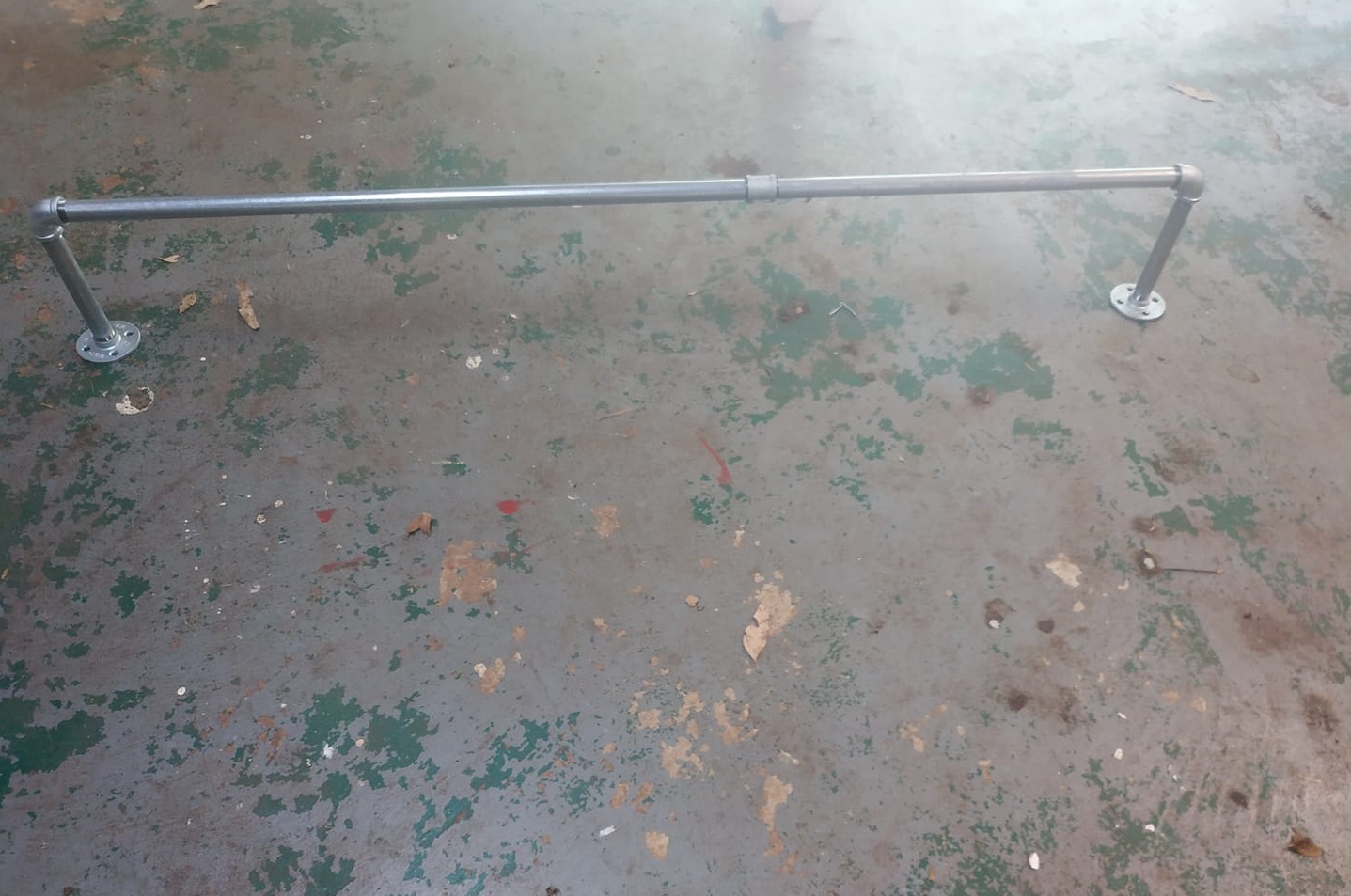
Galvanised pipe and connections – to make a hanging rail for the laundry
Small saddle brackets – to attach gate for dog run
9V battery – replacement for smoke alarm
Prescription medications – essential
Toaster – a replacement as the previous one has ceased to operate
Pet medication – essential

The list was thought out, planned and could hardly be described as frivolous. Since it is a 70km round trip we try to make sure that we make the journey worthwhile. We did not spend any longer than necessary and were home in under 3 hours despite the busy carparking areas and heavy traffic in every direction.

This is the hanging rail assembled. It needs to be painted and then installed.

So, why am I sad?

I think it was witnessing the overwhelming amount of stock in every shop we passed and the hordes of shoppers buying more and more stuff. Is it to replace an item, as with our toaster? Perhaps but I am more than mildly sceptical of that reason for more than a very small percentage of purchases.

The passion for decluttering in recent years and resultant overflowing charity shops leads me to think that many of today’s purchases or the goods they are replacing will be charity shop stock in a matter of months.

Many items, including clothes, electronics and household goods can be purchased cheaply and we do not value or care for them but almost regard them as disposable. When they break, are superseded by a new model or are simply no longer the ‘flavour of the month’ we toss them aside. Many of these discarded consumer items end up in landfill but to salve our consciousness we drop them at the charity shop. Unfortunately, a significant proportion still ends up in landfill and takes up time, effort and resources of those who volunteers to assist the various charities.

Everywhere you turn there are empty shops and businesses. Online shopping continues to gather pace. Are we buying more stuff because it is so easy to click a few buttons and it turns up on our doorstep in a matter of days? Is the lack of effort or consideration required making us shop more?

There is plenty of discussion amongst marketers on how to make sure that people continue to buy more and more stuff so that retailers and businesses can continue to increase their profits. At what cost?

We are drowning in our stuff and killing the planet in our quest to have more and more. I feel like something has to change and soon.

My personal action is to try not to waste anything, use what we have, source items secondhand where possible and be mindful that we have ‘enough’.

I wrote this post just over 6 years ago. There is a link to an interesting short video which is worth watching.

The Big 4

3 Comments

When it comes to Plastic Free July and reducing your single-use plastics for the long-term good of the planet in general and the oceans in particular, there are 4 major culprits.

2017-06-28 03

Although they are the worst offenders, I think it is relatively easy to make changes to eliminate many of them.

In no particular order they are:

Coffee cups
Bags
Straws
Bottles

Why are they regarded as the biggest problems?

  1.  Volume – there are just so many used every single day.
  2.  Only used once in most instances.
  3. Lightweight – so they easily become unintentional litter which ends up in waterways and ultimately in the ocean.
  4. Unnecessary – there are easy alternatives.

What do you currently do and what can you change to reduce your usage of these plastic ‘nasties’?

I will address one of these items each day and today I will begin with coffee cups.

Australians have developed a love affair with coffee, and more specifically takeaway coffee.  Once upon a time we were a nation of tea drinkers and coffee was almost a special occasion drink.  Even more recently the norm was to go to a cafe and sit down with a cup of coffee.  However, the trend of grabbing a coffee ‘to go’ has become a national pastime and we are killing the oceans in the process.

Those innocuous paper cups are NOT recyclable, compostable or anything else.  They are rubbish, that at best ends up in landfill or at worst in the ocean.  This is because they are made of composite materials, including a layer of plastic.

The recent ABC television program, ‘War on Waste’ shone the light squarely on disposable coffee cups and the havoc they are creating.

2017-07-02 02

I am not a coffee drinker and fail to grasp what amounts to an addiction to coffee but you can still have your ‘caffeine fix’ without destroying the planet.

Simply take your reusable cup along to your favourite cafe and have it filled for you to take away.  Simple.  Easy.  We could very quickly eliminate disposable coffee cups.

Some cafes even offer a discount as an incentive to bring your own mug.  If your cafe is not willing to oblige you could vote with your feet and take your custom elsewhere as there are no shortage of cafes looking for your business.  Remember, conscious consumption can make a difference.

So, what is your coffee story?  Do you take a reusable cup for your coffee?  How it is received?  Do you get a discount?


A Critical Mass

2 Comments

The Australian government continues to lag behind most of the rest of the world when it comes to any kind of action with respect to climate change.  I have often thought that any serious action would need to be driven by a groundswell of public opinion but despaired that it would ever happen.

For many years I have felt like I was swimming against the tide as I refused excess packaging, tried to avoid as much single-use plastic as possible and generally tried to reduce my carbon footprint as much as possible.  Gradually, I have seen an increase in groups and individuals trying to make a difference but recently this seems to have taken a definite upswing.

There even seems to be some interest in the mainstream media with programs such as ‘War on Waste‘.

2017-05-29 01oc

Are we reaching a point where there are enough voices to actually begin to make a difference?  What do you think?

Fit to Wear

Leave a comment

There are many ways of approaching the goal of producing less waste but for me, one of the most obvious things is to consume less and make do with what you have.

Mending, repairing and refashioning will significantly extend the life of items, save them from landfill for longer and of course, reduce the need to purchase a replacement.

Here is a practical example that I did this morning in less than an hour.

This is GMan’s sweatshirt which he wears on the weekend when gardening, mowing and painting as you can see.  The cuffs and lower band are all frayed and badly stretched but the body of the garment is still relatively sound.

2017-04-25 01

When I said that I could replace the cuffs, he commented how much he liked the fit of it – although I don’t think ‘fit’ is actually the right word.  So, The first thing I did was to make a pattern for future reference.

2017-04-25 02

I use lightweight interfacing for this purpose and have a roll of it.  I find the patterns cut on interfacing are durable and unlikely to tear.

There are only 2 pieces required – one for the front and back (with different necklines marked) and one for the sleeves.

2017-04-25 03

Next, I had a dig in my stash of ribbing to find a suitable piece.  I found some bottle green which was exactly enough for the lower band and sleeve cuffs – no wastage at all.

2017-04-25 04

I then found a piece of black for the neckband and set to work.  I will not try to explain how the ribbing is attached as there are plenty of good instructions which can be found using Google.

The final result.

2017-04-25 05

GMan is happy and I am sure this will see plenty more wear in the garden.