Return to Sender

2 Comments

I am on a never-ending quest to minimise the waste created by our purchases.  However, I regard the ‘zero-waste’ trumpeted by some as a somewhat false achievement.  Even if your purchase is transported home in your own bag, jar or basket it is almost certain that there was packaging, most likely plastic involved in getting the product to you.

Think about any product and trace it back to the source.  A good example is our free range eggs from our chickens.  At first glance they may seem to be ‘zero waste’ but, no, the grain for the chickens comes in a 20kg plastic bag.

So, one of the best things we can do is to try to buy things where the packaging can be re-used.  Remember, that re-use is far better than recycling.  I was reminded of a couple of examples where I can literally close the loop.

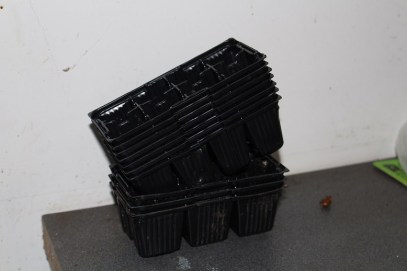
My ideal would be to grow food from seed but I am sufficiently honest with myself to realise that this is not often possible whilst holding down a full-time job.  So, I end up with plastic seedling trays but I was delighted to recently discover that these can be returned to the seller at the market for re-use.

2016-12-05-01

On another note, I buy my laundry and dishwashing liquid from a local manufacturer at a market stall.  The product is sold through retail outlets in 1 litre bottles, however, if pre-ordered from the market stall it is presented in re-used 2 and 3 litre juice bottles and I am even able to return those bottles when emptied.

2016-12-05-02

It is worth thinking critically about the source and packaging of your purchases to ensure that you have the opportunity to make informed choices.

My Own Advice

2 Comments

Today I am swallowing some of my own advice.

In my last blog post I talked about not trying to meet prescriptive minimalist goals.  I eschewed the extreme attitude of Bea Johnson at Zero Waste Home as being not for me quite early in my minimalism journey.  There are numerous other extreme ideas such as wearing the same dress every day for a year.  I applaud the people that choose to push the boundaries and carry out these ideas but it is not for me.

However, I have been somewhat seduced by things such as Project 333 and Plastic-Free July.  I have discovered that the life I live does not necessarily meet the lofty ideals of these and similar sites.

I think that part of my ‘problem’ which is not really a problem at all is the fact that I am a well-rounded person (not necessarily in the physical sense).  I dabble in range of strategies to live simply, reduce consumption as well as saving money and resources and have done for quite some time.

It is those ideas and strategies that I try to share with you here on the blog.  The little day to day things that may not look like much but add up over time.

There are many others out there who are doing the same stuff every single day and I want to encourage you to do the same.

There are no numbers that you have to achieve, it is not a race but simply an invitation to live the best life you can.

That is enough talk from me – from tomorrow I will be back to sharing some of the practical things that are part of my routine.

2016-04-20 03

A Frugal Mindset – 4

Leave a comment

Number 4 in the frugal series appears to be at odds with frugality until you think it through.  It is all about quality and this is something I regularly take into account.  I find that in many instances, paying a bit more for a quality item does reap rewards in the long-term.  This applies to appliances, equipment, clothing and a range of other things.

4. Frugal people are not afraid to spend more on big expenses if it saves them money in the long run. This one may seem counterintuitive  to the point I just made above, about how frugal people are known as penny pinchers. But truly frugal people, as opposed to just tightwads, know when it is the time to pinch your pennies and the time you need to pull out your wallet and spend a bit more upfront to save money in the long run. An example of this is choosing a more reliable, slightly more expensive brand of lawn equipment. Ultimately this machinery will, statistically speaking, last longer and cost less in repair costs, making it better to plunk down a few extra dollars up front to reap the savings long-term.

Question to ask yourself: Don’t just ask yourself, when making a purchase, how much does this cost me now? Instead, also have follow up questions which include how long do I want or need this to last, and how much can I afford in repairs or maintenance?

It is all about quality and this is something I regularly take into account.  I find that in many instances, paying a bit more for a quality item does reap rewards in the long-term.  This applies to appliances, equipment, clothing and a range of other things.

Here is an example:  This Canterbury rugby top was bought in 1999 and has been worn every year since.  It is a favourite and gets plenty of wear.  I noticed today that the collar is beginning to show signs of wear so I will either turn the collar or replace it.  The colour has faded somewhat and the is a small area which I mended many years ago just below the logo.  None of that stops me wearing this top which has lasted much longer (and will continue for years yet) than cheaper ones.

I am also aware of the environmental cost of constantly replacing cheap items and would prefer to buy something that is going to have a longer useful life and consequently a smaller environmental footprint.

Almost July

2 Comments

In another 9 days it will be July.  Six months of 2016 will be gone – that is half of the year.  The winter solstice (in the Southern hemisphere) is gone and now the days will begin to get longer, although the coolest days are still ahead of us.  Here in Australia the financial year ends on 30th June each year and then there will be a flurry of activity of tax returns and hopefully, refunds.

This year, the beginning of July will also herald a Federal election on 2nd July after an inordinately long campaign of about 8 weeks.  In some respects, it seems much longer as we were subjected to much speculation regarding the date prior to the actual announcement.

None of this fills me with particular joy and optimism but there is one highlight and that is ‘Plastic Free July’.

‘Plastic Free July’ began with one Council in one city in Australia 5 years ago and last year the concept was embraced by groups and individuals in 69 countries around the globe.  You can read more here.

I have read various discussions in which people have mentioned that are are setting themselves up for the challenge by buying or making tulle vegetable bags and beeswax wraps as a substitute for plastic film.

My plan is continue much as I currently do and redouble my efforts to get rid of more single-use plastic from my life.

What single-use plastic could you eliminate?  What alternatives would you use?  Are you looking for ideas?

I would love to hear your thoughts and ideas to develop a discussion where we can all learn from each other.

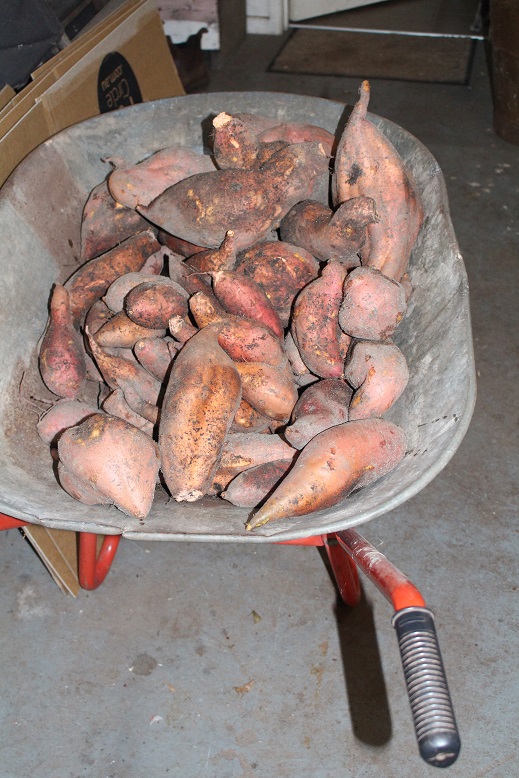
Here are some plastic-free treats from our vegie garden.

2016-06-22 02.JPG


Dragged Down

Leave a comment

As much as possible I try to keep my blog posts positive.  Now I know why.

During the last few days I have stumbled on some really negative and downright depressing discussions on the internet.  I have realised how much I have been dragged down by it all.  This combined with being tired from a busy work schedule has drained my creative juices and made writing a blog post almost impossible.

One of the discussions was related to this article which is well-written and contains some really useful information in the article and also within the links.  However, many of the responses were negative and ranged through bitterness, envy and disbelief.

The other was about global warming, although I prefer the term ‘climate change’ as a more accurate descriptor.  I was astounded and dismayed at the number of people who seemed unable to accept the premise of human-induced climate change which is accelerating at an ever increasing rate.  Even more worrying were the links being shared which referenced articles from such ‘luminaries’ as Ted Cruz, Andrew Bolt and Lord Monckton.

However, my faith was somewhat restored when I read this comment in the discussion.

Quote:

I thought I would add what I have been doing personally as I am very concerned about this issue myself.
I have read Naomi Klein book This changes everything. It was very hard to read for me as I need things set out more clearly in non fiction but she raised some good points. I also read Vandana Shiva Soil not oil which was much easier to read and something I felt I could do more about.
Switched to power shop for my electricity. Compost all food stuffs though council. Reduce car usage etc. Trying to cut down meat consumption. I know a lot of people think we should all just go vegan and angrily support that but I think think that would be like a badly failed diet for everyone. I think think you’re better off encouraging a slow change to encourage permanence.
I have joined one million women, 350. Org , green peace and a heap of others to support their works sign petitions etc.

Need to work on my plastic bag use and buying unnecessary packaging, although I am doing better than most I know.

It is lovely to hear of others who are prepared to do their bit and I applaud every small step that each and every one of us can take.

It is only 2 weeks until July – and that means 2 weeks until ‘Plastic-Free July’ so please take a look here and consider what you can do to make a difference.

An Endless Summer

1 Comment

Here in Australia we have had a long, hot summer.  There is no other way of describing it.

I found found some statistics from the Bureau of Meteorolgy.  There is no information for April but we all know that the warmer than average trend continued.
December
Second-warmest December mean minimum temperatures on record
Warmest December mean temperatures on record for Tasmania, Victoria and South Australia
Two heatwaves break December records in southeast Australia
Severe bushfire in southern Victoria
December was another very warm month for Australia, the sixth-warmest on record for nationally-averaged mean temperatures. The national mean minimum temperature was the second-warmest on record with an anomaly of +1.24°C, while maximum temperature was the warmest on record for parts of southeast Australia including Victoria (+3.80°C).
January

National mean temperature above average

Maximum and minimum temperatures both above average
January mean temperatures were warmer than average for Australia as a whole (an anomaly of +0.52°C), with all States and the Northern Territory recording warmer than average mean temperatures.
Tasmania recorded its second-warmest January on record.
The Australian mean daily maximum temperature was 0.21
°C above average and the Australian mean daily minimum temperatures was 0.83°C above average
February

Australia’s ninth-warmest February on record

Heat wave in northwestern Queensland results in some daily maximum records broken.

February was a warm month for Australia and the ninth-warmest February on record. The national mean temperature was 0.92°C above the historical average, with the monthly mean maximum temperature 1.43°C above average and the monthly mean minimum temperature 0.41°C above average.

Mean temperatures and mean maxima were above average in all States.
Queensland recorded its fifth-warmest February on record for mean temperatures and equal sixth-warmest for both maximum and minimum temperatures. Tasmania was sixth-warmest for minimum temperatures.
A heat wave in north-western Queensland in the last week of February resulted in a number of records for daily maximum temperatures being broken in this region
March
Mean March temperature for Australia warmest on record.
National mean March minimum temperature warmest on record.
National mean maximum temperature seventh-warmest March on record.
A new record for the warmest March day on record for Australia on the 2nd.

This month was the warmest March on record with a mean temperature anomaly 1.70°C

above the average, exceeding the previous record set in 1986 (+1.67°C). The national mean March minimum temperature anomaly was also the warmest on record at +1.97°C.
The hottest March day recorded in Australia was recorded on the 2nd.  On this day, more than one-third of Australia recorded maximum temperatures in the warmest percentile.
During the month warmer than average maximum and minimum temperatures affected much of the country. New South Wales and Victoria experienced record high mean March temperature anomalies (+2.49 °C and +2.42 °C respectively).
Nationally, the mean March maximum temperature was the seventh-warmest on record (+1.42 °C).
How did you cope with the heat?  Did you enjoy the ‘endless summer’.  Are you looking forward to ever increasing temperatures over the coming years?
Think it won’t happen?  Check out this graphic.
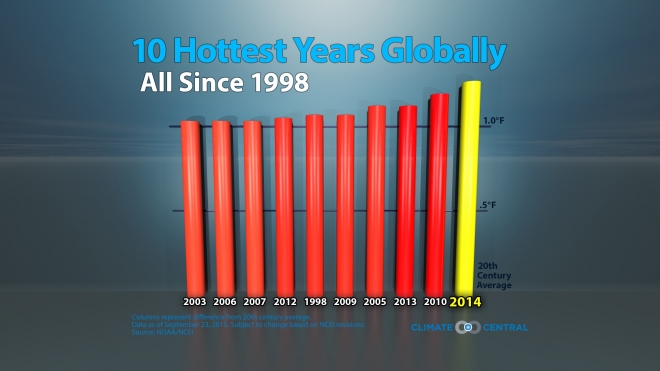
2016-05-09 01
Climate change is real and it is here right now.  It is time to stop and consider what the future is going to look like.  What is life going to be like for our children and grandchildren?  We are well on our way to leaving them a legacy of an uninhabitable planet.
Check out this page for more information.
What do you think?  How do you feel?
I am interested in your opinion whether you are here in Australia or overseas.