Stay Safe

Leave a comment

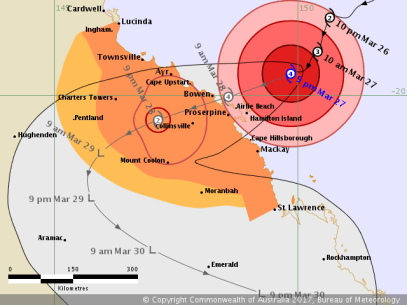
My internet has been somewhat unreliable over the past few days, hence the lack of posts.  I had several ideas but have shelved them for tonight as I would simply like to say to everybody in north Queensland who is in the path of Cyclone Debbie, “Please take care and stay safe.  We are thinking of you and praying that you will be safe”.

2017-03-27 01


Cause for Optimism

1 Comment

It is easy to feel worn down and thwarted at every turn when you try to live according to your values with regards to reducing your carbon footprint.  However, this is not always the case.  At times there is cause for great joy and optimism and I have experienced that feeling this week.

I have been buying laundry liquid, pre-soak stain remover, dishwashing liquid and dishwasher powder from Felix at Kin Kin Naturals for a number of years now.  This family business is located at Kin Kin in the Sunshine Coast hinterland, about 80km north of where I live.  The products are available nationally particularly in Queensland and most especially on the Sunshine Coast.

Felix also sells the products at the Kin Kin markets which are held once a month in the small village.  We make the trip about every 6 months and stock up because it is cheaper to buy them direct from the producer.  Additionally, if I pre-order by email I can avoid new plastic packaging and buy the liquids packaged in re-used 2 or 3 litre juice bottles.  You can see some in the photo below from when I cleaned out the laundry cupboards.  You can read about it in this post.

006

Last week I emailed an order to be collected at the next market at the beginning of April.  I decided to make it a bit more than just an order and sent the following email.

Hi Felix

I have previously purchased products from you at the Kin Kin markets on several occasions.  I have bought the dishwashing liquid and laundry liquid in the reused 2 and 3 litre juice which I really appreciate as it helps to limit the amount of plastic waste which our household generates.

I would like to buy:

8 litres of lavender and ylang ylang laundry liquid in the reused bottles
4 litres of tangerine and mandarin dishwashing liquid in the reused bottles
1 x 2.5kg refill pack of lemon myrtle and lime dishwasher powder
2 x 1.2kg eucalypt and lime eco laundry soaker

Does the laundry soaker come in refill packs?  If so, that would be my preference.

Is it possible or have you ever considered having bulk containers of all products at the market so that people can bring their own containers to be refilled?

There is a growing movement of people who are trying to reduce/eliminate single use plastic (including packaging).  Many of us are keen to buy/support locally produced/family businesses such as yours who produce a true eco-friendly product. Any opportunity to purchase these products without additional plastic would really be appreciated.

I look forward to hearing from you.

Thank you for your help.

Kind regards

I really had no idea what sort of response I would get so I was absolutely delighted to receive the following email 2 days later.

Hi Yvonne,

Thanks for your order – and for thinking with us on how to reduce senseless packaging.

I will put 2.5 kg of laundry soaker in a refill pack rather than 2 of the plastic jars. Depending on the exact size of the re-used bottles on hand when we fill we’re looking at about 17 kg/L total x $5 = around $85 for your order please.

I can see the beauty of refilling on the spot at the markets but I prefer the current way of pre-ordered re-used containers because we are doing only the Kin Kin markets which are on only once a month and would be stuck with remainders of the refill drums of each of the 4 liquid variants for months which wouldn’t be ideal for product freshness.

On your broader question of packaging reduction, great point. Our current approach is to encourage stores to get our 20L drums and offer refills from those. The problem is that apart from a few stores in an area with refill-minded people (e.g., Cooran and Pomona) this refill route isn’t doing too well, I think mainly because stores don’t like the extra effort, mess – and of course selling a prefilled plastic bottle is easier, but that’s what Coles and Woolies can do too. If you have any ideas, don’t hesitate..

See you at the April markets.

I will respond to Felix and also look forward to discussing some possibilities when I see him next month.

In the meantime, this has renewed my confidence in the ability of individual consumers to influence positive change.  Not every approach will be received as positively as the example above but I will definitely be making more of an effort in the future to provide feedback to suppliers and retailers regarding plastic packaging.

Finite Resources

1 Comment

There are many, many ways of looking at the environmental issues facing our planet today.  Different people choose to focus on different things but our goal is the same – to do the best that we can to preserve the health of the planet for future generations.  Right?

Some people try to source as much as possible second-hand, others eschew plastic at every turn, barely a handful of waste is the goal sought by another group and then there are those who are always looking for a way to recycle or re-use items that are no longer required.

2017-03-07 01

Plastic seems to have been recently declared ‘public enemy no. 1’ due to the masses of micro (and not so micro) plastics in our oceans and the detrimental effect it is having on marine life.  I agree with this sentiment and do the best I can to minimise my use of single use plastic products.  However, I have not rushed to get rid of all my plastic containers and other items as I believe it is my responsibility to use my existing products wisely and extend their life as much as possible.

Some people disagree because of the perceived potential risks of using plastic – particularly where food and drink are concerned.  I do not have a problem with this as I do not use plastic for storing liquids, oils, acidic foods nor do I use plastic where there is heat involved – such as the microwave.

2017-02-22-05

There will always be some plastic products but it is our responsibility to restrict the use of plastics to those applications where it is necessary.  Not only for the marine life but due to the fact that plastic is made from oil which is a finite resource – there is not an endless supply.  Most people can clearly recognise single plastics – water bottles, drinking straws, disposable cutlery, takeaway food containers and so on but it is the composite plastics that are less obvious.  These include takeaway coffee cups, reuseable ‘green’ shopping bags, ‘foil’ chip packets and packaging where plastic may be sandwiched between 2 layers of paper or cardboard.

2015-05-17 06

The purpose of this blog post is to encourage people really try to make a difference where plastic products are concerned.

Here are a few goals.

  1.  Minimise your use of single use plastic items – look for re-useable, non-plastic alternatives.
  2. Dispose of any plastic waste carefully to ensure it stays out of waterways and oceans.
  3. Remember that plastic is manufactured from oil and oil is a finite resource.
  4. Use recycling as a last resort – it is not a licence to keep using as much plastic (and everything else) as we want and assuaging our guilt by simply tossing it in the recycle bin.  At best, plastic is downcycled not recycled.  It only has one secondary life then it becomes landfill.
  5. Be a conscious and responsible consumer.

Picture

It is not yet July but there is no time like the present to begin to phase out the single-use plastics from your life and consider what else you can change.


Not Tree-Hugging Nonsense

Leave a comment

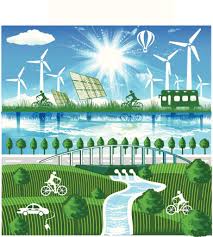
For too long investment in renewable energy, electric cars, sustainable agriculture and a swag of other activities has been seen as the preserve of alternative individuals in our society.  These people are often derogatorily referred to as tree-hugging greenies by those who do not share their values or see the urgency in transitioning our communities to more sustainable practices.

2017-02-21-02

The Australian government continues to refuse to accept that exponential economic growth at the expense of environmental protection is not the key to our future.

However, I believe the tide is turning.  I have read several articles in the past few days in which the impact of climate change is of concern.  Doctors are identifying health issues, global banks are withdrawing funding for coal mines and an Australian private health fund has announced that it is divesting itself from fossil fuels on the grounds that it cannot reconcile supporting an industry which harms the health and well-being of its members.

This one from APRA (Australian Prudential Regulation Authority) is close to home and should be a stark warning to the government that they simply cannot continue on their current trajectory with regard to action on climate change and support of power generation from non-renewable sources such as coal..

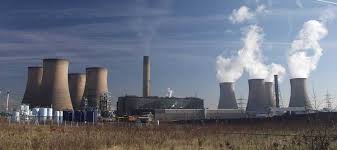
As the support for the coal industry wanes and associated funding options begin to evaporate, the government is determined to push on with its agenda of coal at any cost.   The latest idea is to use the Clean Energy Finance Corporation (CEFC) to fund the establishment of more coal-fired power stations using ‘clean coal’ technology.  This is an absolute disgrace and should be stopped.

2017-02-21-01


Joining the Dots

1 Comment

I have just checked my blog and realised that it is now 6 days since I last posted.  Why?  Well, I could tell you about how busy I have been but that is not really true.  Life has been ticking along and there has been plenty of activity.  On Wednesday I took our 2 granddaughters to see the matinee performance of “Matilda – The Musical”.  This was their Christmas gift from us and we all thoroughly enjoyed it.  Then I spent Thursday and Friday in Sydney on work-related business so there really has not been a huge amount of time for blogging.

However, the real truth is that I have felt so overwhelmed by the recent political events, both domestic and international, that it has been quite difficult to think about writing about the simple things that I do here at home.  When you add in a dose of exceptionally hot weather the inertia really takes over.

It is difficult not to despair when the Treasurer of this nation (supported by his colleagues) brings a lump of coal into the parliament and mercilessly mocks those for whom climate change is a real and present threat.  This, in a week where much of the country is sweltering through some of the highest temperatures on record and it is set to be even worse in Queensland tomorrow.

2017-02-11-01

What will it take for these dinosaurs to understand that we are living with climate change here and now and there is a real risk to public health?  Yet their answer is to dig up more coal to supposedly generate cheaper power for the air-conditioners which are deemed essential to cope with the environment we have created.  Will they ever manage to join the dots and work out that the solution is not digging up more coal?

Here are a few basic statistics from NASA.  15 of the hottest 16 years on record have been since 2001.  Climate change, perhaps?  Why would our government believe that?  A lump of coal is much more fun!

This article should be compulsory reading for all of our politicians.


I Bought a Bucket

2 Comments

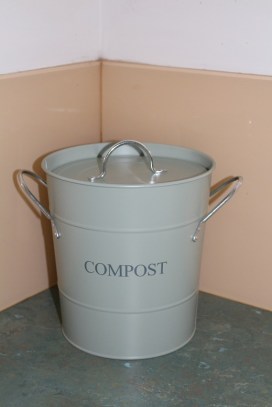
This may seem like mindless consumption as I did already have a bucket to collect the kitchen scraps for the compost but I recently bought a new compost bucket.

img_6057

I first considered buying this over 12 months ago when I saw the one my daughter had at her place.  The thing that appealed to me about it was the drop-in lid with a silicone seal.  The following photo shows the lid  and also  the bucket insert.  It is also rather more stylish when sitting on the kitchen bench and has the added bonus of being labelled which is a help to guests who are unfamiliar with our kitchen.

img_6060

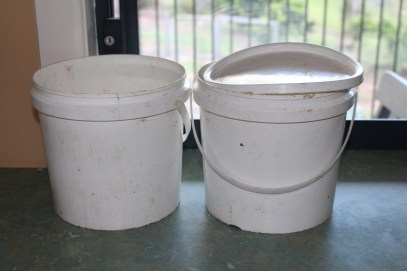
These are the 2 buckets I have used previously.  Each one is a bit larger than the new one so I will definitely need to empty it each day but that is not a great imposition.  The lid is the main problem as it takes 2 hands to seal it tightly as opposed to the drop-in lid on the new one.

img_6059

I ordered the bucket online and it arrived packaged in a cardboard box.  This had clearly been re-used which is pleasing but the downside was that it had 2 layers of plastic tape.  I managed to remove all of the tape so that I can use the cardboard as weed mat in the garden.  There was quite a pile of tape.

img_6058

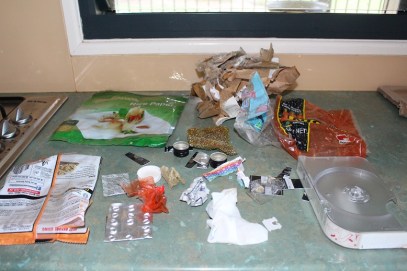
In fact, the tape contributed quite a significant portion of our waste for the week.  You can see it all here.

img_6061

The rubbish for this week weighed in at 264g which is considerably more than the previous couple of weeks.  This is due in to the plastic sticky tape from the cardboard box.  There is also a selection of items, including, plastic bags from rice paper wrappers, tortillas, cheese and carrots, an expired credit card, foil packet from medications, festival wristband, bottle tops, screen cleaning cloth and plastic packaging from a computer program.

Another Parcel

1 Comment

About 10 days ago I placed an online order with OzFarmers for some glass jars.  They arrived by courier a few days later.

2017-01-26-01

Time to open it up.  I was impressed that the box had clearly been reused and was excited to find that the packing was not bubbled plastic or styrofoam beads, but good old newspaper.

2017-01-26-02

The newspaper was shredded quite uniquely but it is a little difficult to see in this photo.

These are 2 Weck glass jars with glass lids.  I am quite glad that they were wrapped in bubble wrap to ensure that they arrived safely.  We ordered these as GMan needed one for making a sourdough starter.  He has been making bread in the breadmaker for many years using bread mix and yeast but has decided to branch out and try sourdough.

2017-01-26-03

Since we were only able to buy these online, it made sense to purchase an additional one so that we would have a spare.  I have used reused glass jars for preserving jam, chutney and sauce but recently made the decision to invest in proper canning jars with a two-piece lid.

2017-01-26-04

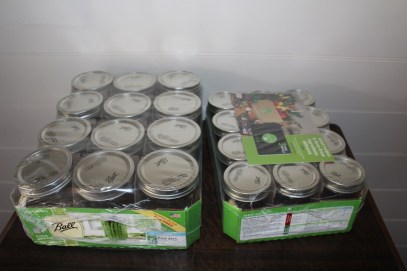
I bought 12 of each of two sizes – Half pint and Pint jars – for those of us who deal in metric the actual capacity is 250ml and 500ml respectively.

Here is a closer look at the newspaper packaging.  There are about 6 layers of newspaper which have clearly been put through some sort of mechanical shredder to make a series of incomplete cuts and then it is spread to make a grille pattern.  The newspaper is now in the compost bin and the cardboard box is flattened and will be used as a weed suppressant when we next spread some mulch in the garden.

2017-01-26-05

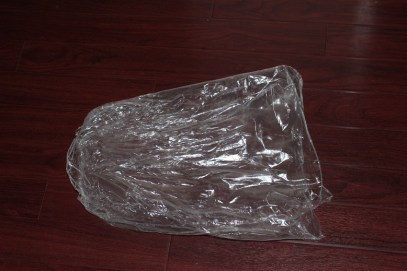
Sadly, the entire trays were shrink-wrapped in plastic but rather than just ripping it off, I split the corners at one end until I was able to slide the whole wrapper off in one piece.

This is what it looked like.

2017-01-26-06

I sealed the untouched end with an elastic band and this will now be a future rubbish bag for my kitchen bin.

2017-01-26-07

No matter how hard you try, it is impossible to completely eliminate single-use plastic but it is possible to be conscious of your consumption and to think outside the box when it comes to disposing of it.

I am comfortable with accepting what is a relatively low level of plastic packaging to enable me to acquire products which should last a lifetime.  By using the jars we bought to prepare more of our own food we will reduce reliance on other food packaging.

Not My Trash

4 Comments

There seem to be various reasons for people choosing to substantially reduce the amount of waste that their household produces but it is essentially about not turning our planet into a mega rubbish dump.  One of the most visible issues is the plastic in our oceans so removing single-use plastic items from your life is a good first step.

The goal of zero waste is admirable but what about the litter that seems to be everywhere?

This morning I went for a walk.  We live in a semi-rural area on a narrow secondary road.  This is what I collected.

2017-01-19-01

Pepsi bottle
Iced coffee bottle plus 2 pieces of the plastic label
Flattened soft drink can
Turkish delight wrapper
Half of a single serve yoghurt container
Plastic bag
Broken reflector from a vehicle

Apart from the reflector, all of the other items were knowingly discarded.  Almost everything relates to food and drink and the aluminium drink can is the only piece that is not single use plastic.

I know this is only a very small sample but I think these items clearly tell the story of where change needs to occur.

Things you can do that will make a difference (apart from not littering):

Pack your own food and drink for when you are out and about.
If you buy take-away take your own containers or choose compostable packaging.
Lobby governments to introduce container deposit legislation for all beverage containers.
Lobby for a ban on plastic bags.

A New Tank

Leave a comment

Our property is in a semi-rural area and we do not have access to town water.  This is not a problem as we have 2 large rainwater tanks.  The combined capacity is almost 100,000 litres and since we live in a high rainfall area we have never even gone close to running out of water.  However, we have also lived in a low rainfall area as well as in the city when there was a significant drought so we know what it is like to be careful with every precious drop of water.

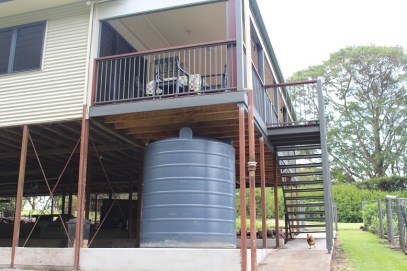
Well, you can never have too much rainwater storage so today we bought another tank.  I discovered that a work colleague wanted to sell a rainwater tank due to new landscaping plans.  I checked out the details and found that it would be perfect for our plan to have another small tank under the verandah.  We will use this for watering out vegetable garden which is close by.  This will be much easier than dragging the hose all the way from the main tap which is at the other end of the house.  Additionally, a tank which is close to the house will give us the option of being able to access water relatively easily if we are without power.

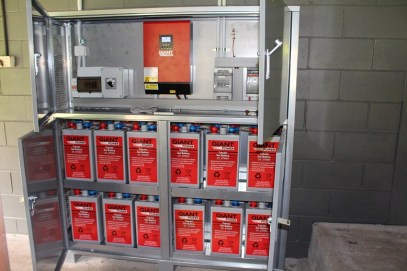
It is unlikely that we will be completely without power now that we have the battery system for our solar panels but is will be good to have a back up just in case.

003

Without power for the pump or a tank close to the house, it is a long trek to the main tanks to get water.  You can read about it in an old post from 2013.

Back to the new tank.  We collected it today and it was loaded into the ute with the help of the seller and a couple of his mates.  After a reasonably cautious drive home it was time to unload.

2017-01-15-01

This is the area we had chosen to position the tank.  In fact, the concreting was only done about 6 months ago with a view to getting the tank this year.

2017-01-15-02

With a bit of careful planning GMan and I were able to manoeuvre it into position.

2017-01-15-03

The next step will be to organise the plumber and electrician to get it all set up.  In the interests of efficiency we need to plan several plumbing and electrical jobs all to be done at the same time.

Zero Waste

4 Comments

As a follow-up to my post from yesterday, I want to talk more about ‘zero waste’.  What is it?  Is it unrealistic?  Do you prefer an alternative term?  Does it really matter?

I have been tossing around these and other questions recently, so I thought I would share my thoughts with you.  I would love to hear how you feel about this, too.
2017-01-14-02

Zero waste is a phrase which first entered my consciousness about 5 years ago when I stumbled upon a blog by Bea Johnson.  More about that later, but apparently the term ‘zero waste’ was first coined in the mid 1990s.  This is what Wikipedia has to say:

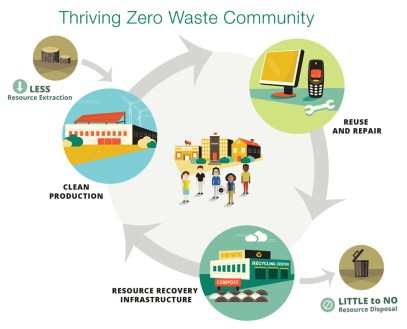
Zero Waste is a philosophy that encourages the redesign of resource life cycles so that all products are reused. No trash is sent to landfills or incinerators. The process recommended is one similar to the way that resources are reused in nature. The definition adopted by the Zero Waste International Alliance (ZWIA)[1] is:

Zero Waste is a goal that is ethical, economical, efficient and visionary, to guide people in changing their lifestyles and practices to emulate sustainable natural cycles, where all discarded materials are designed to become resources for others to use.

Zero Waste means designing and managing products and processes to systematically avoid and eliminate the volume and toxicity of waste and materials, conserve and recover all resources, and not burn or bury them.

Implementing Zero Waste will eliminate all discharges to land, water or air that are a threat to planetary, human, animal or plant health

Zero Waste refers to waste management and planning approaches which emphasize waste prevention as opposed to end-of-pipe waste management.[2] It is a whole systems approach that aims for a massive change in the way materials flow through society, resulting in no waste.[2] Zero waste encompasses more than eliminating waste through recycling and reuse, it focuses on restructuring production and distribution systems to reduce waste.[3] Zero waste is more of a goal or ideal rather than a hard target.[4] Zero Waste provides guiding principles for continually working towards eliminating wastes.[2]

Advocates expect that government regulation is needed[3] [2] to influence industrial choices over product and packaging design, manufacturing processes, and material selection.[5]

Advocates say eliminating waste eliminates pollution, and can also reduce costs due to reduced need for raw materials.

I mentioned Bea Johnson’s blog earlier.  You can take a look here.  Many people find her style and enthusiasm inspiring.  I do not.  She presents herself with an almost evangelical zeal which I find irritating and I believe that could turn away many who want to dip their toe in the water because they simply do not feel that they can measure up to her exacting standards.

The following quote is an excerpt from her bio on the blog:

This blog and my bestselling book, Zero Waste Home (available in 12 languages), have launched a global movement, inspiring thousands of people throughout the world to live simply and take a stance against needless waste.

Good on Bea for having the idea to grab a catchy slogan “zero-waste” and market the concept but I take exception to the notion that she somehow invented the idea of seriously refusing and reducing waste.  Her timing was perfect – by 2008 there was a critical mass, particularly in parts of the USA and Europe, of people who were prepared to hear her message.  There are people in Australia, and globally, who have been living and promoting this ideal every day for close to 40 years yet there is barely an acknowledgement of their contribution in paving the way to allow this 2008 epiphany to occur.

Meanwhile, through this blog I am trying to connect with other concerned individuals to gently encourage you to begin to make the changes which will reduce the waste produced by your household.

As with everything, people have taken zero waste and put their own spin on it.  For some, it is about eliminating all plastics.  For others it is rejecting single-use plastic items such as supermarket bags and straws.  Still others are keen to replace disposables with reusable alternatives – handkerchiefs instead of tissues, cloths instead of paper towel, lids instead of plastic wrap and so on.

Whatever you call it, there are a couple of things I would like to remind you about.

It is not a race to zero.
Start slowly or the changes will not be sustainable.
Remember the hierarchy – recycling should be the last resort – not the first option.
Perfection is virtually impossible due to the way our society and economy are structured.
Do what you can but don’t be disillusioned.
Choose your battles.

2017-01-14-01
And finally, any reduction that you and your family make with respect to what is sent to landfill is a good thing.

Personally, I am not terribly comfortable with the term ‘zero waste’ in the context that many people choose to use it.  I prefer something as simple as rubbish reduction.  However, our goal is the same.

It is easy to become complacent because you have cleverly managed to take you own glass jar to have it refilled with some type of foodstuff, therefore it is zero waste.  Unless you go to the farm and pick the vegetables or milk the cow directly into your glass bottle I do not consider it zero waste.  The dry goods in bulk bins travel to the shop in packaging (generally plastic-lined) and the milk is transported in some type of vessel.  Whilst this may sound extreme, I am simply trying to point out that a true zero-waste meal is a bit of a myth unless you are foraging for all of your food.

I believe that single-use plastics are a very good place to start reducing your rubbish.

2011-04-09 01

Take fabric/reusable bags or boxes to carry your groceries home.
Make or buy lightweight bags for buying fruit and vegetables.  Remove plastic film from your life.  If you have not got it you will find an alternative.
Wash and reuse (as many times as possible) any plastic bags you already have in your possession.
Consider your shopping list.  Look for items with less packaging or able to be bought in bulk.
Take you own containers when buying products that are not pre-packaged – meat, dry goods, deli items.
Look for loose fruit and vegetable produce rather than pre-packed.
Try growing even one or two vegetables or fruit depending on your location and living arrangements.

2016-09-19-02

What do you already do to reduce the amount of rubbish which your household produces?

What changes would you consider implementing in 2017 to reduce your waste even further?