The Big 4

3 Comments

When it comes to Plastic Free July and reducing your single-use plastics for the long-term good of the planet in general and the oceans in particular, there are 4 major culprits.

2017-06-28 03

Although they are the worst offenders, I think it is relatively easy to make changes to eliminate many of them.

In no particular order they are:

Coffee cups
Bags
Straws
Bottles

Why are they regarded as the biggest problems?

  1.  Volume – there are just so many used every single day.
  2.  Only used once in most instances.
  3. Lightweight – so they easily become unintentional litter which ends up in waterways and ultimately in the ocean.
  4. Unnecessary – there are easy alternatives.

What do you currently do and what can you change to reduce your usage of these plastic ‘nasties’?

I will address one of these items each day and today I will begin with coffee cups.

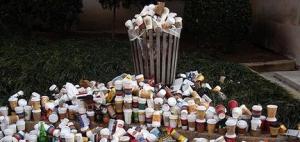
Australians have developed a love affair with coffee, and more specifically takeaway coffee.  Once upon a time we were a nation of tea drinkers and coffee was almost a special occasion drink.  Even more recently the norm was to go to a cafe and sit down with a cup of coffee.  However, the trend of grabbing a coffee ‘to go’ has become a national pastime and we are killing the oceans in the process.

Those innocuous paper cups are NOT recyclable, compostable or anything else.  They are rubbish, that at best ends up in landfill or at worst in the ocean.  This is because they are made of composite materials, including a layer of plastic.

The recent ABC television program, ‘War on Waste’ shone the light squarely on disposable coffee cups and the havoc they are creating.
2017-07-02 02

I am not a coffee drinker and fail to grasp what amounts to an addiction to coffee but you can still have your ‘caffeine fix’ without destroying the planet.

Simply take your reusable cup along to your favourite cafe and have it filled for you to take away.  Simple.  Easy.  We could very quickly eliminate disposable coffee cups.

Some cafes even offer a discount as an incentive to bring your own mug.  If your cafe is not willing to oblige you could vote with your feet and take your custom elsewhere as there are no shortage of cafes looking for your business.  Remember, conscious consumption can make a difference.

So, what is your coffee story?  Do you take a reusable cup for your coffee?  How it is received?  Do you get a discount?


Everything Good

1 Comment

Tonight I want to share a find for ‘Plastic-Free July’ which officially begins today.

2017-06-28 03

We recently discovered a local business on the Steve Irwin Way at Glasshouse Mountains.  It is called ‘Everything Good‘ but if you drive this way you probably know it simply as the fruit and vegetable stall between Glasshouse Mountains and Beerwah.

The unassuming frontage hides a treasure trove of fruit and vegetables, much of it locally grown and some organic.  The majority is unpackaged, too.  The tables at the front offer up a variety of punnets of flower, vegetable and herb seedlings.  If you head out the back there is an amazing nursery with a great range of healthy plants.

When we were here a couple of weeks ago I noticed some ‘Boomerang Bags’ hanging up behind the counter.  Each time we have shopped here I get some positive feedback from the staff about my tulle produce bags.  It is lovely to feel that we are among like-minded friends when shopping at ‘Everything Good’.

Today we had a longer conversation with the gentleman who runs the shop and it is obvious that he is passionate about limiting plastic packaging so he has definitely won my custom.

Although they do not have a website, the link near the beginning of this post will give you a little more information about this great business.  I noticed on this page a mention of recycling punnets and pots so I will definitely be chatting to him about returning punnets for reuse.

We grow some of our own fruit and vegetables but it is fantastic to have a local business where we can source unpackaged produce without a battle.  Congratulations to ‘Everything Good’.  May there be many more similar shops in the not too distant future.

Are you committed to reducing your consumption of single-use plastics during July and beyond?  What are your specific plans?

End of Financial Year

Leave a comment

It is almost the end of June and here in Australia that means it is the end of the financial year.  It is tax time and a busy time for many businesses.  My workload is a bit more than usual this week and it has been compounded by the fact that I was out of the office for 3 days last week at a conference.

So, there is not much time for taking photos or doing anything worthy of a blog post.

While I am busy at work you can enjoy these couple of photos from last week.  It is winter here at the moment but you would not know it.

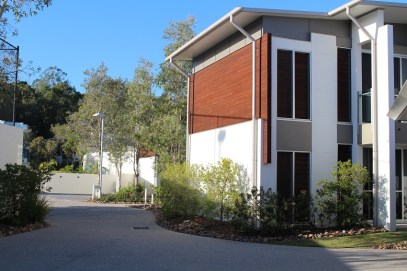
Some of the accommodation at the resort where we stayed for the conference.

2017-06-28 01

Sunrise at Noosa beach on the shortest day of the year.

2017-06-28 02.JPG

A friend took the sunrise photo and yes, the speck in the water is me.  The morning was cool but the water was beautiful.  Such a refreshing start to the day.

Don’t forget that it is almost July so it is time for another round of ‘Plastic Free July’.  My blog posts for the month will reflect that theme and focus on our commitment to eliminate single use plastic items as much as possible.  Will you join me in trying to make a difference?

2017-06-28 03


War on Waste

3 Comments

As I mentioned in a previous post, it seems that the recent ABC series has brought the issues of waste, landfill, over-consumption and single-use items into focus for many people who had previously not really given a great deal of thought to these matters.

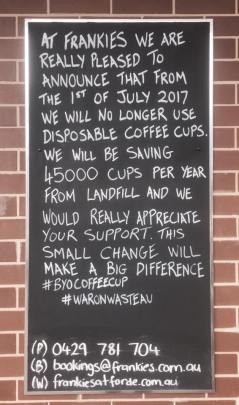
It is even more exciting to see some of the actions that are occurring as a direct result of this increased awareness.  One example is Frankies at Forde in the Canberra suburb of Gungahlin.  The photo below is from their Facebook page.  It would be great to encourage other cafes and coffee shops to do the same.

2017-06-06 01

Have you observed any other changes as a result of this program?

Zero Waste Shopping

1 Comment

As you probably know from some of my previous posts, I try to minimise the amount of packaging we accept when we are shopping.  Fruit and vegetables are relatively easy to find loose and I buy dry goods from bulk bins in my own bags and containers.

However, some other items are a bit more of a challenge.  Today I want to share what I bought yesterday.

At the Co-op I bought brown rice from the bulk bins in one of the tulle bags I made a few years ago.

2017-06-03 01

The next stop was the local IGA where I bought salmon fillets.  I handed over this plastic container, the staff member weighed it and then added the fillets.  The sticker is on the end of the container and I remove it as soon as I get home and the residue comes off fairly easily.

2017-06-03 02

The next stop was at the vet where I needed to get some more medication for our dog.  He only started this a couple of months ago and I was given 40 tablets in a small ziplock bag.  When I needed more I took the bag back to be refilled but was unsuccessful in my attempt to reuse it and ended up with a new bag.  This time I tried something different.  I took an old tablet bottle of my own (label removed) and asked if they could use that and label it.  The receptionist checked with the vet who said it was fine to reuse.  Now that the precedent is set and it is labelled I should be able to continue to do this on a regular basis.

2017-06-03 04

Our final stop was in a relatively new shop called ‘Healthy Homewares‘.  It was interesting to browse around and I ended up buying 3 different brushes.  All are made from natural materials, unpackaged and even the labels are cardboard and tied on with natural twine.  No plastic in sight.

2017-06-03 03

I am not always this successful when making purchases but it is certainly great when you can.

A Critical Mass

2 Comments

The Australian government continues to lag behind most of the rest of the world when it comes to any kind of action with respect to climate change.  I have often thought that any serious action would need to be driven by a groundswell of public opinion but despaired that it would ever happen.

For many years I have felt like I was swimming against the tide as I refused excess packaging, tried to avoid as much single-use plastic as possible and generally tried to reduce my carbon footprint as much as possible.  Gradually, I have seen an increase in groups and individuals trying to make a difference but recently this seems to have taken a definite upswing.

There even seems to be some interest in the mainstream media with programs such as ‘War on Waste‘.

2017-05-29 01oc

Are we reaching a point where there are enough voices to actually begin to make a difference?  What do you think?

Garden Notes – Raspberries and Rocket

2 Comments

We have fruit trees and a vegetable garden.  Some years the vegetables garden does better than others.  A lot depends on the weather and how organised I am.

This year I have decided that I will make a concerted effort to successfully produce more of our own food.  Since the hot summer is over and we finally have some moderate autumn weather I have made a start on planting.

2017-04-26 01

The lettuce and kale seedlings which I planted about 5 weeks ago are now thriving full-sized plants and we are enjoying plenty of fresh lettuce.  I planted red cabbage seedlings about 10 days ago and they are established and looking healthy.

2017-04-26 02

On the weekend I sorted through a pile of seed packets which I store in an airtight container in the refrigerator.  Many of them are expired but I decided that I had nothing to lose by planting them.

There are bush beans interplanted with the red cabbage. Coriander and rocket are in the freshly-dug strip in the background of the same photo.  I am excited to report that exactly 48 hours after planting them, the rocket seeds have germinated and I now have hundreds of tiny, two-leaved seedlings.  Other beds have carrot, red onion, peas and radishes.  If they all grow I will have a bumper harvest, if not I will try again with some fresh seeds.

Some seeds are best raised in seed trays before transplanting them.  These include broccoli, cabbage, cauliflower, celery and spinach.  Here they are on a temporary potting table which I created from a couple of sawhorses and a piece of pool fencing.  There is another piece of pool fencing over the top in an attempt to prevent the chickens from digging them up when they are free-ranging.

2017-04-26 03

Here is a close-up of the trays with their labels cut out of an old ice-cream container.

2017-04-26 04

Finally, I wanted to show you the raspberry canes on the left-hand side of the photo below.

2017-04-26 05

We have a substantial clump of raspberry canes from the original 4 canes that we planted about 3 years ago.  In an attempt to control the growth of these we have tried to contain them using star pickets and a couple of strands of wire.  When we dig up the canes which are beyond the designated area we will plant them in the vacant area beside the gate.  Our goal is to have a raspberry patch stretching from the front boundary to the gate and extending 600mm either side of the fence which forms part of the garden enclosure.

2017-04-26 06

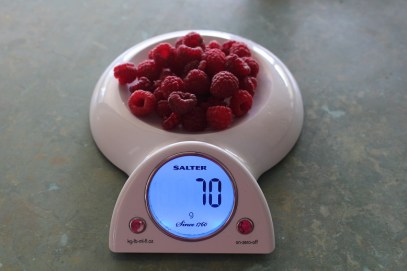
Many people are quite surprised that we can grow raspberries in our climate.  Ours are an autumn fruiting variety which are suited to our climate and we are very happy with the yield.  This year has been the best crop so far.  While we are not exactly inundated I am picking about 50 – 100g every few days at the moment and that is definitely enough to have for dessert with some ice-cream.

Growing our own food means that it is raised without pesticides and artificial fertiliser, it comes with no additional packaging and it saves us money.  What is there not to love?


The Last Drop

1 Comment

It is often difficult to extract the last of a product from the container using the regular method of dispensing.  However, there are ways of getting the best value from what you have bought and minimising the amount of waste.

Bottles of shampoo and tubes of toothpaste are classic examples of where there is often unused product which is discard.  Buying the largest bottle available is a good strategy because you come to the end of the bottle less frequently.  You can add a little water to shampoo, conditioner and laundry liquid bottles and get several more uses from them.

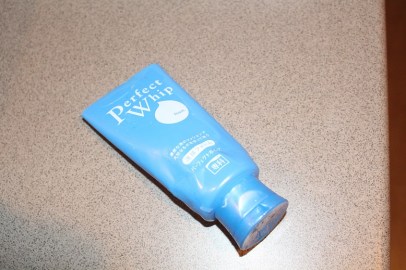
Tubes can be cut open to reveal more than you can ever hope to extract via the nozzle.  Here is a tube of face wash which I have cut the end off.

2017-04-23 01

This is not the face wash I usually use but it was left behind some months ago by a guest and I felt it would be a waste to just throw it out so a few weeks ago I decided to use it.  There was not a lot left in the tube but once I had squeezed out what I could I then unscrewed the lid and was able to get a bit more on the tip of my finger for several more days.

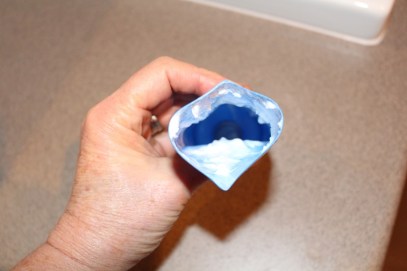
I cut the end off yesterday and discovered that there was quite a bit more.

2017-04-23 02

I estimate that there is at least enough for another week, possibly longer.  It is definitely a worthwhile exercise to spend 2 seconds to cut off the end of the tube rather than tossing all of this in the bin.

What do you do to make sure that nothing gets wasted?

Gobsmacked

2 Comments

Sometimes titles for my posts are really easy to choose and other times it is a little harder.  The title for today was immediately obvious.

According to the dictionary it means utterly astounded.  Yes, that really sums it up.

I and many, many others care about waste, saving the planet, using resources wisely and so on.  Some people are more passionate and devoted to their cause than others and all of us do our bit in different ways.  However, almost everyone makes some effort.

So, I was shocked yesterday when a young work colleague appeared with a large handful of good quality, plastic-coated paper clips and announced that someone was throwing them out.  I have a small box of these at work which I carefully use and re-use as files become obsolete and and put in the confidential waste bin for shredding and the large handful was more than my entire collection.

Worse was yet to come.  She returned with another handful and announced that there were ‘heaps more’.  My curiosity got the better of me and I went with her to check out the source.  I found that someone had thrown a bulk quantity of these paper clips into a green wheelie bin in another area of the office.

I quickly considered my options and located a reuseable shopping bag from another work colleague and we set about retrieving as many as we could.

These paper clips were loose and not contained so they would quickly and easily slip to the bottom of the bin which was already about 2/3 full.  We carefully scooped up handfuls and although we could not get them all, I feel that we probably saved about 90% of the discarded paper clips.

Here is the result of our efforts.  I apologise for the poor quality of the photos.

2017-04-22 01

Half a bag full of paper clips which I estimate weighs between 5 and 8kg.  It was so heavy when I lifted it that I carried it in my arms rather than by the handles because I was concerned that they would break.

Here is a close-up.

2017-04-22 02

I am still angry when I think about the appalling waste that this represents – both in environmental and economic terms.  The other question that bothers me, is why did someone come to have this many paper clips in the first place?

What did I do?

Firstly, I have no idea how these are going to be used, so at the moment, the bag is in the bottom of the small storage cupboard beside my desk.  It is just as well that I maintain minimal ‘stuff’ at work as well as at home so there was some spare space.

Secondly, I sent an email and photographs to the team who are responsible for sustainability on a corporate level.  I do not know who discarded these paper clips, nor do I want to, but the team who work hard to improve the sustainable credentials of the business need to know where there are problems and develop strategies to change this sort of behaviour.  I believe that this is an extreme but not isolated incident.

The next challenge is to work out how best to distribute these paper clips to people who will use and reuse them wisely.  What do you think?

Future-Proofing

2 Comments

Well, it is 3 days since my last post in which I shared our concern for the residents of north Queensland who were in the path of Cyclone Debbie.  What a 3 days it has been!

In 72 hours Cyclone Debbie has flattened the island resorts of the Whitsunday Islands and the adjacent mainland towns of Airlie Beach and Prosperine as a Category 4 cyclone before being downgraded as it moved inland.  Most of these areas are still without power or water and this situation is likely to continue for several more days, at least.

As predicted, the system then turned south east and headed towards the densely populated south-east corner of Queensland, including Brisbane.  For almost 24 hours we experienced substantial rainfall and some high winds – but of course, nothing like the conditions endured by those who were in the direct path of the cyclone.

2017-03-30 01.JPG

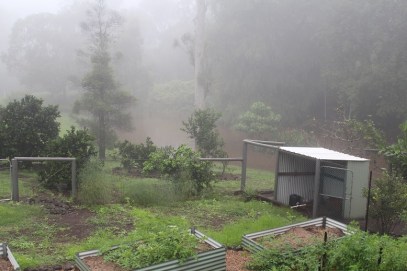
This is a view of part of our backyard this morning during a break in the rain.  The water in the background is not normally part of the landscape.  The ‘lake’ develops as the run-off from the mountain behind us pools in the low-lying part of our property.  It is not as extensive as some other occasions and will drain over the next few days.

The area where we live lost power about 2pm today and do not expect it to be restored until at least midday tomorrow.  There are currently thousands of consumers in Brisbane and the surrounding areas without power.  We are fortunate to be reaping the benefit of our decision to install a grid-connected battery system almost 18 months ago.  You can read about it here.

While it is great to be able to use our stored power each evening, the real benefit of the system is that it provides us with a power source in the event of a power failure from the grid.  Whether it is extreme weather or any other reason it is reassuring to know that we are not reliant on the grid for power.  This experience has confirmed the importance of a degree of self-reliance and we are extremely glad to be in this position.