No Thanks, Mr Newman

10 Comments

Yesterday was a clear, sunny day with not a hint of the political storm clouds gathering on the horizon.
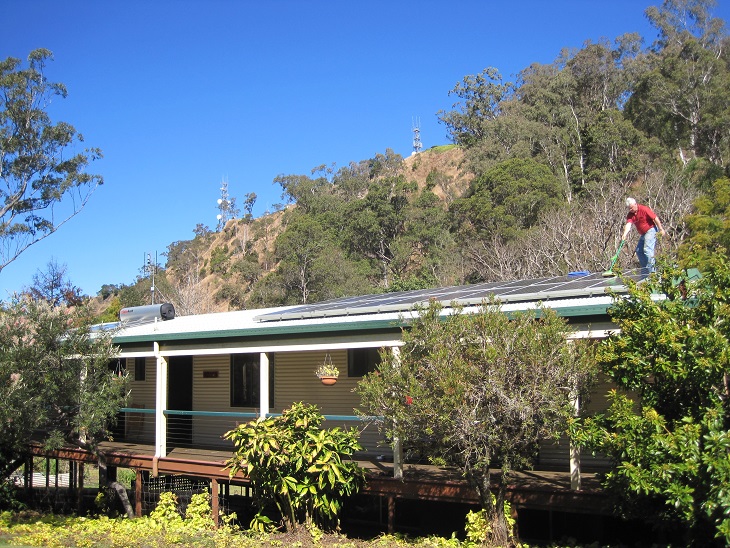
2012-08-05 02Our household has now been identified as one of the 180,000 households in Queensland who are the culprits responsible for soaring electricity costs.

“Roughly 180,000 households are benefiting with low power prices or getting cheques and well over 1.5 million are paying for that benefit to those people.”  The Courier-Mail understands 92,600 Queensland households pay nothing for power or get money back as a result of the generous solar feed-in tariff introduced by the previous Labor government.

Our house has a perfectly angled, north-facing roof with virtually no obstructions (trees, buildings) to the sunlight.

We have 20 solar panels (3.7kW system) which were installed in November 2010.  We chose this system because our research and modelling indicated that this would be more than enough to cover our current and future electricity requirements.  It also means that by being judicious in our power usage, we are able to export a significant portion of the power generated by our system back to the grid.

According to Mr Newman and his government, we are making money at the expense of others.  Rich greenies are wreaking havoc on the budgets of the poor people who are struggling to make ends meet.

  1. I believe that climate change is real and acknowledge that we all need to make an active contribution to reducing greenhouse gas emissions.
  2. I have a long-standing commitment to reducing our carbon footprint and do so by a variety of means.  Installing solar panels is just one of them.
  3. We funded the purchase of the grid-connected solar panels through a bank loan.
  4. The feed-in tariff was set by government to encourage people to invest in renewable energy sources.
  5. We chose a grid-connected system and pay all of the associated service charges to enable us to access power at any time of the day or night from the electricity grid.
  6. The feed-in tariff is contracted for 20 years (ending in 2028).

We will reconsider our position if any attempt is made to penalise those who have chosen to install grid-connected solar panels.  Our preferred option will be to move off-grid and we will invest in batteries to enable us to do this.  Therefore, the power generated by our solar panels will be used only by our household and none will be exported to the grid, resulting in a net loss to the electricity grid.

I do not deny that we do receive a monetary gain from the excess power that is generated and exported to the grid, however, all of the households who do this are providing a net gain of green power to the grid.  This is then ‘sold’ to other consumers who choose ‘green power’ with a premium cost, so it is only reasonable that we (the producers) should be paid a premium price (feed-in tariff) for our product.

The following information has been taken from here.  I cannot articulate these thoughts any more succinctly.

The market fails to take into account the true value and many benefits to the electricity network which arise from the adoption of renewable energy technologies embedded within the electricity grid. 

Solar PV, like other renewable energy sources, provide environmental benefits through reduced atmospheric pollution, and social benefits through industry development and job creation – for example through the installation of grid-connected solar systems, each with related economic benefit. 

When electricity is transmitted over a distance, some is lost through what is known as line loss. By installing rooftop solar arrays on houses, the electricity can supply not only the house on which it’s installed, but the surplus can feed other houses close by. 

Centralised power generation facilities also provide a relatively easy target for hostile parties and can be destroyed in natural disasters such as cyclones or fires. A decentralised network or grid connected systems allows for better energy security as it’s much cheaper and faster to repair a sub-station than it is to replace an entire plant.

It’s in the interests of our national security to decentralise power generation. 

During the summer months, it’s becoming increasingly common for blackouts to occur due to an overload of the mains grid.  It’s during these months that solar power installations can make their greatest contribution. 

A feed-in tariff for grid connected systems redresses these systemic market failures and threats and rewards solar electricity generation for its true value to the electricity market and wider society, by providing a financial incentive for the adoption of renewable energy.

So, to sum up I would like to say “Thanks, but no thanks” to Mr Newman.  Try to penalise me for choosing to make a positive contribution to the environmental footprint of this state and I will take my bat and ball (and solar panels) and go off-grid.  I am sure I will not be the only one.

Slow Living – May

10 Comments

Another month has flown by and it is time to review it in the spirit of the monthly round-up at Slow Living Essentials . {nourish*prepare*reduce*green*grow*create*discover*enhance*enjoy}

Here are the Slow Living categories:

{Nourish}  Apart from the everyday cooking I discovered that I could make very acceptable gluten-free cupcakes by simply substituting gluten-free flour for regular wheat flour.

Cupcakes

{Prepare}  I retrieved several kilos of cherry tomatoes from the freezer and made some more tomato sauce.  I gave some to Missy and restocked the supply in our pantry.

2013-06-03 02{Reduce}  When I look around our home I can see how much ‘stuff’ we do not have.  It feels so much lighter not to have excess in our lives.

Bookcase

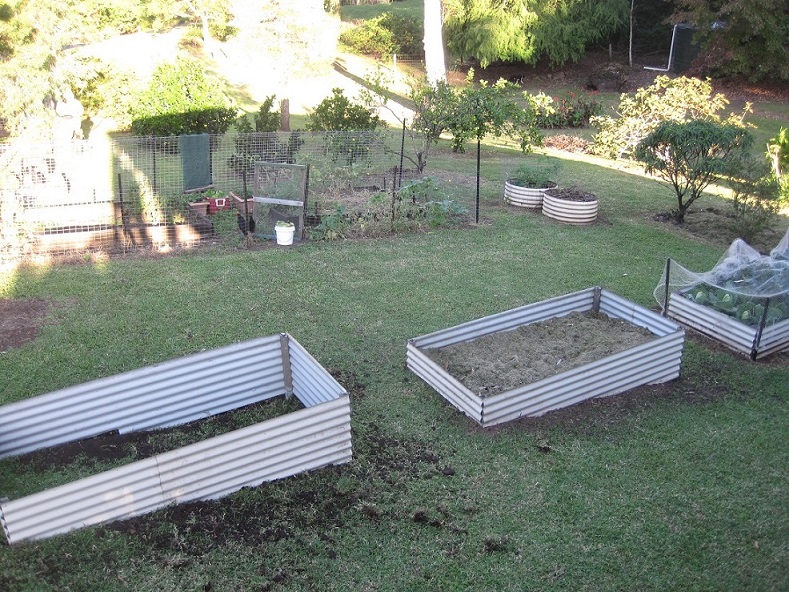
{Green}  Another raised bed made which brings the total to 3 so far.  These have all been created entirely with salvaged or leftover materials.

2013-06-03 05{Grow}  This is the time of the year when we harvest with seemingly almost no effort on our part.  The citrus are all producing luscious fruit – oranges, grapefruit and lemons as well as so many avocadoes that we can almost eat them at every meal.  We have planted more seeds and the bok choy seedlings are poking theirs through the soil.  We planted seed potatoes in another bed.

2013-06-03 06The harvest…………….

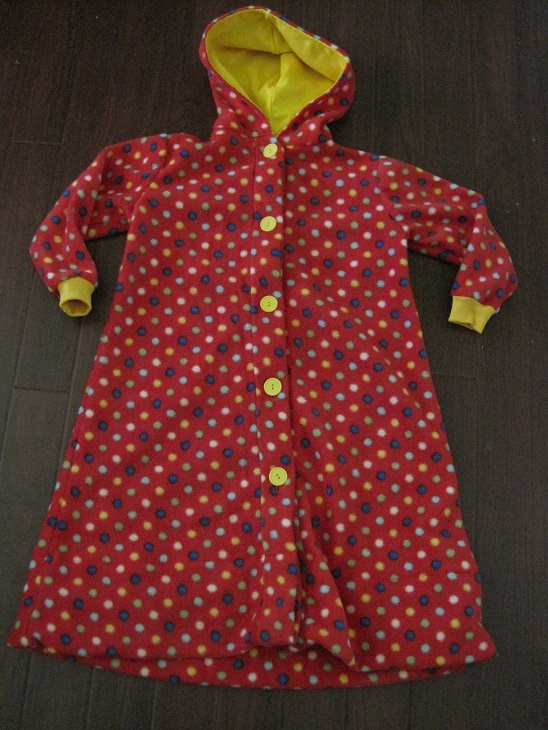
2013-06-03 07{Create}  I made a dressing gown for Miss O.

2013-05-14 03{Discover}  I am discovering some more family history snippets as I keep working on my family tree.

{Enhance}  We have applied to have our home included in the Sustainable House Day in September.  It was interesting to write the application and really think about all of the things that make our home sustainable.  Many of them are things we now simply take for granted.

2012-08-05 02I also made enquiries about joining the local Friends of the Library group.

{Enjoy}  We enjoyed having visitors.  Our daughter who lives in Melbourne was here for a weekend – she managed to tack it onto the end of a work trip so that was good.  We enjoyed her company and dined at a local restaurant one night.  Miss O came to stay for a few days before she went back to school after having had her tonsils removed.  She and I had lots of fun and you can read about it here and here.  Taking time to savour afternoon tea with friends is special.

Afternoon tea

Now I am off to check out some of the slow living blogs.

Til next month………..

Reprise

10 Comments

After reading the latest post from Living Simply Free I was inspired to resurrect the following post which I wrote almost 2 years ago.  There was supposed to be a follow-up post which never happened but I will put my mind to it in the next week or so.  Meanwhile, I hope you will find some value in Part 1.  I look forward to your comments.

The Journey So Far………..

I was reading this older post from Zero Waste Home the other day and it got me to thinking about how and when I came to be on the road to a more sustainable existence.  Unlike Bea, I did not have an overnight epiphany from a consumerist lifestyle to attempting zero waste.

A bit of history is probably the best way to start.  I was born a little over 50 years ago when Brisbane was really not much more than a big country town in many ways.  My parents did not own a car, milk was delivered in glass bottles, the greengrocer, fishmonger and baker called in with their produce for sale and supermarkets were still a relatively new innovation in Australia.  We had a wood stove in our modern home which was a mere 6 miles from the CBD.  We kept chickens and grew some of our own food.

As I grew up things changed.  The wood stove was replaced by an electric one, my mother shopped at the supermarket, my parents bought a car and a television.  Nevertheless, we grew up with an awareness that things were not upgraded just because there was a newer, more expensive model.  We were taught that possessions were not easily replaced and that it was important to take care of what you had.  All types of things were mended, repaired, re-purposed and re-used.  They were only thrown out when they truly reached the end of their useful life.

We had new toys but also appreciated the value of home-made.  I remember the excitement when our father made kites for us – from some timber dowel, brown paper (saved from the packaging of something), glue, string and pieces old old sheeting salvaged from the rag bag to make the ties on the tail of the kite.

I learned to knit and sew when I was quite young, although crocheting is something I have never really mastered.  In my teens I learned how to mix concrete as I helped my father.  No-one set out to teach me these things, they were learned by shared experience with my mother, father and extended family.

I believe that although there have been times when I have tended to consume more resources and be wasteful, the essence of who I am and what I believe in comes from my upbringing.

In the late 1980s, with 2 young daughters, I came to realise that there was no way that we could all continue to exponentially use more and more resources and expect that we and future generations could continue on that path.

We were living in Adelaide at the time and I became aware of a conservation group, Gully Environment Network, which was started by Clive and Gloria Bristow.  Gloria wrote, “Why Conservation” which was published in 1979, well before many people took any interest in conservation and environmental issues.  At the time that I met this amazing couple, they were campaigning against the introduction of wheelie bins (240 litre) in our local council area, arguing that the increased capacity (from the standard 55 litre galvanised bins) would encourage waste rather than reduce it.  It is ancient history that the wheelie bins became a fact of our lives but there is a 120 litre option.  However, the action continues.  The Wynn Vale Community Garden was another brainchild of Clive and Gloria.  Gloria was also instrumental in setting up the ReGen Community Op Shop.  The link will take you to the Facebook page where there are more links to articles from the local paper.   Gloria has consistently advocated and led the way with local and individual action rather than reports and studies.  I am proud to say that she has been my mentor in my path to tread more lightly on this earth and try to make a difference.

If you are still reading this missive, I applaud you.  I will write more on my sustainable journey another day.  Thank you for taking the time to read.

What are you doing to move towards a more sustainable future?  Who or what inspires you?  I would love to hear your stories.

Teamwork

4 Comments

What is teamwork?  Is it working together on the same project?  Doing different parts of the same task?  Performing separate but complimentary jobs?

Or is it all of the above?

Is there a clear division of labour  in your home?

I often hear people despairing because one or other partner does or does not do a particular chore to the ‘required’ standard.  Sometimes it is that they simply do not do a particular activity at all.

Although The Duke and I are both capable of doing pretty well any jobs, there are a couple of exceptions.  I have never mowed the lawn and am not about to start.  The Duke can iron but he does not offer to do the ironing.  I dislike loading the dishwasher and don’t usually make bread in the breadmaker.

Washing and drying dishes, preparing meals, shopping and gardening are probably the best examples of when we actually work side by side to achieve an outcome.

What about making plans, setting goals and handling finances?  Are these joint decisions or does one partner tend to take responsibility?

I have posed numerous questions here and would love to hear your thoughts.

Happy Harvesting

2 Comments

In a complete turnaround from yesterday, it has been a gloriously sunny day although quite cool and windy.  Miss O was delighted when she woke up to sun streaming in the window.

Apart from a trip into Maleny to go to the library and a short stint in the nearby playground, we have spent the day at home.  While I have been doing some paid work, my grand-daughter has happily entertained herself with some dolls and a dolls house which I received from Freecycle a couple of years ago.  There has been lots of chattering, singing and imaginative play going on.

While we were hanging out the washing, Miss O noticed some lemons on the tree and was keen to pick them.  We put on our gumboots and headed downstairs to spend some time in the garden.  The first stop was the chicken run to give the chickens the contents of the scrap bucket.

2013-05-23 01Next, it was time to collect the eggs. Only 2 today.

2013-05-23 02Quite a number of limes had fallen and there were a few grapefruit ripe but most of the lemons and oranges will be a bit longer before they are ready.  We collected up the rotten fruit and put them in the compost bin.  We took the extendable fruit picker and picked some avocadoes from high up in the tree.  No words can begin to describe the squeals of delight and, “Get it, get it!” as Miss O bounded through the leaf litter, offering encouragement to me as I wielded the long-handled picker.

Finally, I took her out to the front yard where the cherry tomatoes are growing wild and flourishing.  It was only a couple of weeks since I had picked 2 kg of tomatoes so I was not sure how many there would be.  However, there we plenty to keep us entertained and she was quick to point out to me that you do not pick the green ones and the squishy ones are no good.

Miss O was very keen to pose with her harvest.

2013-05-23 03We put all of the produce in the bucket and used the wheelbarrow to collect some more firewood from the shed.

2013-05-23 04The clear sunny day means that the night will be cold so I will light the fire soon as the sun has just about set.  We will bring the clothes in from the line and hang them on the airer in front of the fire to finish drying.

All in all, it has been another productive and successful day and it has been lovely to have a helper with whom to share the work and the harvest.

Growing Girls and Large Hems

2 Comments

It is easy to forget how quickly children grow.  I made this dressing gown for Miss O in June 2011.

2011-06-16 01By July 2012 I was writing about letting the hem down here.

Now it has been handed down to Izz and the hem taken back up.

2013-05-14 02A few weeks ago I took Miss O to Spotlight and chose the fabric for a new dressing gown.  It is red with black and white dogs on it.  She gave the princess, fairy and other girly fabric a glance but this is the one that caught her eye.  The fact that we have a Border Collie (black and white) may have influenced her choice.

New dressing gown

Once again, I have put a large hem on the gown and it is still quite long so I expect this one will easily last a couple of years.

2013-05-14 04Something as simple as a hem that can be let down is not an option on a ready-made garment but by making clothes you can customise them to suit your needs and generally extend their usefulness.

Some Reflections

Leave a comment

Today, the second Sunday in May is Mothers’ Day.

It can be a day of celebration, perhaps with your mother, your children or both.

It is also a day of reflection.  Time to think of those who cannot be with their mother.  This may be due to death, distance or estrangement.  Special thoughts for those who have outlived a child, suffered miscarriages or stillbirths or made the difficult choice to place their child for adoption.  Finally, but by no means least  are those who have been unable to conceive – much love and hugs.

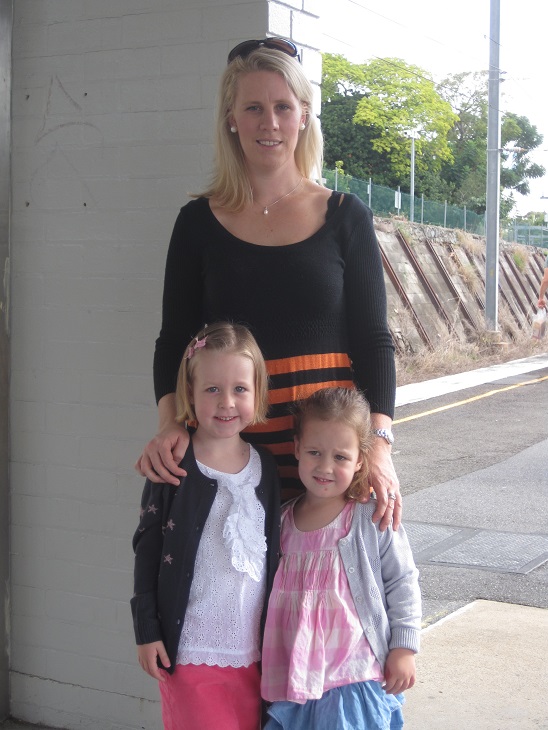
2013-05-12 01I was so blessed to spend the afternoon with my mother, daughter and two grand-daughters.  Times like this are to be cherished.

Thoughts for some of the special women in my life for whom this is a bittersweet day (in no particular order) – Pat, Tania, Suzanne, Cath, Patty and Susan.  Thinking of you all.

It really is a day for the sisterhood to reach out and care for all women – whatever their role – mothers, daughters, grandmothers, would-be mothers.

The Root of All Evil

8 Comments

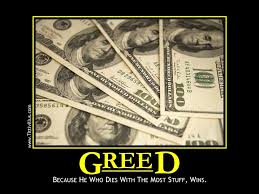
The saying goes that money, or more specifically, the love of money is the root of all evil.

Several things have prompted me to consider where we are headed as a society and my conclusion was that greed was the source of many if not most of our ‘problems’.  It was then that I remembered the saying and I guess greed and love of money are essentially the same thing.

2013-05-09 01It seems that we all want something for nothing – best paying job, cheap food, appliances/gadgets, accommodation.  We want to earn the most and pay the least.  We do not seem to value the effort in producing quality – hand -raised meat, organic food, quality garments and so on.

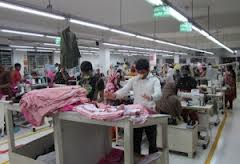
2013-05-09 02I started writing this post about a month ago.  Since then we have seen a factory collapse in Bangladesh with significant loss of life.  I was searching for information about that incident and found this article which shows that this event is far from being an isolated incident.

The recriminations and blame game go on between government, building owners and the corporations who outsource the manufacture of their garments.  Do you feel even a tiny pang of guilt about buying products that are made under these conditions?  Some say that if we did not buy the items produced in places like China and Bangladesh that these people would not have jobs.  Perhaps it would be better for them to have an economy based on sustainable practices that will enhance their way of life rather than being exploited in sweatshop conditions for the sake of us being able to buy a t-shirt for $5.

2013-05-09 03How do you reconcile what you buy with where it is manufactured and what the ‘real cost’ of it is?

The Circle of Life

4 Comments

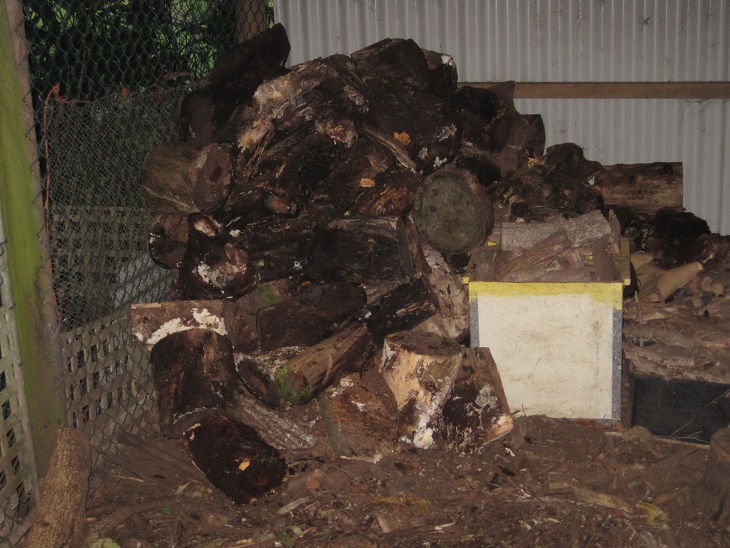
On Friday afternoon I moved some of the wood that had been left to season.  It is now in the woodshed and will be split and added to the the stash of firewood which we keep for the wood heater.

2013-04-28 01Once I disturbed the ground, I was surrounded by the chickens who were eager to feast on the grubs and other insects which were lurking under the wood.  They had a wonderful time turning over the soil and looking for tasty morsels.

2013-04-28 02This weekend we have built 2 more raised garden beds.  One of them is lined with heavy cardboard that I had been saving.  Then we piled in a thick layer of dry leaf litter followed by some lawn clippings.  We will add more soil, compost and probably some mushroom compost which we will buy locally.  These 3 garden beds have been constructed entirely from leftover and salvaged materials.

2013-04-28 03I started to think about how we manage to use and recycle much of what is generated on our property.

The wood is from tree limbs that have fallen or been lopped on our block.  These will be used to heat our home.  The resulting ash is added to the garden beds, either directly or via the compost.  Any charcoal is saved in a jar of kerosene to use as firelighters.  We grow fruit and vegetables.  The chickens provide us with eggs.  The scraps and peels are fed to the chickens.  The chicken manure is added to the garden beds.  Leaf litter and lawn clippings are added to the compost.

It is all part of a never-ending cycle.

Lest We Forget

2 Comments

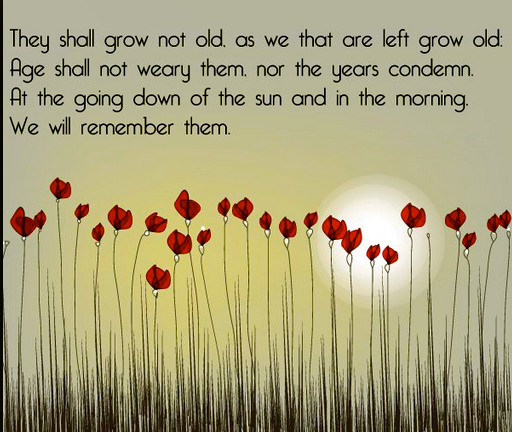
April 25th – Anzac Day.  This is the anniversary of the day in 1915 that soldiers from the Australian and New Zealand Army Corps landed at Gallipoli in their first major military action of World War I.

Since the earliest memorial services following World War I, Anzac Day has become a day to commemorate the service of all Australian and New Zealand military personnel.

Anzac DayThere are very few families in this country who have not been touched in some way by the military conflicts of the past 99 years.