Zero Waste

4 Comments

As a follow-up to my post from yesterday, I want to talk more about ‘zero waste’.  What is it?  Is it unrealistic?  Do you prefer an alternative term?  Does it really matter?

I have been tossing around these and other questions recently, so I thought I would share my thoughts with you.  I would love to hear how you feel about this, too.
2017-01-14-02

Zero waste is a phrase which first entered my consciousness about 5 years ago when I stumbled upon a blog by Bea Johnson.  More about that later, but apparently the term ‘zero waste’ was first coined in the mid 1990s.  This is what Wikipedia has to say:

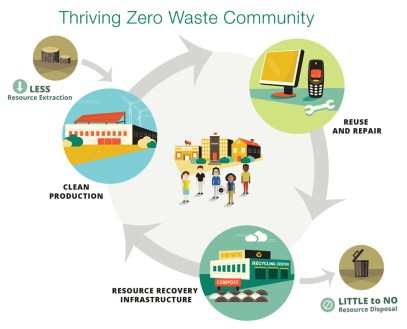
Zero Waste is a philosophy that encourages the redesign of resource life cycles so that all products are reused. No trash is sent to landfills or incinerators. The process recommended is one similar to the way that resources are reused in nature. The definition adopted by the Zero Waste International Alliance (ZWIA)[1] is:

Zero Waste is a goal that is ethical, economical, efficient and visionary, to guide people in changing their lifestyles and practices to emulate sustainable natural cycles, where all discarded materials are designed to become resources for others to use.

Zero Waste means designing and managing products and processes to systematically avoid and eliminate the volume and toxicity of waste and materials, conserve and recover all resources, and not burn or bury them.

Implementing Zero Waste will eliminate all discharges to land, water or air that are a threat to planetary, human, animal or plant health

Zero Waste refers to waste management and planning approaches which emphasize waste prevention as opposed to end-of-pipe waste management.[2] It is a whole systems approach that aims for a massive change in the way materials flow through society, resulting in no waste.[2] Zero waste encompasses more than eliminating waste through recycling and reuse, it focuses on restructuring production and distribution systems to reduce waste.[3] Zero waste is more of a goal or ideal rather than a hard target.[4] Zero Waste provides guiding principles for continually working towards eliminating wastes.[2]

Advocates expect that government regulation is needed[3] [2] to influence industrial choices over product and packaging design, manufacturing processes, and material selection.[5]

Advocates say eliminating waste eliminates pollution, and can also reduce costs due to reduced need for raw materials.

I mentioned Bea Johnson’s blog earlier.  You can take a look here.  Many people find her style and enthusiasm inspiring.  I do not.  She presents herself with an almost evangelical zeal which I find irritating and I believe that could turn away many who want to dip their toe in the water because they simply do not feel that they can measure up to her exacting standards.

The following quote is an excerpt from her bio on the blog:

This blog and my bestselling book, Zero Waste Home (available in 12 languages), have launched a global movement, inspiring thousands of people throughout the world to live simply and take a stance against needless waste.

Good on Bea for having the idea to grab a catchy slogan “zero-waste” and market the concept but I take exception to the notion that she somehow invented the idea of seriously refusing and reducing waste.  Her timing was perfect – by 2008 there was a critical mass, particularly in parts of the USA and Europe, of people who were prepared to hear her message.  There are people in Australia, and globally, who have been living and promoting this ideal every day for close to 40 years yet there is barely an acknowledgement of their contribution in paving the way to allow this 2008 epiphany to occur.

Meanwhile, through this blog I am trying to connect with other concerned individuals to gently encourage you to begin to make the changes which will reduce the waste produced by your household.

As with everything, people have taken zero waste and put their own spin on it.  For some, it is about eliminating all plastics.  For others it is rejecting single-use plastic items such as supermarket bags and straws.  Still others are keen to replace disposables with reusable alternatives – handkerchiefs instead of tissues, cloths instead of paper towel, lids instead of plastic wrap and so on.

Whatever you call it, there are a couple of things I would like to remind you about.

It is not a race to zero.
Start slowly or the changes will not be sustainable.
Remember the hierarchy – recycling should be the last resort – not the first option.
Perfection is virtually impossible due to the way our society and economy are structured.
Do what you can but don’t be disillusioned.
Choose your battles.

2017-01-14-01
And finally, any reduction that you and your family make with respect to what is sent to landfill is a good thing.

Personally, I am not terribly comfortable with the term ‘zero waste’ in the context that many people choose to use it.  I prefer something as simple as rubbish reduction.  However, our goal is the same.

It is easy to become complacent because you have cleverly managed to take you own glass jar to have it refilled with some type of foodstuff, therefore it is zero waste.  Unless you go to the farm and pick the vegetables or milk the cow directly into your glass bottle I do not consider it zero waste.  The dry goods in bulk bins travel to the shop in packaging (generally plastic-lined) and the milk is transported in some type of vessel.  Whilst this may sound extreme, I am simply trying to point out that a true zero-waste meal is a bit of a myth unless you are foraging for all of your food.

I believe that single-use plastics are a very good place to start reducing your rubbish.

2011-04-09 01

Take fabric/reusable bags or boxes to carry your groceries home.
Make or buy lightweight bags for buying fruit and vegetables.  Remove plastic film from your life.  If you have not got it you will find an alternative.
Wash and reuse (as many times as possible) any plastic bags you already have in your possession.
Consider your shopping list.  Look for items with less packaging or able to be bought in bulk.
Take you own containers when buying products that are not pre-packaged – meat, dry goods, deli items.
Look for loose fruit and vegetable produce rather than pre-packed.
Try growing even one or two vegetables or fruit depending on your location and living arrangements.

2016-09-19-02

What do you already do to reduce the amount of rubbish which your household produces?

What changes would you consider implementing in 2017 to reduce your waste even further?

A Particular Passion

4 Comments

During the holiday break I have had time to read and post in various groups and forums.  I participate to varying degrees in several groups.  I find that many of them have quite a narrow focus, sometimes to the exclusion of all else.

Some of the topics covered include:

Frugal Living
Zero Waste
DeclutteringMinimalism
Veganism
Upcycling
Buying Nothing New
Simple Living
Plastic Free Living

I dabble in all of these to some degree apart from veganism although we have reduced our intake of red meat to quite a modest level.

2017-01-04-02

At times it seems that I am not sufficiently passionate about any single topic, however, I feel that they are all inter-related and one aspect can support another.

2016-10-22-01
Hence, this blog contains posts which cover and wide range of topics and I hope you will find something of interest to you.

2016-10-08-02

Please let me know if there are particular topics which you would prefer to see more of or less.

2016-01-31 04

Return to Sender

2 Comments

I am on a never-ending quest to minimise the waste created by our purchases.  However, I regard the ‘zero-waste’ trumpeted by some as a somewhat false achievement.  Even if your purchase is transported home in your own bag, jar or basket it is almost certain that there was packaging, most likely plastic involved in getting the product to you.

Think about any product and trace it back to the source.  A good example is our free range eggs from our chickens.  At first glance they may seem to be ‘zero waste’ but, no, the grain for the chickens comes in a 20kg plastic bag.

So, one of the best things we can do is to try to buy things where the packaging can be re-used.  Remember, that re-use is far better than recycling.  I was reminded of a couple of examples where I can literally close the loop.

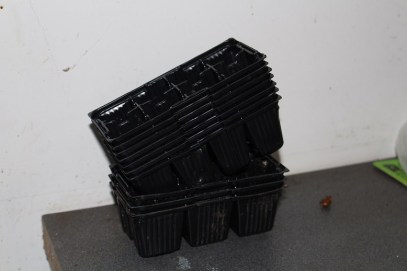
My ideal would be to grow food from seed but I am sufficiently honest with myself to realise that this is not often possible whilst holding down a full-time job.  So, I end up with plastic seedling trays but I was delighted to recently discover that these can be returned to the seller at the market for re-use.

2016-12-05-01

On another note, I buy my laundry and dishwashing liquid from a local manufacturer at a market stall.  The product is sold through retail outlets in 1 litre bottles, however, if pre-ordered from the market stall it is presented in re-used 2 and 3 litre juice bottles and I am even able to return those bottles when emptied.

2016-12-05-02

It is worth thinking critically about the source and packaging of your purchases to ensure that you have the opportunity to make informed choices.

Back to the Bin

6 Comments

Thank you to everyone who took the time to comment on my post about the kitchen bin.  Today I remembered to chop up some of the bacon scraps and put them out for the chickens.  I have not checked to see if they ate them but if they do I will gradually give them the rest over a period of time and that will be another thing that will not go in the bin.

When I next emptied my kitchen bin I took a couple of photos of the contents which I would like to share with you.

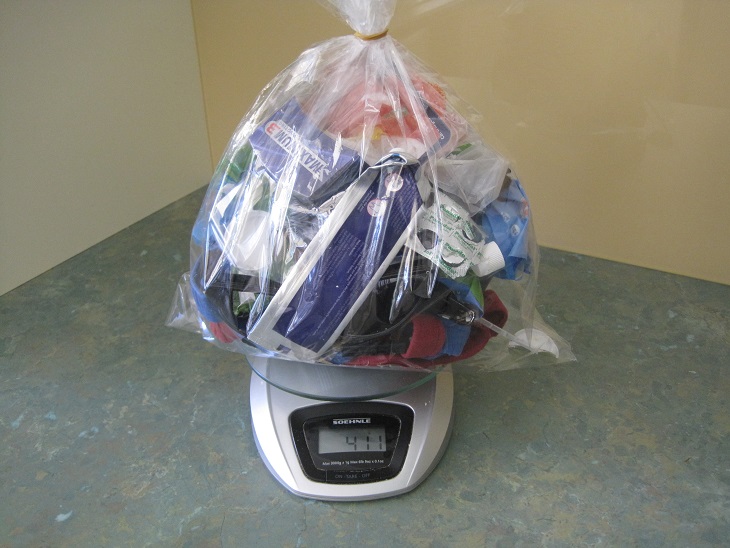
2012-08-08 01 This is what 2 weeks worth of rubbish looks like.  There are 2 adults in the household.  I placed it next to a dinner plate so you can get an idea of the size.

2012-08-08 02Here it is on the scales.  It weighed 411g.

So, what was in the rubbish bag for the week?  An empty toothpaste tube, a foil sheet from medications, a plastic bag from the carrots, plastic packaging from a block of cheese, packaging from razor blades, plastic bag from frozen peas and elastic from several pairs of worn-out underpants.  There were other items that I have not identified as well.

Next time I do this I will be a bit more specific about exactly what it contains.

Obviously our rubbish varies from week to week as some thing are only discarded a couple of times a year.  It is a worthwhile exercise to check what you are discarding each week as a way of considering whether you can change habits to reduce the amount of waste.

Zero Waste – Is It Really?

7 Comments

One of the things that I am really passionate about is waste – specifically packaging.  For many years I have worked hard to reduce what I bring into the house and while I am nowhere near the nirvana that is ‘Zero Waste’, I generally do a pretty good job.

Today we went shopping for various things.  One thing I bought was some sliced salami.  Whenever I buy deli meat from the supermarket or meat from the butcher I always take my own plastic container and ask them to put the meat directly into the container and to stick the price label onto the lid.  Most of the staff are really good and simply weigh the container before adding the produce.

2012-07-29 02However, sometimes it can be challenging and you have to constantly watch what is happening or otherwise you can be easily blind-sided.  We have had instances where my request was followed and then they wrapped the whole container in miles of cling wrap or put the meat in a plastic bag before putting it in the container – AARGH!!  Today the young girl clearly had no idea how to establish the tare weight of the container so she spread a plastic bag on the scales, placed the salami on it and then tipped it into the container I had provided.  I chose not to say anything as it only causes distress to all concerned.

Also, there was not enough sliced salami in the display so she got more from the coldroom  and sliced it.  The piece she retrieved was wrapped in clingfilm and this was removed, discarded and a new piece re-applied when she had finished slicing it.  The display trays are covered with cling film also.

So, by taking my own container and refusing plastic bags and outer wrapping, can I regard this as zero waste?

Buying dry goods from bulk bins creates the same dilemma because although you buy them loose from the bulk bin they have been decanted from some sort of packaging.  At least it is usually a large quantity such as 25kg of flour or sugar so there there is less packaging per kilo.

I still buy my cheese from both the supermarket or the local factory where I can get 2kg blocks but they are still wrapped in plastic.

2012-07-29 04When I buy fruit and vegetables I always make the choice to buy loose produce that I can put in my own tulle bags that I made even if it is more expensive than the pre-packaged option.  A good alternative is a Farmers’ Market, though you do have to check as some stalls do package things into plastic bags.  It is a matter of being committed and voting with your feet as to where and how you shop.

Yandina Markets photo

The only true zero waste shopping is what I can collect from my own garden – eggs, avocadoes, citrus fruit, spring onions and parsley was the haul for today.

2012-07-29 05Do you try to avoid packaging when you are shopping?  Does this influence where you shop and what you buy?

Edible & Spreadable

11 Comments

What do you spread on your sandwiches?  Butter, margarine, something else or nothing at all?

I used to buy margarine without giving it a great deal of thought, however, about 18 years ago I changed to spreadable butter that I make myself.  My reasons are several:

  • Eliminate non-recyclable waste (margarine containers)
  • Health benefits (margarine is simply a chemical cocktail)
  • Easier to spread than pure butter
  • Know exactly what the ingredients are

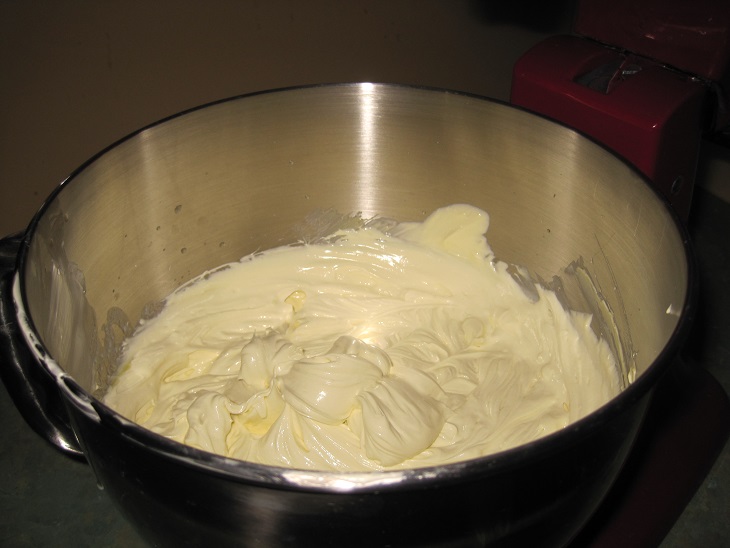
2012-07-15 01This is the recipe.

SPREADABLE BUTTER

500g butter
250ml oil
150ml water
3 tablespoons skim milk powder

2012-07-15 02Allow the butter to soften but not melt.  Beat butter using a mixer or food processor.  Combine the other ingredients in a jug and stir well to dissolve the milk powder.  Gradually add the mixture to the butter while continuing to beat.  Beat for another 1 – 2 minutes until white and creamy.  Spoon into containers and refrigerate.  This made almost 1500ml so it is really quite economical.  Actual costings would depend on the type of oil that you use.

2012-07-15 03I generally keep one container in the refrigerator and freeze the rest because we do not use a lot of butter and it will go mouldy/rancid if stored for long periods in the refrigerator.  I use Pyrex glass containers as they can be put in the freezer and I am constantly trying to minimise the amount of plastic that I use for storing food.

2012-07-15 04This mixture can be used instead of butter in cooking and baking.  The only exception I make is pastry as I prefer to use ‘real’ butter for that.

The type of oil you use is entirely up to you.  I choose to use locally grown and produced organic olive oil which I buy in bulk at the Co-op in Maleny.  Olive oil does have a distinctive flavour so you may prefer something more bland such as rice-bran oil.  I do not consider canola oil as an option as most of the commercial crop is genetically-modified and I prefer not to use foods that contain GM products.

This is not a totally zero-waste exercise but it is certainly better than all of the margarine containers that you would otherwise use.  I take my glass bottle to be refilled with oil.  The butter wrapper is used to grease baking trays or line cake tins and then goes into the compost.  I buy skim milk powder from Aldi in a 1 kg non-recyclable bag, however, I have recently discovered that I can buy this in bulk from Simply Good so will be doing that in the future.