Beyond the Bags

Leave a comment

The ban on single-use shopping bags seems to have garnered all of the media attention recently and not all of the publicity has been positive.  I have already had my say about some of the ridiculous commentary here.

Tonight I want to talk about moving beyond simply banning one particular type of single-use plastic bag and look at other things we can do.

Plastic-Free July is just around the corner so now is a great time to focus on the many single-use plastics that are still part of many people’s everyday lives.

2018-06-25 01

Here is a list of some of the single-use plastics which have combined to create enormous islands of floating waste in our oceans.

  • Bottled water
  • Soft drink bottles
  • Single use cups – styrofoam and plastic
  • Plastic plates
  • Plastic cutlery
  • Plastic straws
  • Balloons
  • Clingwrap
  • Ziplock bags
  • Plastic produce bags

All of these items have relatively cheap and easy alternatives/replacements.

  • Stainless steel drink bottle refilled with chilled tap water2018-06-25 02
  • Limit your consumption of soft drinks
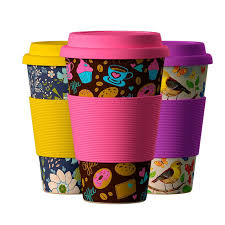
  • Carry your own reusable cup – Keep cups are suitable for hot drinks.  Seek out cafes who will accept your own mug.  Check out Responsible Cafes or just ask.
2018-06-25 03

  • At home – choose to use regular crockery.  When eating out – take your own reusable plate.
  • At home – choose to use regular cutlery.  When eating out – take your own reusable cutlery.
  • Skip the straw – ask for ‘no straw’ when ordering your drink.  If you really need to use a straw, consider buying a stainless steel or bamboo one.

2018-06-25 04

  • ‘Message’ balloons – consider a card or practical gift.  Decorative balloons can be replaced with paper decorations.  Balloon releases are just mass littering.  They do not go to heaven, they end up harming wildlife on land and in the oceans.  Plant trees or scatter wildflower seeds in memory of a loved one.
  • At home – replace clingwrap with a lidded container, plate on top of a bowl or beeswax wraps.  Refuse to purchase produce wrapped in clingwrap.  Buy it unwrapped.


2018-06-25 05

2018-06-25 06

  • Ziplock bags – use lidded containers.  If you have ziplock bags, use them multiple times – they can easily be rewashed.
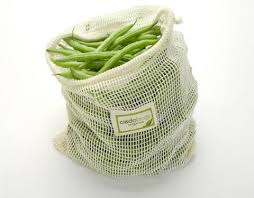
  • Plastic produce bags – buy or make your own produce bags for buying fruit and vegetables.  Tulle or mesh curtains work really well.
2018-06-25 07

As with any change, it is probably best to start with a couple of items and work from there.

What will you commit to changing for Plastic Free July?  Make it a new habit that you can carry forward into the future.  Then build on your achievement with other changes.
2017-06-28 03


The Bag Ban

2 Comments

I really wish I did not feel compelled to write this post and I apologise in advance to those readers who live in jurisdictions not affected by the impending plastic bag ban in Queensland.

2018-06-21 01

It seems to have generated some of the most ridiculous comments I have heard in a long time.

I offer the following observations.

Lightweight plastic shopping bags have not been around forever.  They have been in use in Australia for less than 50 years.

Remembering to take your reuseable bags is as simple as remembering to take your purse and keys when you go shopping.

The ban is about the lightweight carry bags only – not the thicker plastic bags which some supermarkets may choose to sell, nor the flimsy plastic bags for produce.  However, you can choose to refuse these too.  Bring your own reuseable carry bags – fabric ones are best.  They are strong, durable and can be washed as often as required.  You can also buy or make lightweight produce bags for fruit and vegetables.

2017-01-25 01

You do not need supermarket carry bags to line your bin.  Rather than re-invent the wheel please read this post.

Instead of railing against the fact that supermarkets are profiteering, that the ban will not reduce plastic use, that you will not have a bag to line your bin, that other plastic bags are still available and so on, let us use this as a real opportunity to take a leap forward in moving away from a range of single-use plastics.  We do not have wait until change is legislated and forced upon us.  Take the lead and make a difference now.

The ban on lightweight carry bags should be just the beginning.  Plastic Free July looms on the horizon so tomorrow I will address some of the other single-use plastics that we should be campaigning to eliminate.

2017-06-28 03

Do you have a bag story?  Please share in the comments.


Plastic-Free July – All Wrapped Up

1 Comment

Well, July is over and that means Plastic-Free July has come to an end for another year.

However, Plastic-Free July is much more than simply a month of denial.  It is an opportunity for us all to challenge ourselves to reduce our use of single-use plastics and to continue new habits well beyond 31st July.

2017-06-28 03

I chose to renew my efforts to refuse plastic straws. I do not often have a drink when I am out but I made a conscious decision to ask for my drink without a straw whenever I was ordering.

The highlight was tonight when GMan and I went to the local tavern in a small village near us for dinner.  We went to the bar to order our drinks and I ordered a lime and soda.  I was asked if I would like ice – yes, please, lime cordial as well as fresh lime – no, thanks and finally, as the glass was filled – would I like a straw?  Of course, my response was no, thanks but I also pointed out that I was delighted to actually be asked.  I felt that this gives validity to those of us who choose the ‘no straw’ option.  The waitress then asked if I didn’t like drinking from a straw and I replied that I chose not to use one as it is single-use plastic and most often ends up in the ocean.  I then pointed out that it was a perfectly reasonable thing to do because no-one expects that my husband will drink his beer with a straw!  I was excited by her reply of, “You know, I’ve never really thought of it like that, but you are right”.  Another seed is sown…………

Did you participate in Plastic-Free July?  Are you trying to reduce your use of single-use plastics?

Please share your story.

Seasonal Produce

1 Comment

There are many good reasons to eat what is in season where possible.  Food miles are reduced if you eat local seasonal produce.  It is more likely to have been picked ripe and have better flavour.  An abundance of a particular crop will invariably see the best prices for the consumer.

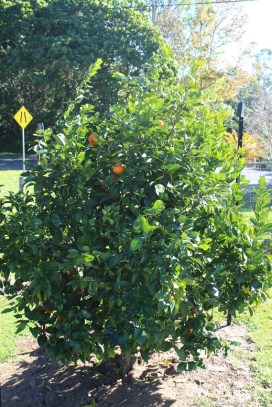
Most of all though, if you only eat items that are in season you will appreciate the wait for those crops which only bear at a particular time of the year.  Like the first sweet bite of a new season mandarin.  In our climate we pick fruit from our mandarin tree during June and July which are our winter months.

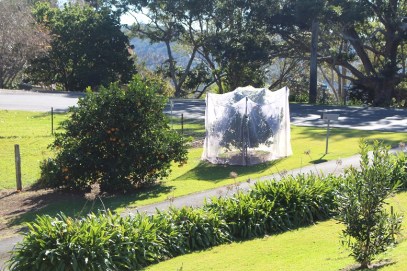
Once the fruit are ripening I have to cover the tree to protect the fruit from the local scrub turkeys.

2017-07-30 01

You can also see one of the orange trees next to the netted mandarin.

This afternoon I removed the netting and picked the last of the fruit.

2017-07-30 02

We have picked a lot of mandarins over the past month or so but these are the last 30 of them.

2017-07-30 03

We will savour these fruit as we know it will be another 10 months before the next crop is ripe.  In the meantime, there will be plenty more seasonal delights as the months roll by.  Imagine if I could eat these all the year round.  They would no longer be anticipated longingly and the delight of that first burst of delicious flavour would soon become ho-hum.

We are fortunate because we live in a temperate climate so many crops can successfully be grown during most months of the year.  However, seasonality still exists for the citrus trees, raspberries, mangoes, passionfruit and avocadoes.

What is in season at your place?

This was our glorious winter day here today.  No, it has not been photoshopped – the sky really is that blue.

2017-07-30 04


10 Days

Leave a comment

Yes, it is 10 days since my last blog post.  There is no good reason – I just took a break.

I think the biggest news (in Australia) in the past couple of weeks has been the announcement by Woolworths that they will stop using single-use plastic bags.  This was closely followed by Coles announcing that they would do the same.  Here is a news report.  I have not commented on this announcement so now is probably as good a time as any.

2017-06-28 03

“What a great initiative” was my my immediate thought, especially in the midst of Plastic Free July.  Perhaps the movement was really starting to gain some traction with mainstream consumers?

My optimism was short-lived as I began to hear and read various responses.  In fact, despair would have been a more accurate description of my mood over the following days.

Here is a round-up of the sort of comments that came to my notice:

  • It is only so they (supermarkets) can sell more heavy-duty plastic carrier bags.
  • Green bags are made from a plastic-based fabric – you have to use them 347 times to make the impact less than the single-use plastic bags.
  • What will I use to collect dog poo when out walking?
  • Research shows that the sale of bin liner bags has increased in those states that have completely banned single-use plastic bags.
  • What will I use to line my bins?

Seriously??

It is evident that many, many people have long way to go before they understand the impact of the millions of plastic bags which are produced every year and used only once.  They also do not appear to be prepared to adjust their lifestyle even slightly.

So, how do you counter these and a million other ill-informed comments?

The first and simplest thing is to consider investing in some strong fabric bags that do not contain plastics.  I can assure you that these will last for many, many years and can be repaired as necessary.

2017-07-04 01

Work towards generating less waste so that you have a reduced need for bin liners.  Purchasing larger packs, from bulk bins, unwrapped, using your own produce bags will all assist in reducing the amount of packaging waste.

Take more care with grocery shopping and buy only what you will actually use.  Remember, first world countries such as Australia, the USA and UK discard around 25% of all food produced.  Make sure you are not part of this dreadful statistic.

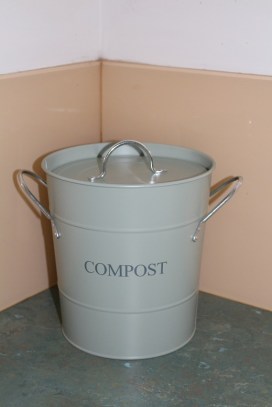
Consider composting food scraps to reduce the amount which you currently send to landfill.  Even if you do not have access to a backyard there are numerous systems available which can be used by people living in apartments.  Additionally, there are opportunities to connect with people who may be happy to take your scraps for their compost system or search for a community garden in your area.  Online connections are invaluable in the 21st century for developing relationships which are mutually beneficial.  One such example is Spare Harvest which is building a sharing community for excess produce, plants and garden resources.

img_6057

Small bins that do not contain wet food scraps can be lined with newspaper.  So, the naysayers point out that not everyone gets the newspaper anymore!

The real point of this post is to encourage everyone to take a positive, solution-based approach to change.  We need to be looking for innovative ways to reduce our environmental footprint rather than railing against any change which may happen to impact our wasteful lifestyle.

I live in a semi-rural area and our local town has a Woolworths and IGA supermarkets as well as a selection of independent retailers.  Almost all of these businesses routinely provide plastic bags for purchases.  I believe that the impending phasing out of plastic bags by the retail giants can taken up by all retailers and set a precedent by making Maleny plastic bag free.

I intend to promote this idea and encourage others to become involved.  My first strategy will be to contact the IGA supermarket and ask them to match the Woolworths ban on plastic bags.  I am also looking into the Boomerang Bags project which would be a perfect way to introduce people to the options available to fill the void left by the removal of plastic bags.


Bad vs. Worse

5 Comments

You would think that a single-use plastic take-away food container would be the last thing I would post about during Plastic-Free July.  Bear with me while I explain.

During the week there was a meeting at work which I was not involved in but this was some of the leftover lunch catering.  At the end of the day someone mentioned that if anyone could use the leftovers to please take them.  I am one of the last to leave the office so I had quite a pile to take with me.  The first stop was to leave a tray of sandwiches and wraps at the park for some of the homeless who are often nearby.

2017-07-15 01

This container had not been opened and contained a mix of pumpkin, onion and baby spinach.  It seemed to have a seasoned oil dressing on it.

This morning I decided to make a vegetable curry.  The pumpkin chunks had not been peeled so I removed the skin.  I know that it is edible, however, I choose not to do so.

2017-07-15 02

I fried a couple of small chillies (diced) and some curry paste, added green beans and capsicum (bell pepper), some coconut cream and finally the pumpkin and spinach.

2017-07-15 03

This was our dinner which I served with some brown rice.

So, I have acquired a plastic container.  However, I saved perfectly good food from landfill.  The container will be used many times over.

I also salvaged some fruit from the same event.  The container on the left is my lunchbox which I filled with fruit that was on skewers (kebab-style) and the other container was provided by the caterers.  This is now in my recycling bin.

2017-07-15 04

I put all of the fruit in the blender along with some frozen pineapple, passionfruit and mango from the freezer.  This made enough for 4 large semi-frozen fruit smoothies.  Here is mine which I had for breakfast.

2017-07-15 05

I could have refused to have anything to do with this excess food because of the plastic waste, however, I chose to take responsibility for it and use the food as well as doing the best I can with the plastic.  Much better than it all ending up in landfill.  Do you agree?


The Big 4 – Part 2

2 Comments

Following on from my previous post about coffee cups, the next item on the list is bags.

Bags really fall into 2 categories in my opinion.  The first is carry bags – from the supermarket, other grocery stores as well as department stores and specialist boutiques.  There are reusable ‘green’ bags which are only marginally better than the single-use plastic bags that they are supposed to replace.  They are still made from plastic and do not have a long life as they are prone to tear.  I have a selection of bags that I use which have come from a variety of sources.

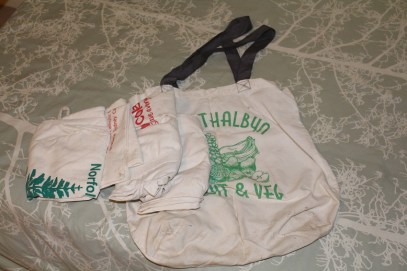
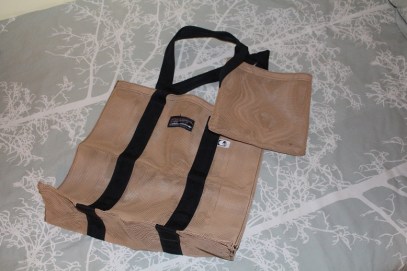
Here are some the calico ones including the one which has had the handles replaced.  You can read that story here.

2017-07-04 01

This one was a gift that my sister brought back for me from Alaska.  They were made in the town she visited.  It is sturdy and folds up into its own pocket for easy storage.  Yes, it is plastic but I believe it will last forever.

2017-07-04 02

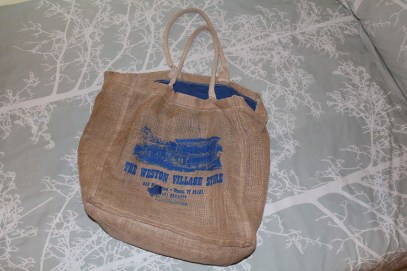
Finally, this one is my go-to bag every time I leave the house.  It is looking a bit the worse for wear after almost 5 years of constant use.  I bought it in Vermont when we visited the USA in 2012.  It was plastic-lined – fused onto the inside of the hessian but when the plastic began to break up, I removed it all and sewed in a new cotton lining.  The project is detailed here.

2017-07-04 03

The second type of single-use plastic bags are produce bags – the flimsy ones that you find at the greengrocer or the fruit and vegetable section of your local supermarket.  Apparently, reusable alternatives can be purchased from various Etsy sellers and also on Amazon but I simply chose to make my own from some leftover tulle that I had at home.  They are very easy to make with very basic sewing skills.  You could really use any fabric but I find the tulle is perfect because it allows for the cashier to identify the produce and because they weigh virtually nothing, I do not have to worry about tare weight.  The fabric does not fray so there is no need to worry about finishing the edges.  I also chose not to worry about drawstrings or ties as I find there is simply no need.  Remember, the plastic ones are just a bag with no added extras.

2017-07-04 04

I also carry a folded Ecosilk bag which I use on the rare occasions that I make clothing purchases.

New bag

There are other opportunities for refusing plastic bags but if you are starting out, I would strongly suggest that you begin with reusable carry bags and produce bags.  This will make an immediate difference.

Do you use your own bags?

The Big 4

3 Comments

When it comes to Plastic Free July and reducing your single-use plastics for the long-term good of the planet in general and the oceans in particular, there are 4 major culprits.

2017-06-28 03

Although they are the worst offenders, I think it is relatively easy to make changes to eliminate many of them.

In no particular order they are:

Coffee cups
Bags
Straws
Bottles

Why are they regarded as the biggest problems?

  1.  Volume – there are just so many used every single day.
  2.  Only used once in most instances.
  3. Lightweight – so they easily become unintentional litter which ends up in waterways and ultimately in the ocean.
  4. Unnecessary – there are easy alternatives.

What do you currently do and what can you change to reduce your usage of these plastic ‘nasties’?

I will address one of these items each day and today I will begin with coffee cups.

Australians have developed a love affair with coffee, and more specifically takeaway coffee.  Once upon a time we were a nation of tea drinkers and coffee was almost a special occasion drink.  Even more recently the norm was to go to a cafe and sit down with a cup of coffee.  However, the trend of grabbing a coffee ‘to go’ has become a national pastime and we are killing the oceans in the process.

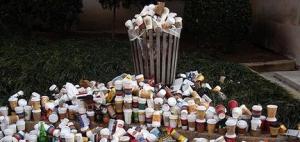
Those innocuous paper cups are NOT recyclable, compostable or anything else.  They are rubbish, that at best ends up in landfill or at worst in the ocean.  This is because they are made of composite materials, including a layer of plastic.

The recent ABC television program, ‘War on Waste’ shone the light squarely on disposable coffee cups and the havoc they are creating.

2017-07-02 02

I am not a coffee drinker and fail to grasp what amounts to an addiction to coffee but you can still have your ‘caffeine fix’ without destroying the planet.

Simply take your reusable cup along to your favourite cafe and have it filled for you to take away.  Simple.  Easy.  We could very quickly eliminate disposable coffee cups.

Some cafes even offer a discount as an incentive to bring your own mug.  If your cafe is not willing to oblige you could vote with your feet and take your custom elsewhere as there are no shortage of cafes looking for your business.  Remember, conscious consumption can make a difference.

So, what is your coffee story?  Do you take a reusable cup for your coffee?  How it is received?  Do you get a discount?


Everything Good

1 Comment

Tonight I want to share a find for ‘Plastic-Free July’ which officially begins today.

2017-06-28 03

We recently discovered a local business on the Steve Irwin Way at Glasshouse Mountains.  It is called ‘Everything Good‘ but if you drive this way you probably know it simply as the fruit and vegetable stall between Glasshouse Mountains and Beerwah.

The unassuming frontage hides a treasure trove of fruit and vegetables, much of it locally grown and some organic.  The majority is unpackaged, too.  The tables at the front offer up a variety of punnets of flower, vegetable and herb seedlings.  If you head out the back there is an amazing nursery with a great range of healthy plants.

When we were here a couple of weeks ago I noticed some ‘Boomerang Bags’ hanging up behind the counter.  Each time we have shopped here I get some positive feedback from the staff about my tulle produce bags.  It is lovely to feel that we are among like-minded friends when shopping at ‘Everything Good’.

Today we had a longer conversation with the gentleman who runs the shop and it is obvious that he is passionate about limiting plastic packaging so he has definitely won my custom.

Although they do not have a website, the link near the beginning of this post will give you a little more information about this great business.  I noticed on this page a mention of recycling punnets and pots so I will definitely be chatting to him about returning punnets for reuse.

We grow some of our own fruit and vegetables but it is fantastic to have a local business where we can source unpackaged produce without a battle.  Congratulations to ‘Everything Good’.  May there be many more similar shops in the not too distant future.

Are you committed to reducing your consumption of single-use plastics during July and beyond?  What are your specific plans?

End of Financial Year

Leave a comment

It is almost the end of June and here in Australia that means it is the end of the financial year.  It is tax time and a busy time for many businesses.  My workload is a bit more than usual this week and it has been compounded by the fact that I was out of the office for 3 days last week at a conference.

So, there is not much time for taking photos or doing anything worthy of a blog post.

While I am busy at work you can enjoy these couple of photos from last week.  It is winter here at the moment but you would not know it.

Some of the accommodation at the resort where we stayed for the conference.

2017-06-28 01

Sunrise at Noosa beach on the shortest day of the year.

2017-06-28 02.JPG

A friend took the sunrise photo and yes, the speck in the water is me.  The morning was cool but the water was beautiful.  Such a refreshing start to the day.

Don’t forget that it is almost July so it is time for another round of ‘Plastic Free July’.  My blog posts for the month will reflect that theme and focus on our commitment to eliminate single use plastic items as much as possible.  Will you join me in trying to make a difference?

2017-06-28 03