Mending a Mop

1 Comment

I have a squeezy mop with a foam head which I have owned for a number of years.  I use it relatively infrequently as sometimes I find that getting down on my hands and knees and washing the floor is the best option.  Nevertheless, the foam head really needed replacing but of course the matching size did not appear to be available.  This would have entailed buying an entire new mop which I find objectionable – both for the unnecessary cost and waste.

So, I bought a jumbo sponge for the princely sum of $1.90 and set about replacing the sponge.  The first step was to remove the plastic backing pieces from the existing head.  These are used to attach it to the mop.  I scraped most of the glue off it.

2020-02-25 01

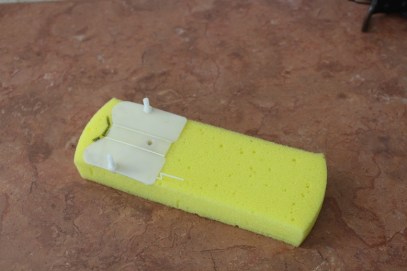
The new sponge was quite thick so I sliced it in half to have enough for 2 replacement sponge heads.  Then I used the old sponge as template to trim the sponge to the correct size.

This is the glue which I chose to use to attach the plastic backing plates to the new sponge.  I have not used it before but it was easy to handle and worked well.

2020-02-25 02

I marked the position of the the backing plate, applied the glue and gently clamped it for a couple of hours.

2020-02-25 03

After 24 hours I checked the position for the second backing plate and repeated the procedure.

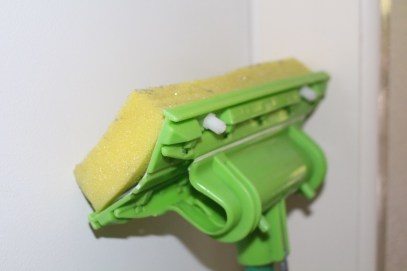
Once the glue was thoroughly set I replaced it on the mop and put it to use.

2020-02-25 04

The new mop head is working successfully.

What We Have

1 Comment

Every day there are multiple instances where we simply use what we have and think nothing of it.  Tonight I want to share a few examples of how we use what is available and minimise buying new items.

About 10 years ago I scored a small rainwater tank on Freecycle.  It had some rust spots and was no longer suitable for collecting rainwater but I had other plans.  GMan cut it into 3 sections which we have used variously for small, raised garden beds and compost heaps.  You can see them in some of the photos in this early blog post from 2011.

Over the years they have continued to rust and deteriorate a bit more and when GMan moved one recently, he declared that it was at the end of its useful life.  However, on reflection, we decided that if we cut the worst of the rusted edge off it would be a bit shallower and would make a perfect herb garden.

The next trick was to find the best location for it.  Ideally, it would be relatively close to the house for easy picking.  After some discussion, we decided to remove the chilli bush in the corner of the vegetable garden area and place it there.  We have two other very prolific chilli bushes so removing this one was not a problem.  I removed all of the ripe chillies and added them to the bag of chillies in the freezer.

With the bush removed, it was time to position the cut-down tank.

2020-02-18 01

The next job will be to fill it with soil and select what to plant in it.

Barely 2 months ago we had a Himalayan ash tree beside our driveway lopped.  As you will see from the hyperlink, it is regarded as environmental weed where we live in southeast Queensland.  The main tree and its multiple suckers had covered quite a large area and we immediately planted a selection of native shrubs and small trees in its place.  One of these is a lovely grevillea which has grown very quickly but the 3 main branches were drooping badly.  So, we decided that the best course of action was to create an enclosure with stakes that would help to support it until it develops enough strength of its own.

2020-02-18 02

The straps connecting the stakes are some old webbing from the seat of an old armchair that GMan recently dismantled.  I stapled them to the stakes using an upholstery staple gun that has been lurking in my craft cupboard for many years.

Here is another garden project that made the most of what we had.

I needed a table for potting and planting seeds so we created this one a couple of months ago and it has proved to be very successful.

2020-02-18 03

We used an old bed frame and the slats which had previously been removed were replaced with some wire which we attached to the frame using fencing staples.  A couple of timer crossbars allowed the attachment of a pair of metal legs.  These had been salvaged from a table that my father had made many years ago.  The wire top allows for easy watering and drainage while the location on the southern side of the house gets plenty of light and some sun while still being reasonably sheltered.

The final photo is not something we had but something we were given.
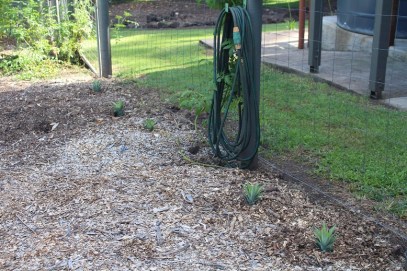
2020-02-18 04

GMan planted these 5 new pineapple tops along the fenceline of the vegie garden.  Thanks, Sandra and Glenn.  We are looking forward to watching them mature and hopefully produce some delicious fruit.  It will entail being patient as pineapples take about 18 months to grow.


Share the Joy

1 Comment

On two occasions recently, I have been able to pass along items that are not of use to me.

This is slightly different to decluttering because I never intended using either of the items concerned.

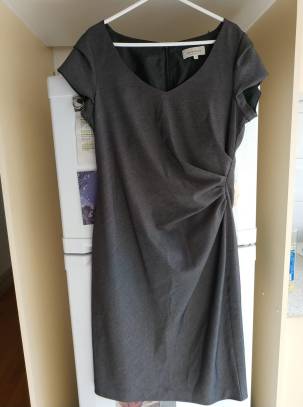
The first was when we were in Melbourne and I was having a good look around a large suburban op shop.  I found a Veronika Maine dress.

2020-02-15 01

While I have never owned any Veronika Maine clothing, I do know that they are good quality and it was made in Australia.  I knew that a size 10 would not fit me nor did I need a dress which would be totally at home in a corporate work environment.  So, I left it there even though it looked perfect and was priced at a relatively tiny $9.  After several hours of thinking about this dress, I decided to write a post for a Facebook group.  This group is simply a gathering of like-minded female friends, some of whom I know in real life.  I offered to buy the dress and post it (if required) if anyone was interested.  Sure enough, someone was keen and the dress is now in regional NSW with a new owner.

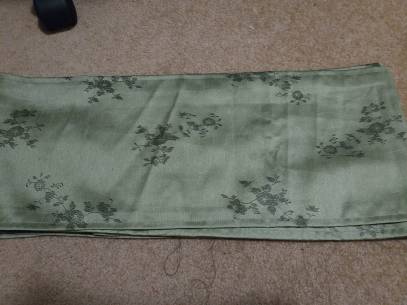
I am part of a small group in my local town who make Boomerang bags.  We regularly receive bags and boxes of donated fabric from a variety of sources.  Sometimes these include fabric which is not suitable for making the bags and we generally try to repurpose it in some way.  However, I was sorting through some fabric yesterday when I came across several pieces which defeated me when it came to thinking about how it could be used.

2020-02-15 02

It is a silky type of material with a floral pattern on it.  Most intriguing was the fact that is had been cut into long strip about 20cm wide and up to 6 metres in length.  This rendered it unusable for making any type of garment.  Once again, I offered it to my online group of friends for the cost of the postage.  Lo and behold, someone was very keen and the parcel is currently en route.  I will look forward to discovering what crafty project this will be used for.

The alternative was to send it to an op shop but I fear that it would have landed in the ‘too hard’ basket and subsequently in landfill.

I have found that it is worth spending a little extra time and effort to find someone to pass things on to directly.


Crazy Corn

3 Comments

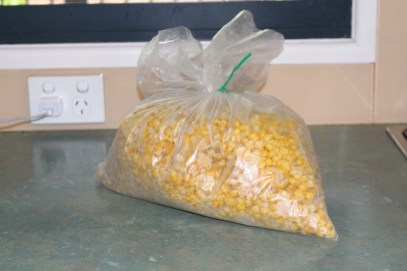
We were away for 4 days but by the time we arrived home 2 days ago the corn was ready to harvest.  I picked a total of 28 cobs.  Apart from setting aside 1 cob for GMan to have for lunch today I processed all of the corn.

My preferred option is to blanch the cobs then strip the kernels to freeze and use as required.

To see the full details of the process I use please check this old post from 2014.

This year I ended up with 2.5kg of frozen corn kernels.

2020-02-08

The corn is not the only produce we have in abundance at the moment.  We have been picking, eating and giving away figs aplenty.  The persistent rain over the past week has been the enemy but I am not about to complain.  Additionally, we have been fortunate to able to pick dozens of mangoes from a neighbour’s trees.  I shared some with friends and family as well as freezing multiple jars of pulp and containers of mango pieces.

Processing large quantities of a particular harvest can be a bit time-consuming but it ensures that as little as possible is wasted as well as providing the opportunity to enjoy your own local produce for an extended period through the year.