Seasonal Produce

1 Comment

There are many good reasons to eat what is in season where possible.  Food miles are reduced if you eat local seasonal produce.  It is more likely to have been picked ripe and have better flavour.  An abundance of a particular crop will invariably see the best prices for the consumer.

Most of all though, if you only eat items that are in season you will appreciate the wait for those crops which only bear at a particular time of the year.  Like the first sweet bite of a new season mandarin.  In our climate we pick fruit from our mandarin tree during June and July which are our winter months.

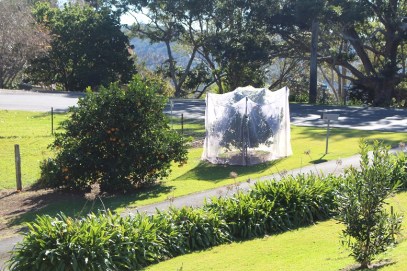
Once the fruit are ripening I have to cover the tree to protect the fruit from the local scrub turkeys.

2017-07-30 01

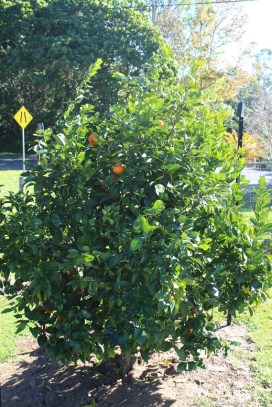
You can also see one of the orange trees next to the netted mandarin.

This afternoon I removed the netting and picked the last of the fruit.

2017-07-30 02

We have picked a lot of mandarins over the past month or so but these are the last 30 of them.

2017-07-30 03

We will savour these fruit as we know it will be another 10 months before the next crop is ripe.  In the meantime, there will be plenty more seasonal delights as the months roll by.  Imagine if I could eat these all the year round.  They would no longer be anticipated longingly and the delight of that first burst of delicious flavour would soon become ho-hum.

We are fortunate because we live in a temperate climate so many crops can successfully be grown during most months of the year.  However, seasonality still exists for the citrus trees, raspberries, mangoes, passionfruit and avocadoes.

What is in season at your place?

This was our glorious winter day here today.  No, it has not been photoshopped – the sky really is that blue.

2017-07-30 04


10 Days

Leave a comment

Yes, it is 10 days since my last blog post.  There is no good reason – I just took a break.

I think the biggest news (in Australia) in the past couple of weeks has been the announcement by Woolworths that they will stop using single-use plastic bags.  This was closely followed by Coles announcing that they would do the same.  Here is a news report.  I have not commented on this announcement so now is probably as good a time as any.

2017-06-28 03

“What a great initiative” was my my immediate thought, especially in the midst of Plastic Free July.  Perhaps the movement was really starting to gain some traction with mainstream consumers?

My optimism was short-lived as I began to hear and read various responses.  In fact, despair would have been a more accurate description of my mood over the following days.

Here is a round-up of the sort of comments that came to my notice:

  • It is only so they (supermarkets) can sell more heavy-duty plastic carrier bags.
  • Green bags are made from a plastic-based fabric – you have to use them 347 times to make the impact less than the single-use plastic bags.
  • What will I use to collect dog poo when out walking?
  • Research shows that the sale of bin liner bags has increased in those states that have completely banned single-use plastic bags.
  • What will I use to line my bins?

Seriously??

It is evident that many, many people have long way to go before they understand the impact of the millions of plastic bags which are produced every year and used only once.  They also do not appear to be prepared to adjust their lifestyle even slightly.

So, how do you counter these and a million other ill-informed comments?

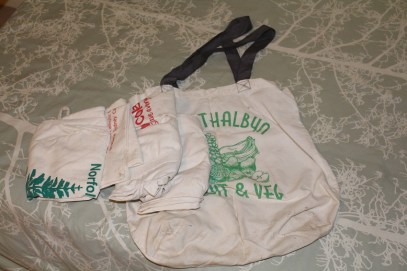
The first and simplest thing is to consider investing in some strong fabric bags that do not contain plastics.  I can assure you that these will last for many, many years and can be repaired as necessary.

2017-07-04 01

Work towards generating less waste so that you have a reduced need for bin liners.  Purchasing larger packs, from bulk bins, unwrapped, using your own produce bags will all assist in reducing the amount of packaging waste.

Take more care with grocery shopping and buy only what you will actually use.  Remember, first world countries such as Australia, the USA and UK discard around 25% of all food produced.  Make sure you are not part of this dreadful statistic.

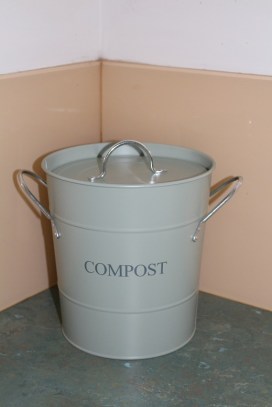
Consider composting food scraps to reduce the amount which you currently send to landfill.  Even if you do not have access to a backyard there are numerous systems available which can be used by people living in apartments.  Additionally, there are opportunities to connect with people who may be happy to take your scraps for their compost system or search for a community garden in your area.  Online connections are invaluable in the 21st century for developing relationships which are mutually beneficial.  One such example is Spare Harvest which is building a sharing community for excess produce, plants and garden resources.

img_6057

Small bins that do not contain wet food scraps can be lined with newspaper.  So, the naysayers point out that not everyone gets the newspaper anymore!

The real point of this post is to encourage everyone to take a positive, solution-based approach to change.  We need to be looking for innovative ways to reduce our environmental footprint rather than railing against any change which may happen to impact our wasteful lifestyle.

I live in a semi-rural area and our local town has a Woolworths and IGA supermarkets as well as a selection of independent retailers.  Almost all of these businesses routinely provide plastic bags for purchases.  I believe that the impending phasing out of plastic bags by the retail giants can taken up by all retailers and set a precedent by making Maleny plastic bag free.

I intend to promote this idea and encourage others to become involved.  My first strategy will be to contact the IGA supermarket and ask them to match the Woolworths ban on plastic bags.  I am also looking into the Boomerang Bags project which would be a perfect way to introduce people to the options available to fill the void left by the removal of plastic bags.


A Perfect Loaf

Leave a comment

I thought the sourdough loaf that GMan managed to produce 3 months ago was good and you can see it here.  He has continued to work on fine-tuning the method and I think his most recent effort is pretty well perfect.

2017-07-17 01

It must be about time he tried making that gluten-free starter for me.  🙂

A Special Gift

4 Comments

My birthday was a couple of months ago but I recently received a slightly delayed gift.

Our younger daughter was working on this project when her life was thrown into disarray with the sudden death of her partner.  In between everything else that was going on she continued to steadily embroider this piece.  Apart from her desire to complete the gift for me, I am sure it was beneficial for her to have this project to work on.

2017-06-24 01

It is now hanging up in my sewing room where I can see it as I sit at the sewing machine.

I had no idea that my daughter could embroider, let alone produce a piece of work like this.  What a clever girl she is and I am a lucky mum that she chose to make this for me

The thing I like about this story is the value of skills from days gone by.  I am sure you could reproduce this using a fancy computerised embroidery machine but like so many artisan skills there are so many more benefits to this endeavour than simply the production of the finished piece of work.

What skills have you taught yourself with the assistance of Google and YouTube?

Saving Scraps

Leave a comment

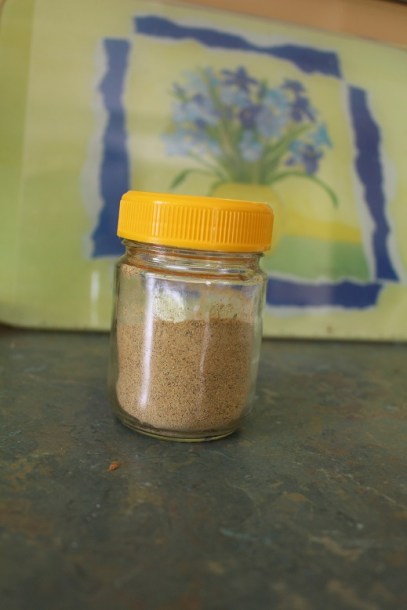
I have read many times about people saving their vegetables scraps/peelings and using them to make vegetable stock.  I take a slightly different approach and dehydrate them to make stock powder.  The end result is the same but I find it easier to make and it takes up minimal storage space.

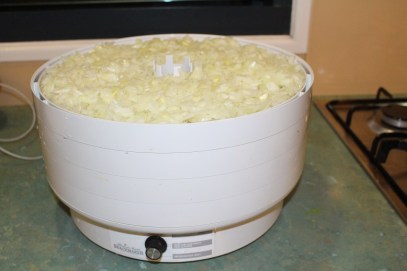
This is my dehydrator.

2012-02-02 01

I had some broccoli stalks, kale stalks as well as some carrot and onion ends stored in the freezer so I spread them on the tray of the dehydrator and let it work its magic which took about 24 hours.  You need to make sure that the vegetables are thoroughly dried.

This was the result.

2017-05-05 01

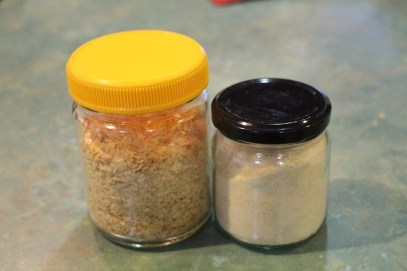
I place the dried pieces in the small spice grinder attachment for my food processor and blitz them until they are a fine powder.

2017-05-05 02

I generally store the jar in the freezer as it does not contain any preservatives.  This partially filled small Vegemite jar is the yield from my tray of vegetable scraps.

While I have chickens and a compost heap, it is nice to actually be able to use these scraps and not have to buy packaged stock powder.

A Lasting Legacy

Leave a comment

When we consider what constitutes a legacy, recipes handed down through the generations may feature.  However, it is not often that the recipe for a salad eaten in a restaurant would be remembered in these terms.

The salad we ate at Antique Taco in Chicago last year was no ordinary salad.  Fortunately, there is a reasonably detailed description on the menu.

I have made my version of this salad several times and it is an absolute favourite.

The kale we have growing has reached a suitable size so it was an obvious choice for dinner last night.

2017-05-02 01

ANTIQUE TACO SALAD

Finely chopped kale (remove and discard the thick central stem)
Finely chopped onion
Diced capsicum (bell pepper)
Spiced peanuts
Dried cranberries

2017-05-02 02

Combine the ingredients and then make the dressing.

2017-05-02 03

DRESSING

2 teaspoons red wine vinegar
1 teaspoon olive oil
1 teaspoon pomegranate molasses
1 teaspoon lime juice

Mix thoroughly and season with a little salt and pepper.

Drizzle dressing over the salad and toss to thoroughly coat the kale.

2017-05-02 04

This was our dinner – soft corn tortillas filled with refried beans, spicy pan-fried capsicum and onion strips and grated cheese.  Served with kale salad, cucumber slices and cherry tomatoes.

I am trying to incorporate something we have grown into each of our meals and last night it was cherry tomatoes and kale.

Garden Notes – Seedling Success

4 Comments

It is 8 days since I planted the seeds which I wrote about in my previous post and I am pleased to report success, almost beyond my wildest dreams.

Here are the trays of cabbage and cauliflower.  It looks as though the germination rate was almost 100%.

2017-05-01 01

The cauliflower had begun to lean towards the sun so I brought them out from their sheltered spot and they are now in the full sun on some mesh which is covering one of the garden beds.  The mesh is to keep the scrub turkeys out of the sweet potato which I transplanted from the compost heap.

The broccoli seedlings are also looking good but a few days behind the others.

2017-05-01 02

The germination rate of these is also excellent as I think there were only 20 seeds in the packet – they are a hybrid bred specifically for our warmer sub-tropical climate.

The celery and spinach are still in the sheltered area and I continue to be hopeful.  I think I can see some celery just poking through the soil but the spinach are not showing any signs of life just yet.

The red cabbage seedlings have doubled in size in a week and the beans which I planted directly in the bed are growing at a rapid pace.

On another note, and related to the garden, I wanted to show you a bit of work we did last week.

When we fenced the area for the vegetable garden we installed a couple of gates.  Due to the slope of the land we set this timber sleeper beneath the wide gate.  It has stayed in position and works well.

2017-05-01 03

There did not seem to be a need under the standard width gate but over time we have noticed that the ground had settled and a few rocks were placed to thwart the efforts of the chickens to access the enclosed area.

So last weekend we found another sleeper and cut a piece for this gate.

2017-05-01 04

I need to encourage the grass to grow on this side of the gate.  I am not worried about the enclosed area as that will eventually all be mulched with no grass at all.

While we were doing this we decided to also do the gate for the chicken run which had the same problem.

2017-05-01 05

The gate is propped open as the girls were out free-ranging when I took this photo this afternoon.

Garden Notes – Raspberries and Rocket

2 Comments

We have fruit trees and a vegetable garden.  Some years the vegetables garden does better than others.  A lot depends on the weather and how organised I am.

This year I have decided that I will make a concerted effort to successfully produce more of our own food.  Since the hot summer is over and we finally have some moderate autumn weather I have made a start on planting.

2017-04-26 01

The lettuce and kale seedlings which I planted about 5 weeks ago are now thriving full-sized plants and we are enjoying plenty of fresh lettuce.  I planted red cabbage seedlings about 10 days ago and they are established and looking healthy.

2017-04-26 02

On the weekend I sorted through a pile of seed packets which I store in an airtight container in the refrigerator.  Many of them are expired but I decided that I had nothing to lose by planting them.

There are bush beans interplanted with the red cabbage. Coriander and rocket are in the freshly-dug strip in the background of the same photo.  I am excited to report that exactly 48 hours after planting them, the rocket seeds have germinated and I now have hundreds of tiny, two-leaved seedlings.  Other beds have carrot, red onion, peas and radishes.  If they all grow I will have a bumper harvest, if not I will try again with some fresh seeds.

Some seeds are best raised in seed trays before transplanting them.  These include broccoli, cabbage, cauliflower, celery and spinach.  Here they are on a temporary potting table which I created from a couple of sawhorses and a piece of pool fencing.  There is another piece of pool fencing over the top in an attempt to prevent the chickens from digging them up when they are free-ranging.

2017-04-26 03

Here is a close-up of the trays with their labels cut out of an old ice-cream container.

2017-04-26 04

Finally, I wanted to show you the raspberry canes on the left-hand side of the photo below.

2017-04-26 05

We have a substantial clump of raspberry canes from the original 4 canes that we planted about 3 years ago.  In an attempt to control the growth of these we have tried to contain them using star pickets and a couple of strands of wire.  When we dig up the canes which are beyond the designated area we will plant them in the vacant area beside the gate.  Our goal is to have a raspberry patch stretching from the front boundary to the gate and extending 600mm either side of the fence which forms part of the garden enclosure.

2017-04-26 06

Many people are quite surprised that we can grow raspberries in our climate.  Ours are an autumn fruiting variety which are suited to our climate and we are very happy with the yield.  This year has been the best crop so far.  While we are not exactly inundated I am picking about 50 – 100g every few days at the moment and that is definitely enough to have for dessert with some ice-cream.

Growing our own food means that it is raised without pesticides and artificial fertiliser, it comes with no additional packaging and it saves us money.  What is there not to love?


Fit to Wear

Leave a comment

There are many ways of approaching the goal of producing less waste but for me, one of the most obvious things is to consume less and make do with what you have.

Mending, repairing and refashioning will significantly extend the life of items, save them from landfill for longer and of course, reduce the need to purchase a replacement.

Here is a practical example that I did this morning in less than an hour.

This is GMan’s sweatshirt which he wears on the weekend when gardening, mowing and painting as you can see.  The cuffs and lower band are all frayed and badly stretched but the body of the garment is still relatively sound.

2017-04-25 01

When I said that I could replace the cuffs, he commented how much he liked the fit of it – although I don’t think ‘fit’ is actually the right word.  So, The first thing I did was to make a pattern for future reference.

2017-04-25 02

I use lightweight interfacing for this purpose and have a roll of it.  I find the patterns cut on interfacing are durable and unlikely to tear.

There are only 2 pieces required – one for the front and back (with different necklines marked) and one for the sleeves.

2017-04-25 03

Next, I had a dig in my stash of ribbing to find a suitable piece.  I found some bottle green which was exactly enough for the lower band and sleeve cuffs – no wastage at all.

2017-04-25 04

I then found a piece of black for the neckband and set to work.  I will not try to explain how the ribbing is attached as there are plenty of good instructions which can be found using Google.

The final result.

2017-04-25 05

GMan is happy and I am sure this will see plenty more wear in the garden.


The Last Drop

1 Comment

It is often difficult to extract the last of a product from the container using the regular method of dispensing.  However, there are ways of getting the best value from what you have bought and minimising the amount of waste.

Bottles of shampoo and tubes of toothpaste are classic examples of where there is often unused product which is discard.  Buying the largest bottle available is a good strategy because you come to the end of the bottle less frequently.  You can add a little water to shampoo, conditioner and laundry liquid bottles and get several more uses from them.

Tubes can be cut open to reveal more than you can ever hope to extract via the nozzle.  Here is a tube of face wash which I have cut the end off.

2017-04-23 01

This is not the face wash I usually use but it was left behind some months ago by a guest and I felt it would be a waste to just throw it out so a few weeks ago I decided to use it.  There was not a lot left in the tube but once I had squeezed out what I could I then unscrewed the lid and was able to get a bit more on the tip of my finger for several more days.

I cut the end off yesterday and discovered that there was quite a bit more.

2017-04-23 02

I estimate that there is at least enough for another week, possibly longer.  It is definitely a worthwhile exercise to spend 2 seconds to cut off the end of the tube rather than tossing all of this in the bin.

What do you do to make sure that nothing gets wasted?