A Frugal Mindset – 7

1 Comment

Well, here we are at the end of the series of points about frugality.  I feel as though they saved the best for last as this final point underpins everything for me.

7. Frugal people are content with “enough.” A lot of the concepts and mindsets that I’ve mentioned above can be summed up with the idea of “enough.” Enough is the opposite concept of “more.” More is a constant search for acquiring, and even when you meet one goal instead of being content with it, you just continue climbing, seeking more. Enough is stopping at the top of the mountain and just enjoying the view.

Question to ask yourself: Am I trying to keep up with the Joneses, or seeking more only for more’s sake? Or really, is this good right where I am? Do I have enough?

There is more to life than stuff.  Do you have enough?

2016-06-10 02

A Frugal Mindset – 6

1 Comment

I am coming to the end of this short series and today’s gem is all about DIY.

While GMan and I do quite a few things ourselves, I think it is important to understand your limitations.  There is no saving in attempting to do something yourself and ending up creating more of a mess that will incur a greater cost to have it fixed up.

We happily and effectively do our own gardening, sewing, cooking, landscaping, chopping firewood, cleaning solar panels, painting, tiling and some furniture restoration.  Things that we do not attempt are cutting our hair, computer repairs, car maintenance or anything electrical.

6. Frugal people embrace the idea of “do it yourself.” If something needs doing frugal people first consider whether they can do it themselves. No need to pay someone for convenience if you could do it yourself with just a bit of sweat equity. And those that are more content in their frugality actually enjoy that process. They like learning new things, and feeling self-sufficient without having to rely on someone else to do it for them.

Question to ask yourself: Why am I paying for that service or product? Could I get good enough results myself by learning something new, or spending a bit more time on the task?

What do you do yourself?  Or not?

A Frugal Mindset – 5

1 Comment

This post has been half written for a few days as life has a tendency to get in the way.

Here is the next instalment.

5. Frugal people use items until they break, and then fix them. Marketers are always coming out with the biggest and the best thing, and urging you to upgrade now. But frugal people don’t worry about that. Instead, they’ll continue to use the perfectly good, whatever (you fill in the blank) until they just can’t get it to work anymore. No need to buy something new when what they have works perfectly well!

Question to ask yourself: Do I really need a new ________ (fill in the blank)? Or does what I have already do what I really need it to already?

This just commonsense as far as I am concerned.  Whilst it may be tempting to buy something in the latest colour/style or bigger and better there really is no need.

We are all seduced from time to time by shiny new things but if you can limit your purchases of things that will replace ones you already have you will be well on the way to making some substantial savings.

Try thinking of the oldest item you have in regular use and share it in the comments.

Mine would be the mixing bowl that belonged to my grandmother followed by the woollen blankets on the single beds – they are almost as old as me.  The blankets on the guest bed were a wedding gift as were much of the crockery, glassware and kitchen paraphenalia that I use regularly.

A Frugal Mindset – 4

Leave a comment

Number 4 in the frugal series appears to be at odds with frugality until you think it through.  It is all about quality and this is something I regularly take into account.  I find that in many instances, paying a bit more for a quality item does reap rewards in the long-term.  This applies to appliances, equipment, clothing and a range of other things.

4. Frugal people are not afraid to spend more on big expenses if it saves them money in the long run. This one may seem counterintuitive  to the point I just made above, about how frugal people are known as penny pinchers. But truly frugal people, as opposed to just tightwads, know when it is the time to pinch your pennies and the time you need to pull out your wallet and spend a bit more upfront to save money in the long run. An example of this is choosing a more reliable, slightly more expensive brand of lawn equipment. Ultimately this machinery will, statistically speaking, last longer and cost less in repair costs, making it better to plunk down a few extra dollars up front to reap the savings long-term.

Question to ask yourself: Don’t just ask yourself, when making a purchase, how much does this cost me now? Instead, also have follow up questions which include how long do I want or need this to last, and how much can I afford in repairs or maintenance?

It is all about quality and this is something I regularly take into account.  I find that in many instances, paying a bit more for a quality item does reap rewards in the long-term.  This applies to appliances, equipment, clothing and a range of other things.

Here is an example:  This Canterbury rugby top was bought in 1999 and has been worn every year since.  It is a favourite and gets plenty of wear.  I noticed today that the collar is beginning to show signs of wear so I will either turn the collar or replace it.  The colour has faded somewhat and the is a small area which I mended many years ago just below the logo.  None of that stops me wearing this top which has lasted much longer (and will continue for years yet) than cheaper ones.

I am also aware of the environmental cost of constantly replacing cheap items and would prefer to buy something that is going to have a longer useful life and consequently a smaller environmental footprint.

A Frugal Mindset – 3

2 Comments

Well, I actually had 2 rest days but here I am, back again with number 3.

3. Frugal people know small expenses add up to big ones. I think we’ve all thrown something extra into the shopping cart because it was only a buck, or grabbed up the clearance item because it was just such a great deal despite having no idea how we’d use it. While getting a great deal for items you need is worth it, frugal people also realize something else — those small expenses add up to real money, so they can distinguish between impulse purchases and those that are necessary. There’s a reason frugal people are known as penny pinchers, they grasp the concept of a little bit adds up to a lot.

Question to ask yourself: Do I want to buy this because it’s a great deal, or because it’s just a small amount of money, or because I really need it and have a plan for how I’ll use it? 

2016-06-30 01

I feel that I have a pretty good grasp on this one.  I can honestly say that I very rarely buy anything that is not on my list or a planned spend.

I do not chase sale items for groceries or other household goods.  I shop intentionally and generally pay full-price for items but I believe it is still wiser than buying random stuff simply because it is on sale.  This works for me. I never have food that I do not know what to do with it because I only buy what we eat and what I need for the meals I have planned.  There are no clothes in my cupboard that have never been worn or piles of unused household goods.

What about you?

A Frugal Mindset – 2

Leave a comment

Today I will address the second point in the article which you can read in full here.

2. Frugal people know where their money goes, down to the penny. If you get to the end of the month and wonder where your money went, you are not tracking it as well as you could. While it may seem like a hassle to keep track of where your money is going frugal people know that this information is vital to keeping money in your pocket and from being frittered away on things that aren’t important, in the grand scheme of things.

To keep track frugal people use the dreaded “B” word — Budget. A frugal person’s budget has two parts — it has a plan for how they’ll spend their money for the time period of the budget (see mindset #1 above), but it also has another part, to track what actually happened to the money. They want to know, were they able to follow their plan?

Question to ask yourself: How well am I following the plans I’ve made for my money?

We all know life happens, and sometimes we can’t follow our plans completely, but when you know what the plan is, and make mindful corrections and deviations when life throws you a curveball, you’ll be much better off.

For many years I kept a fairly close eye on our spending but did not track every cent.  It was always a bit of a revelation at tax time to see what our net income was, deduct the total we had paid on the mortgage and shake our heads as to where the rest of the money had gone.  It is a sobering thought.

However, over the past 18 months we have kept track of everything we have spent in a spreadsheet which we complete every couple of days.  I am not sure that it has changed our spending greatly but we do know exactly where it has gone.  It will be interesting to compare things like groceries year on year.  Because I have it set up in categories we can easily identify costs that will disappear when we retire – transport is the big one as we spend several thousand dollars each year in train fares to get to work.

2016-06-27 01

I would definitely recommend tracking your spending to really understand where the money goes.

Tomorrow we will delve into the little purchases that can sabotage your savings.

A Frugal Mindset – 1

2 Comments

As promised yesterday, I plan to address the points from the link I posted one by one.

The first point is:

1. Frugal people plan ahead. Planning ahead may not, at first, seem like it has anything to do with money, but it really does. Frugal people plan ahead in many ways. They do things like plan out their meals for the week to save money at the grocery store, or more long term planning like knowing that they’ll need a new roof on the house in several years, and to begin saving for this expense now.

Frugal people live by the mantra that failure to plan is planning to fail. They’ve learned that taking steps now for anticipated future events helps make those future events easier to deal with. And typically those plans make it both easier in both time spent, and in money saved.

Question to ask yourself: What can I do today to make tomorrow and the future easier to deal with?

If you really want use this strategy to its fullest potential don’t just make those plans in your mind. Write them down!

I regard planning as one of my strengths and there is no doubt in my mind that it saves money.  It also saves time and my sanity which are equally important to me.

I plan our meals, plan to combine errands in a single trip, plan what I will wear to work, plan what to pack for a holiday, plan future projects at home – there is no end to what we plan.

An example of long-term planning was when we began looking for our current home.  This was over 10 years ago and I was still in my forties but one of the things that we considered was that it would have to have at least one point of ground-level access or be able to be relatively easily adapted to meet this requirement.  Although we have numerous stairs to reach the verandah we know that this can be altered if required – we have a plan.

We are also changing and adapting our large garden to reduce the level of maintenance which will be required as we age.  Putting in the effort now will reap rewards in years to come.

As a result of ensuring that we have sufficient rainwater storage as well as the installation of solar panels means that we are pretty well self-sufficient for water and electricity which minimises the ongoing costs of running our home.

2016-06-26 01

As GMan regularly quotes from Baldrick in Blackadder, “I have a cunning plan”.  The difference between Baldrick’s plans and ours is that ours are realistic and generally achievable.  Even if things do not go quite according to plan you have a framework with which to start again.


Busy Being Frugal

Leave a comment

Pardon my absence but I have been busy doing the everyday things at home as well as my paid employment.

Tonight I want to share a link that one of my Facebook friends posted a couple of days ago.

7 Mindsets of Frugal People

I am usually very sceptical of this type of post on Facebook but I was pleasantly surprised when I clicked on this one.  In my opinion these 7 messages make good sense and mirror much of what we do every day.

I hope you will take the time to click on the link, have a read and leave a comment.

I plan to write a blog post on each of the 7 points and how it aligns (or otherwise) with what we do here at ‘The Castle’.

I look forward to your comments and discussing in more detail in the coming week.


Almost July

2 Comments

In another 9 days it will be July.  Six months of 2016 will be gone – that is half of the year.  The winter solstice (in the Southern hemisphere) is gone and now the days will begin to get longer, although the coolest days are still ahead of us.  Here in Australia the financial year ends on 30th June each year and then there will be a flurry of activity of tax returns and hopefully, refunds.

This year, the beginning of July will also herald a Federal election on 2nd July after an inordinately long campaign of about 8 weeks.  In some respects, it seems much longer as we were subjected to much speculation regarding the date prior to the actual announcement.

None of this fills me with particular joy and optimism but there is one highlight and that is ‘Plastic Free July’.

‘Plastic Free July’ began with one Council in one city in Australia 5 years ago and last year the concept was embraced by groups and individuals in 69 countries around the globe.  You can read more here.

I have read various discussions in which people have mentioned that are are setting themselves up for the challenge by buying or making tulle vegetable bags and beeswax wraps as a substitute for plastic film.

My plan is continue much as I currently do and redouble my efforts to get rid of more single-use plastic from my life.

What single-use plastic could you eliminate?  What alternatives would you use?  Are you looking for ideas?

I would love to hear your thoughts and ideas to develop a discussion where we can all learn from each other.

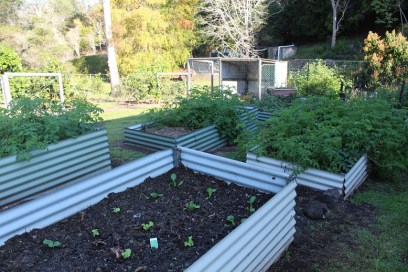
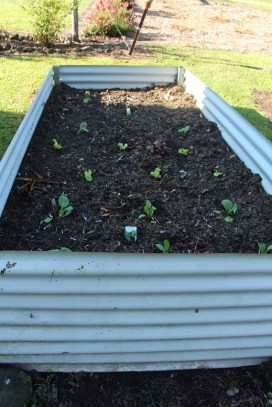
Here are some plastic-free treats from our vegie garden.

2016-06-22 02.JPG