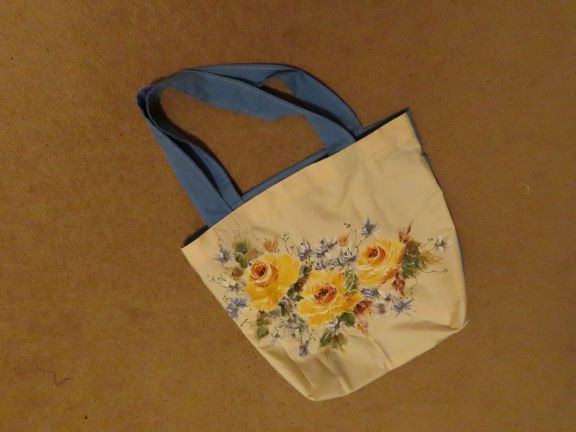
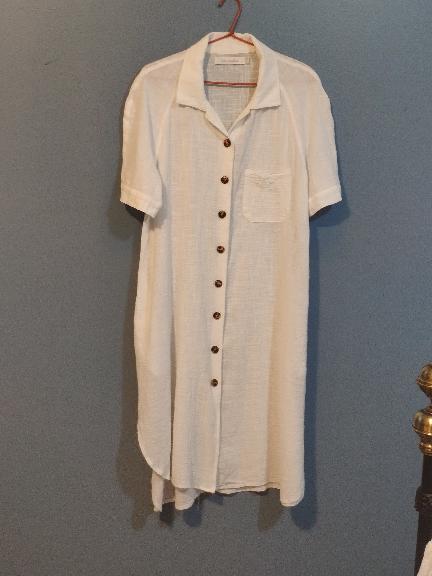
Refreshed, Ready to Use

Leave a comment

It is over 2 years since my mother died and in many ways it seems like just yesterday. Both of my parents were small children during the Great Depression which undoubtedly coloured their views of taking care of their possessions and mending, repairing and upcycling where necessary. Throwing perfectly good items away was simply not in their DNA. Much of this mindset filtered down to my siblings and me so we felt a certain obligation to ensure that Mum’s personal effects were distributed wisely. Some went to various family members, others were sold and yet more went to charities who could use them.

I was surprised when my younger daughter expressed an interest in the kitchen stepstool. It was sturdy but had seen better days and the orange vinyl seat screamed 1970s. Nevertheless, she was keen to have the stool as it offered a practical solution for accessing the top shelves of her kitchen cupboards as well having some special memories of helping in her grandma’s kitchen when she was a young child.

I don’t have any before photos but GMan dismantled the stool, removed the seat and spraypainted the metal frame. We disassembled the seat, scrubbed the vinyl cover, bought a new piece of foam and cut a replacement base from some leftover timber. I used upholstery staples to recover the seat using the same vinyl cover. This is apparently some of the appeal to my daughter.

Here is the end result.
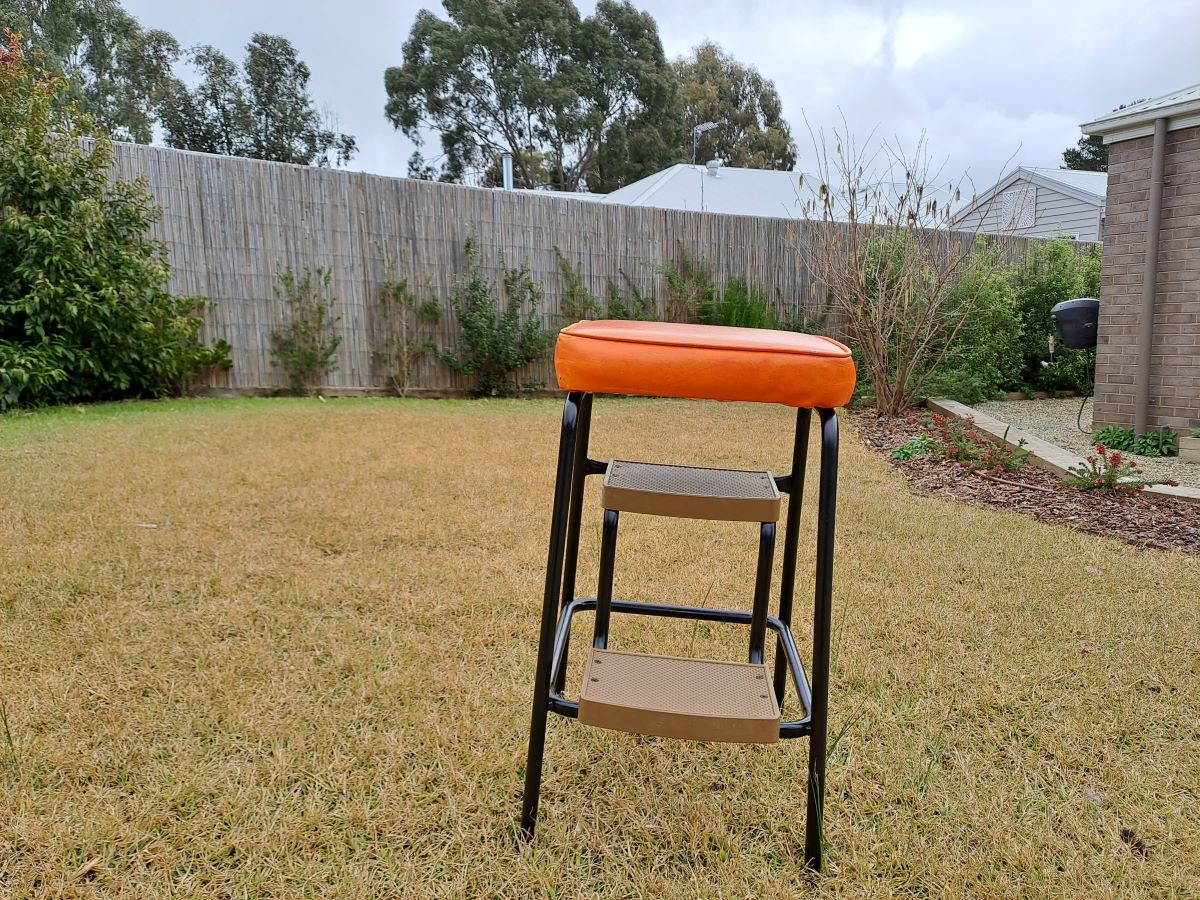
The seat folds up to allow the steps to be accessed. Note the photobombing dog!!
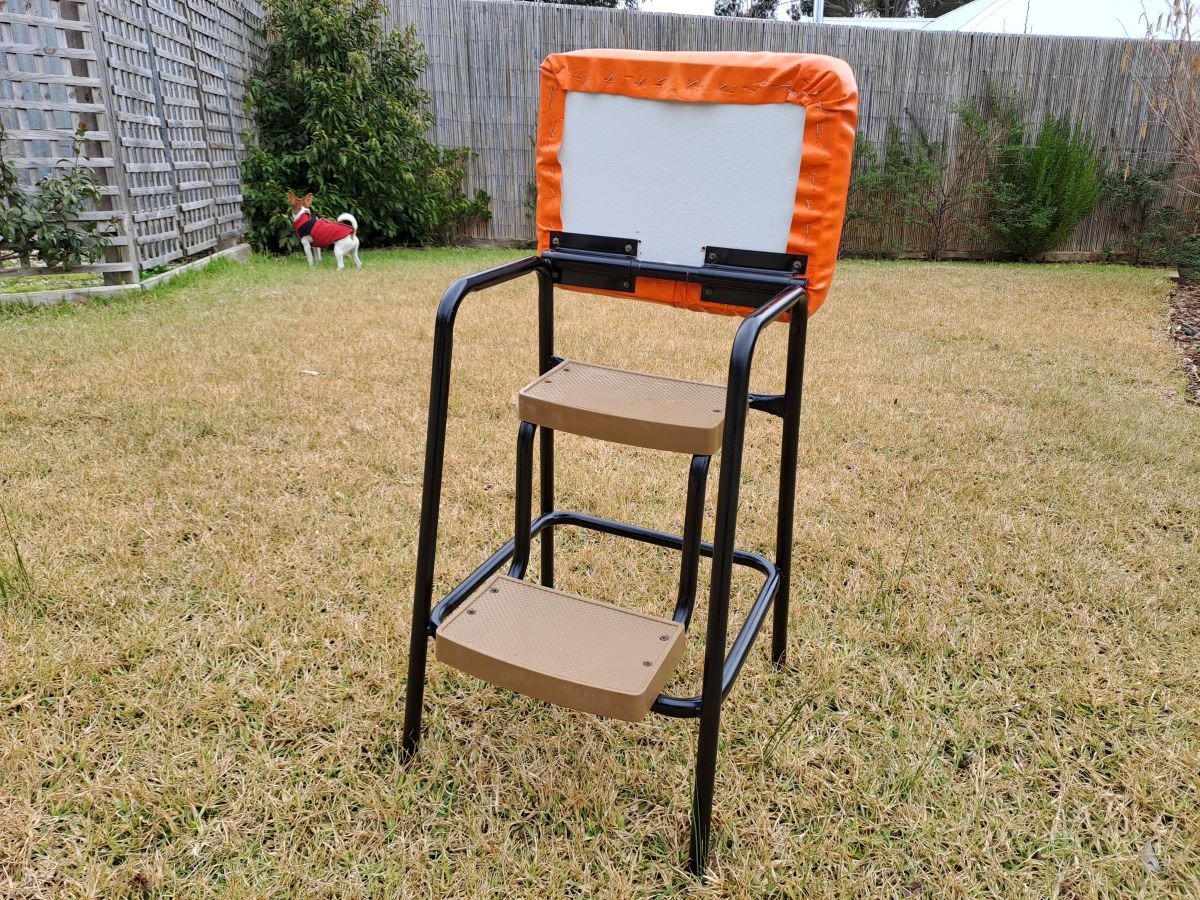
We will be delivering the refurbished stepstool to its new home this week.

Don’t forget that there are various repair cafes and groups who can assist with restoring/repairing items if they are beyond what you are prepared to tackle.

Remember, the most sustainable items are those that you already own.
A Zippy Day

1 Comment

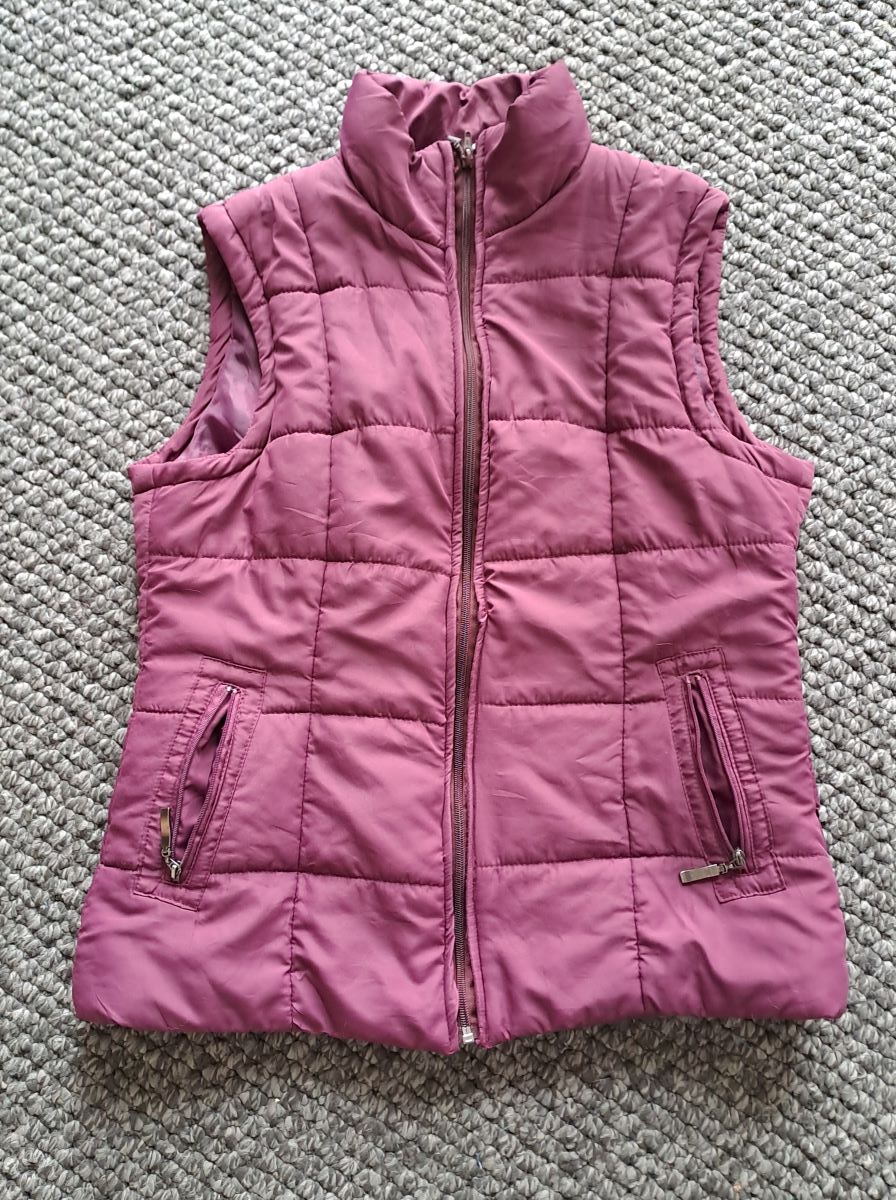
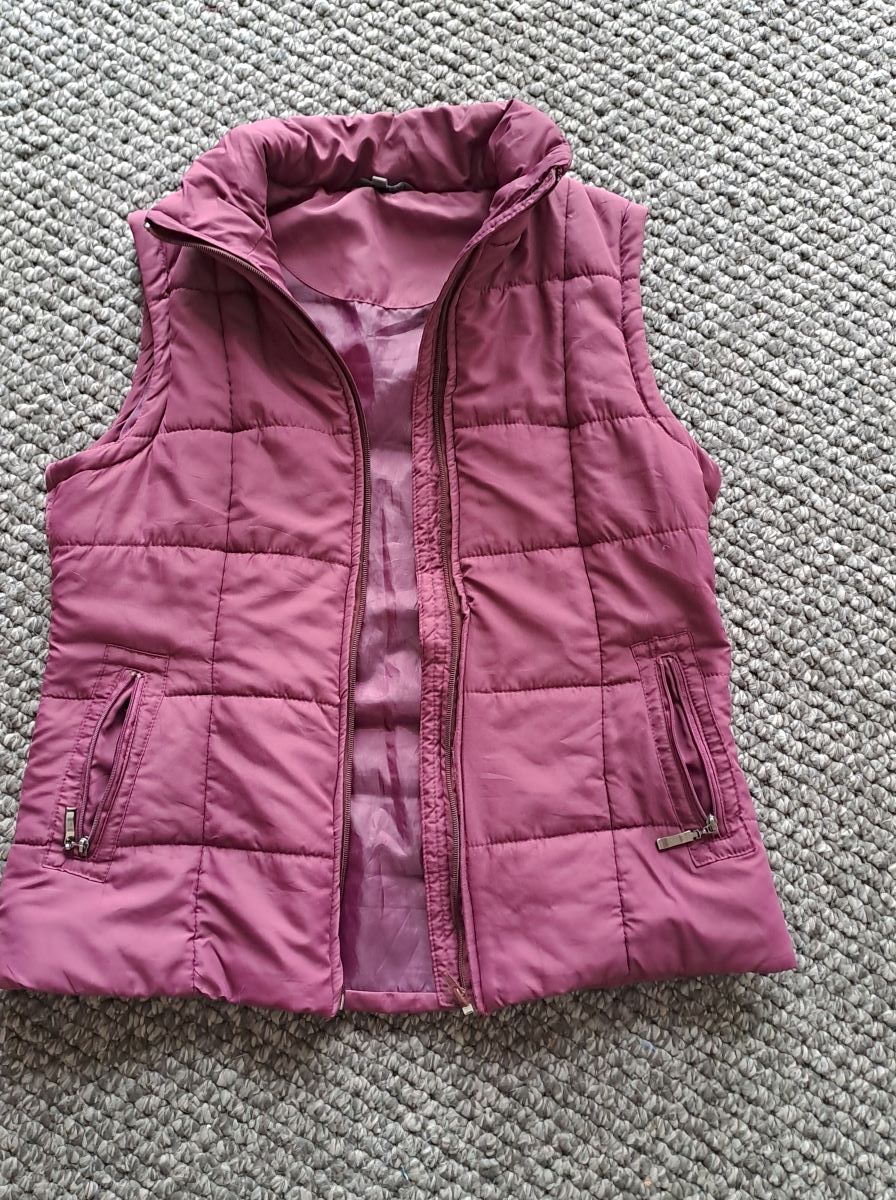
One of the op shop buys I mentioned in my last post was a vest which had a broken front zip.

Yesterday I bought a new zip and my project for today was to replace the broken zip.

Replacing zips can be a bit of a challenge as they are generally inserted fairly early in the garment construction, therefore, it is a bit of a balancing act to deconstruct enough of the garment to allow the removal and replacement of the zip.

I have managed to achieve my goal reasonably successfully.

Is it perfect? No.

Is it good? Yes.

Am I happy with the result? Absolutely.

New zip inserted

Zipped up.

Wearing the finished garment.

The zip cost me $8.50 which was more than double what I paid for the vest but I still regard it as $12.50 well spent to have this addition to my wardrobe.

Wardrobe Wins

2 Comments

Yesterday we headed out and about with a bit of a plan which included visiting a specific op shop in a small town some distance from us. It had been specifically recommended so I was keen to see for myself.

The pricing was very modest and I bought 3 summer tops. It is the middle of winter here but I regard this as forward planning because it will definitely be hot in 6 months time.

This sheer floaty top will need a camisole underneath it.

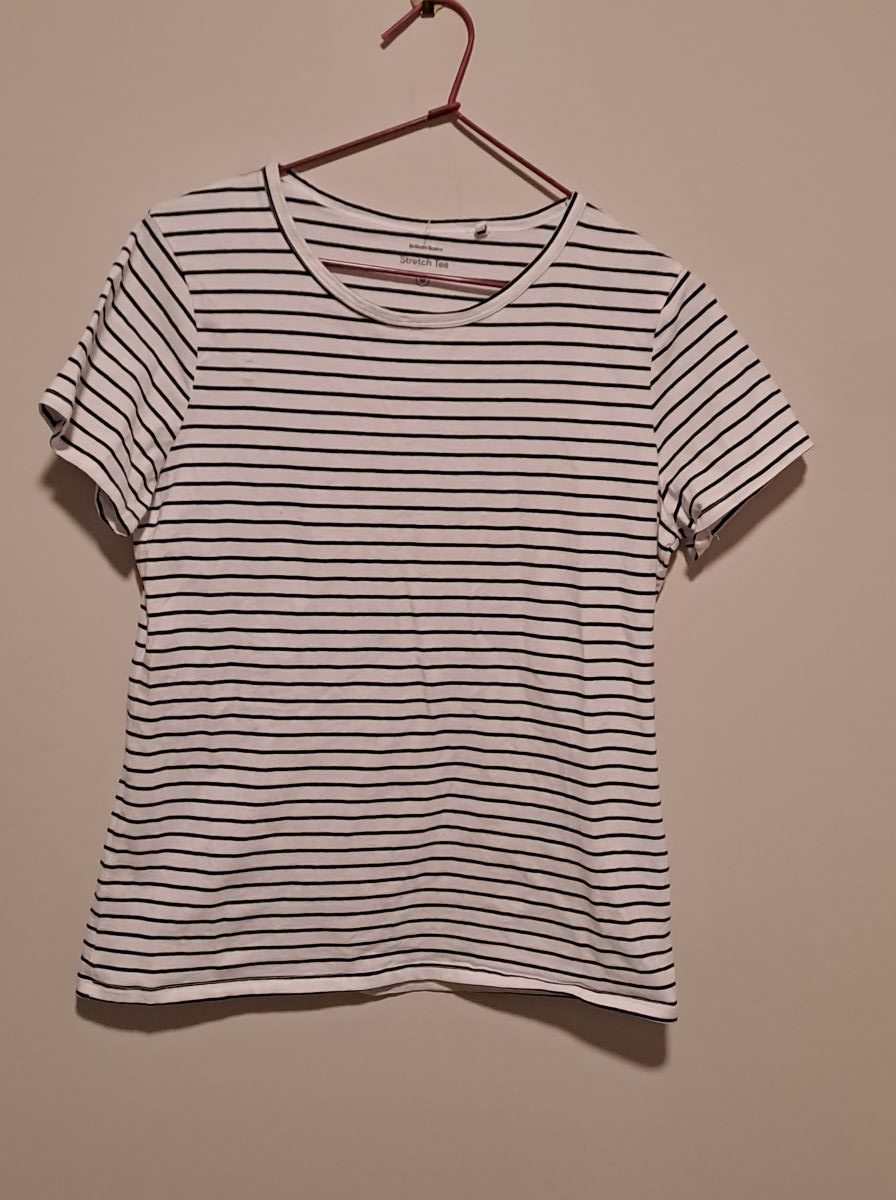
A girl can’t have too many navy/white striped tops. (In my opinion). These tshirt tops appear to be unworn or only very lightly worn. I will shorten the navy one a little bit.

I could not believe my luck as these tops were $2 each! It is almost impossible to get anything for $2 these days in an op shop.

Later in the day I spotted another op shop near the supermarket. Once again, I was in luck.

I had been on the lookout for another vest and spotted this one for $4. The zip does not work but I am not too worried as I generally wear a vest like this unzipped. However, I do plan to buy a new zip and replace it to restore this lovely vest to full functionality.

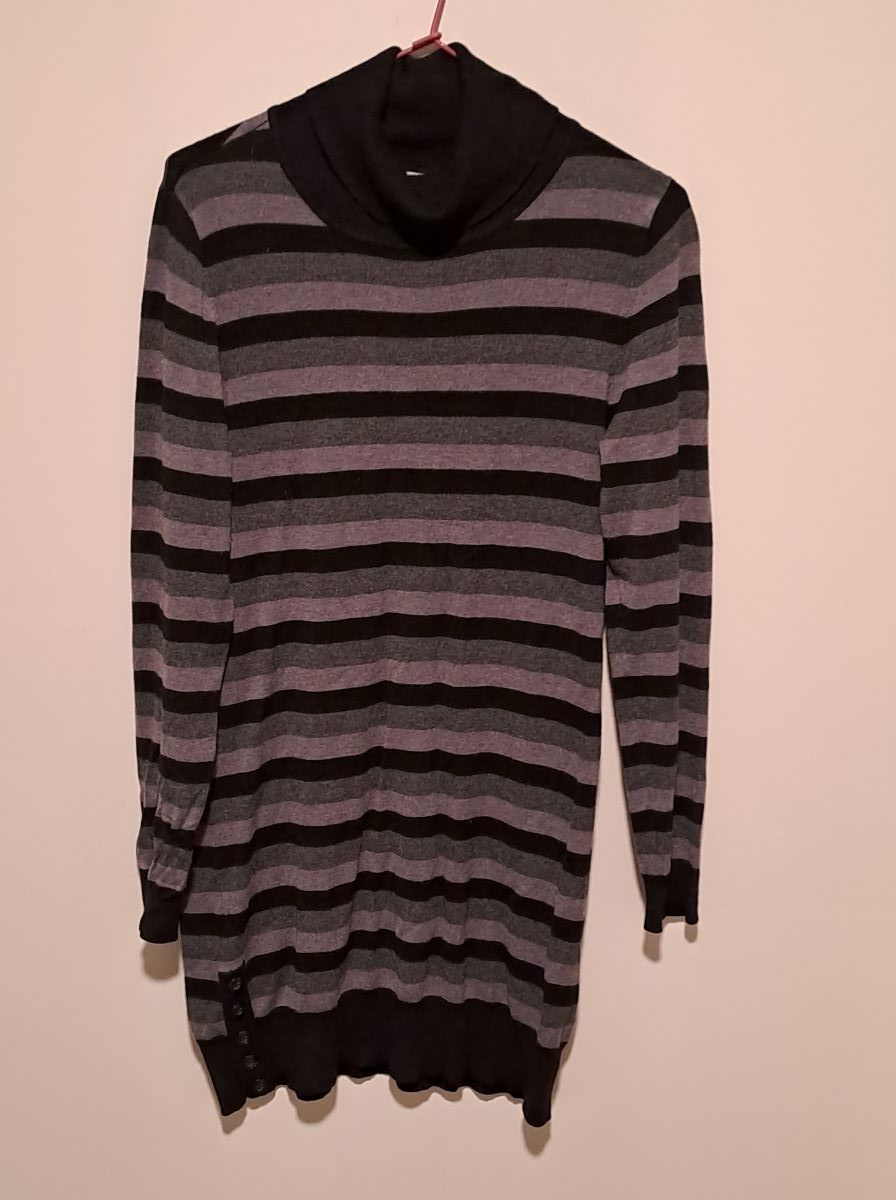
My final find was this knit ‘dress’. It is a synthetic mix and quite fine but will be perfect with a layer of thermals underneath and teamed with tights, boots and a scarf.

I scored all of these additions for the amazing total of $15.

However, it is not all about the money. My prime reason for op shopping is to minimise my use of new resources. It is scary to see the amount of clothes and other textiles which end up in landfill and this was what drove my decision to limit, and preferably eliminate, my reliance on new clothes. My exceptions are underwear, socks and shoes.

I set myself a challenge in November 2018 that I would not buy any new clothes from retail outlets for 5 years. It seemed outrageous and probably unachievable but I was determined to give it a go.

I only have 4 months to go. So, how I am I going? I have bought 1 dress and a scarf (in February 2021) brand new to wear to a wedding. The scarf went to an op shop after a couple of wears as I realised it had been an impulse buy and was not really going to have a long-term place in my wardrobe. The dress was a bargain – reduced from $179 to $21!! I have worn in many times since the wedding, including to my mother’s funeral, as it is very versatile.

My wardrobe has altered significantly in nearly 5 years and I have achieved that through buying pre-loved items in op shops as well as higher-end recycle boutiques. Some have appeared to be brand-new and it is even more important than ever to save these items from ending up in landfill. It has been a continual evolution as I moved from full-time work to retirement and again as we moved from Queensland to Victoria.

Plastic-Free Challenge

Leave a comment

This is a rather timely post as we approach Plastic-Free July. I choose not to participate directly in this initiative but simply to make every day a challenge to reduce, preferably eliminate, single-use plastics.

Moving to a new town throws up a few challenges when it comes to refusing single-use plastics.

Naturally, I take my own bags when grocery shopping and tulle produce bags when buying loose fruit and vegetables. I have managed to locate a couple of shops in Melbourne where I can buy bulk dry goods such nuts, flours, seeds and dried fruit.

However, one of the trickier items to purchase without single-use plastic is meat. Some butchers are prepared to place meat directly into the customers container but plastic bags remain the default position and some outlets specifically refuse to use containers provided by the customer. Unfortunately, Covid19 has become an ‘excuse’ for not accepting containers.

A few days ago I set about searching for a butcher in our general vicinity who would be amenable to placing my purchases directly into my own containers. I found ‘Meats on Mitchell’ in central Bendigo so yesterday I tested them out. Aside from the single-use plastic issue, the meat needs to be good quality which appeared to be the case.

It was a simple matter of asking for what I wanted and handing over my containers. There was no hesitation or problem with checking the weight of the container before adding the meat. I was happy with the entire transaction and let the staff know that I had chosen their shop primarily because I was able to bring my own containers.

The chicken we ate last night was excellent quality and I intend to make this my regular butcher for meat purchases. Although we do not eat a lot of meat it is good to be able to source it without any single-use plastic.

Feeding Us

Leave a comment

We are home again after our short trip away. It was not so much a holiday as a reconnaissance mission to our preferred relocation destination. After about 6 months of searching we may have found the ideal property. More about that in the next week or so.

In the meantime, I have packed a few more boxes – I think the count is up to about 22. I have a description and number on each box and a small notebook where I have recorded the number of each box with a more detailed description of exactly what is in it. I am hoping that this will make it easy when we come to unpack at our destination.

There is also the everyday jobs to ensure that we remain fed and clothed. Yesterday I caught up on the washing and ironing after having been away and this morning I am cooking.

We are by no means self-sufficient but we do grow some food and also prepare most of our meals from scratch.

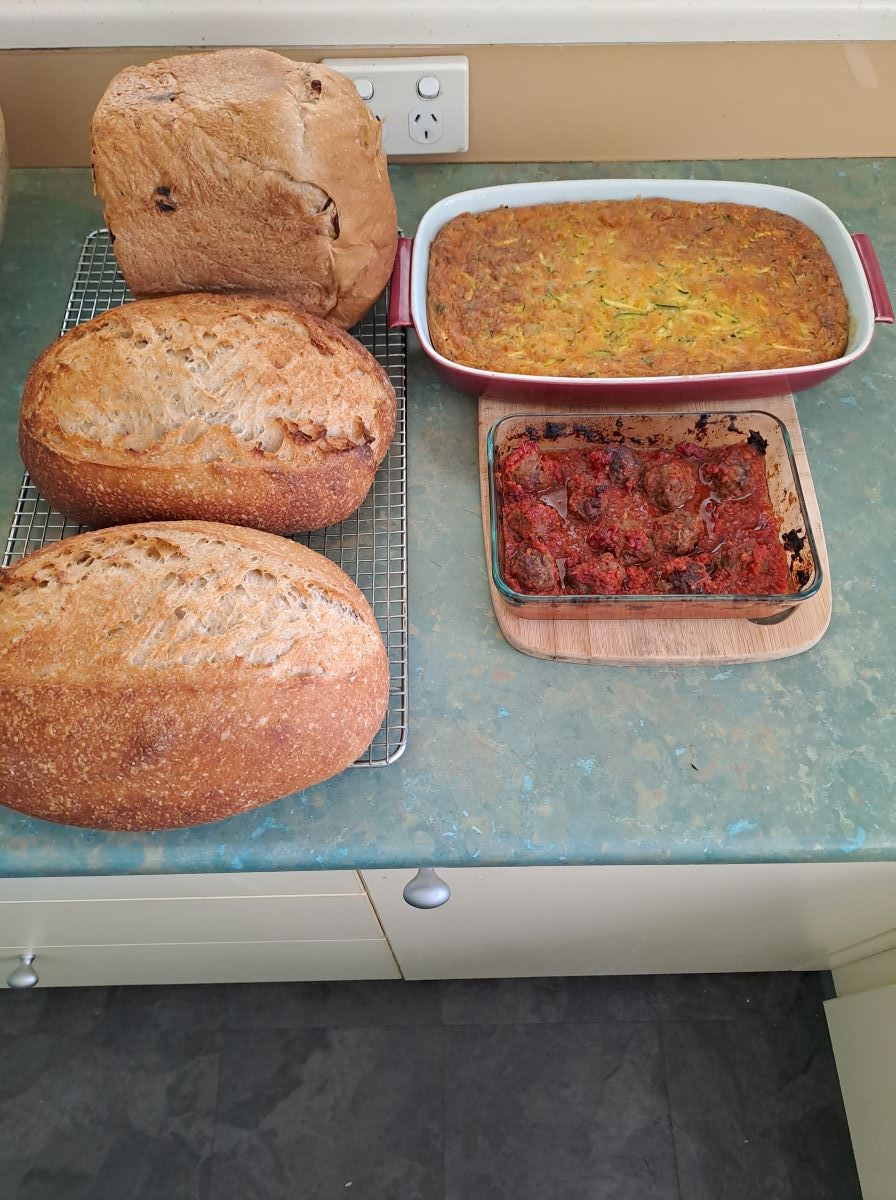
In the interest of energy efficiency we try to cook multiple dishes in the oven when it is turned on. GMan was ready to bake sourdough bread this morning so I made a Zucchini Quiche and some baked meatballs. The bread at the rear of the photo is fruit loaf made in the breadmaker.

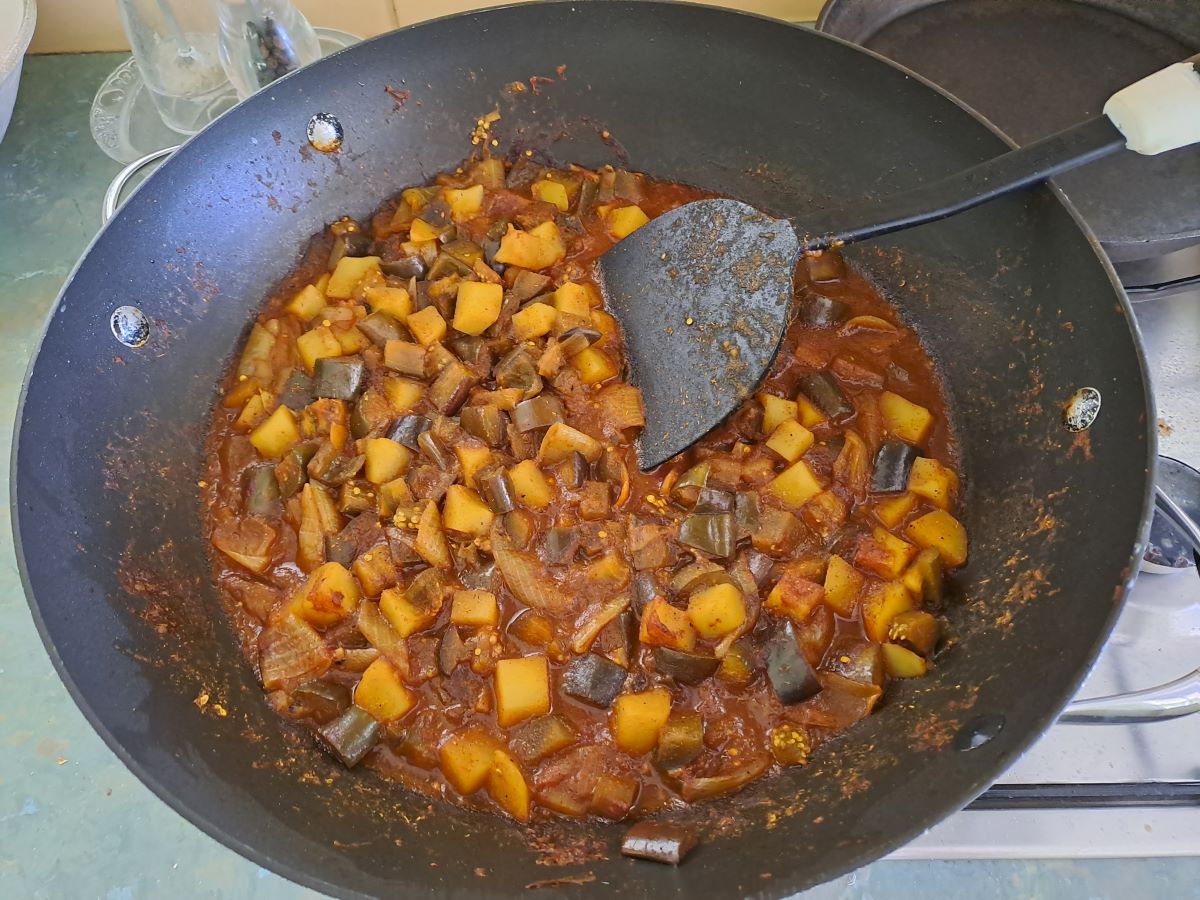
I picked the last of the eggplant before I pull the bushes out and clear out that garden bed. So, I am making a big batch of Eggplant and Green Bean Curry which will make at least 4 – 5 meals for us so most will go in the freezer. These will be handy for days when I don’t have the time or inclination to cook.

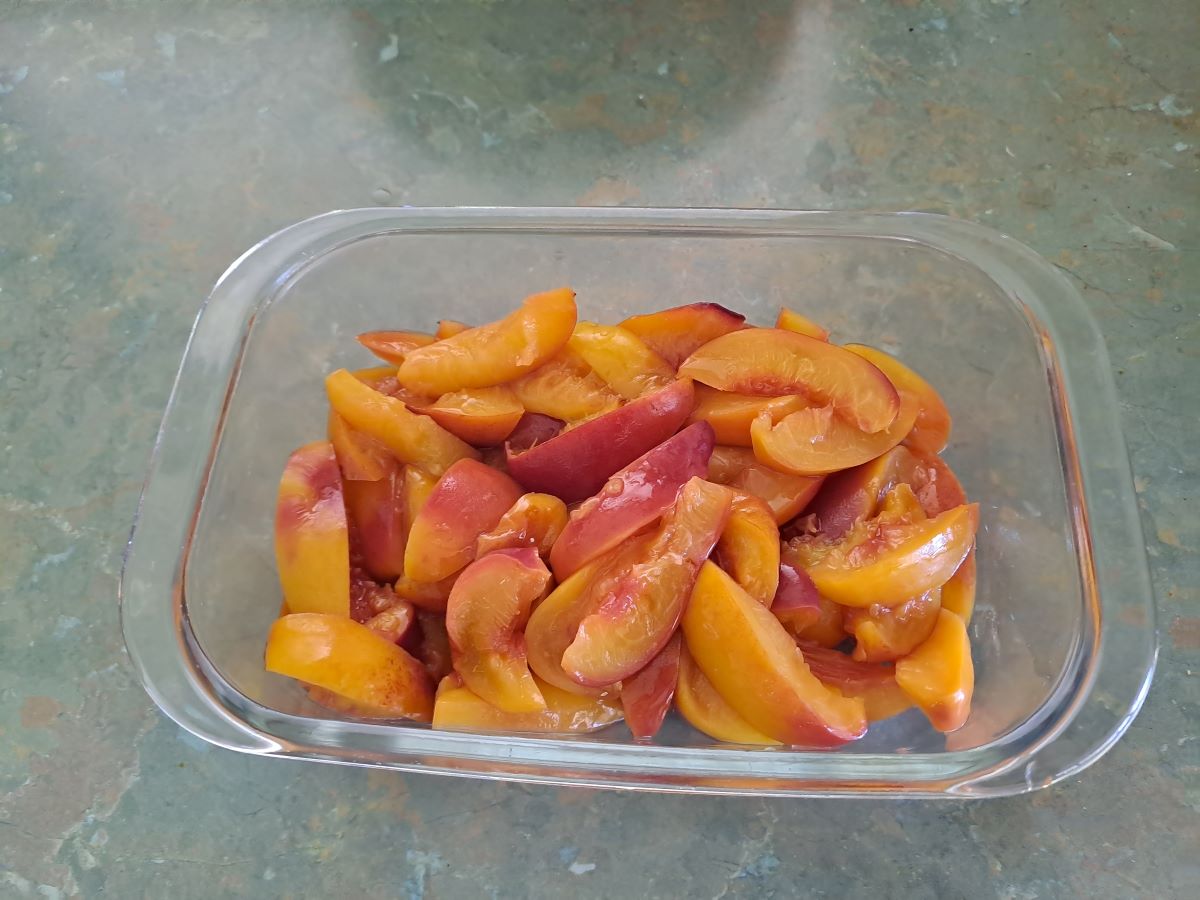
I had some nectarines which were not great for eating fresh so I stewed them and will use this fruit on my breakfast cereal in coming days.

I have also made a batch of coleslaw and hard-boiled 6 eggs ready for lunches, prepared the mashed potato and cut up green beans to go with the meatballs for dinner tonight. My final project for this morning is to make some more hummus.

No Spend January?

4 Comments

Over a number of years I have heard of many people choosing to do ‘no-spend’ days, weeks, months or even a year. It seems that there are as many different ‘rules’ as there are people undertaking this idea but the general premise is to not buy excess food and try to use what you have on hand but most importantly to eschew discretionary spending.

I have never consciously tried to not spend for a specified period of time but since we are halfway through January I thought it might be timely to review what I have spent this month. It is a relatively easy process as we track everything we spend.

We track our regular, fixed expenses on one spreadsheet. This allows us to see what subscriptions, insurances etc are due each month and we make sure there is money set aside for those.

The other spreadsheet is a month by month record of our variable spending. Some of this is discretionary such as eating out, books or clothing purchases but others are what I regard as essential. This category includes things like groceries and fuel.

This January certainly does not look like ‘no spend’ as our expenditure for the first 16 days of the month has been a little over $2000. So, let’s examine where the money has gone.

  1. Our fixed expenses for all of January are $627.
  2. We had planned and budgeted for an interstate holiday for 2.5 weeks which concluded when we arrived home on 6th January. Costs for the January portion of the holiday were $503.
  3. In the 10 days since we arrived home we have spent $912.
  • $195 – Groceries
  • $148 – Fuel
  • $285 – Pet expenses
  • $100 – Health expenses
  • $134 – Home maintenance expenses
  • $50 – Entertainment expenses

Yes, the entertainment expenses are definitely discretionary and if I was strictly following a ‘no-spend’ regime that would have been foregone. Other than that and the holiday spending at the beginning of the month, everything else was necessary.

On balance, I think that our method of accurately tracking and recording our spending works well for us. I don’t feel any real need to try to artificially reduce our spending by pushing spending from one month into the following month.

Do you do ‘no-spend’ months? What are your ‘rules’? Do you feel that it makes a difference to your overall spending?

I look forward to hearing your thoughts and comments.

Last Post (for 2022)

4 Comments

I feel as though this blog has limped to the end of the year. Only 44 posts with a mere 12 in the second half of the year. The reasons are multiple and complex.

After 11 years of writing this blog it sometimes seems that there is nothing new to write about. Do I want or need to cover the same topics over and over again? Despite some misgivings I have decided that there is plenty I have to share with readers old and new. If you have any ideas, suggestions or requests please let me know and I will try to cover them.

I did not think that things could be much more challenging than 2021 when I faced my mother’s terminal illness and subsequent death. However, 2022 was equally difficult in many respects. I lost 2 friends, both of whom were younger than me, to cancer, this year. Others are dealing with health challenges, too.

While Covid has severely limited our ability and desire to travel overseas in the past few years, we have once again managed several trips within Australia. I have not documented most of the short trips on my travel blog in most instances for the simple reason of security. As well as our holiday to North Queensland we made several short trips interstate to visit family and friends.

The end of a year is always a good time to review what has gone before, albeit, without dwelling too much on the past. It also presents us with a clean slate and an opportunity for fresh beginnings. That is certainly likely to be the case here as we hope to complete the sale of our house and subsequent relocation in the early part of 2023. There will be plenty of adventures ahead for us.

Thank you for sticking with me in 2022 and I will be back in a bright and shiny 2023.

Happy New Year!!

From the Stash

Leave a comment

Sometimes I get so involved in projects, I actually overlook posting about what I am doing. So, this is a bit of a catch up on my recent sewing endeavours.

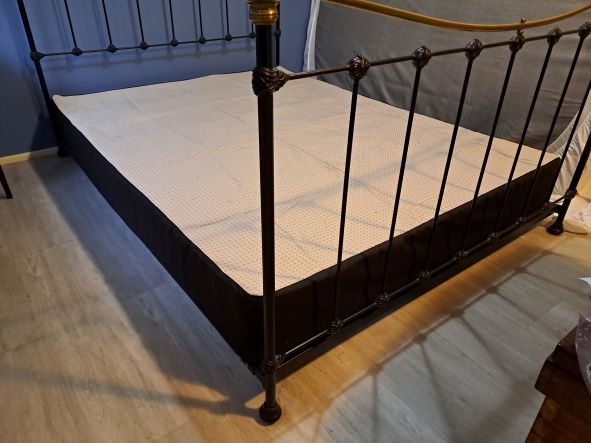
The first was a valance to cover the ensemble base of our bed. We originally had a bedspread which covered both the mattress and base but that has not been the case for a number of years. I did buy an elasticised cover for the base several years ago, however, it was only moderately successful in my opinion. After lengthy consideration I finally decided to try making my own version. I used a piece of light-coloured upholstery fabric from my stash to cover the ensemble base and then joined some strong black cotton fabric for the fitted side panels.

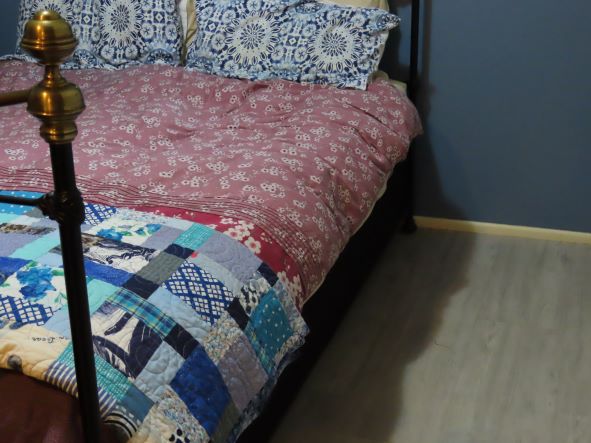
This is a glimpse of the side of the bed once it is made. The black fabric-covered base is barely noticeable so I regard my mission as a success.

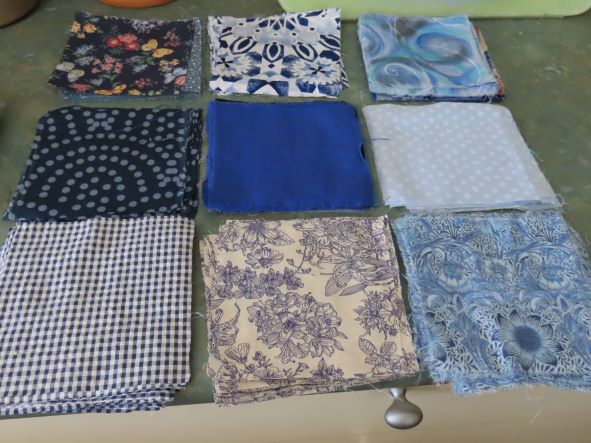
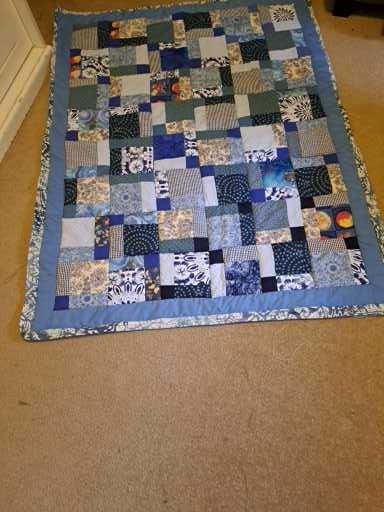
The next project was completed in less than a week once I set my mind to it. I have a patchwork knee rug which I made a few years ago for my mother. We have had some particularly cold evenings and GMan was rather envious as I snuggled under it while watching television. I set to work to make another one.

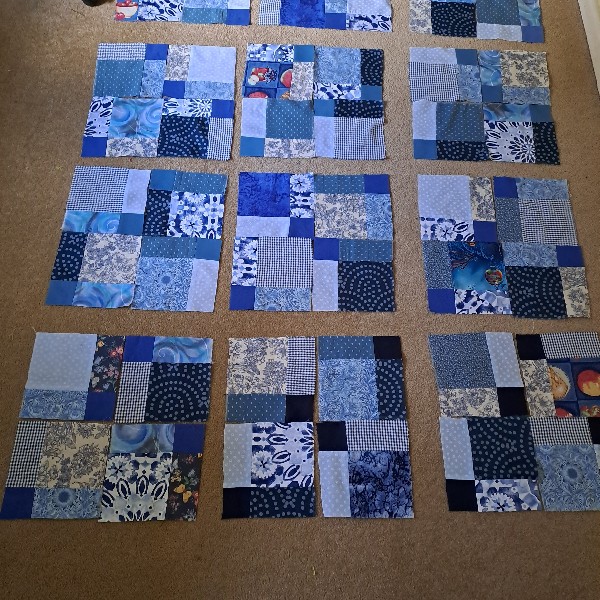
The first step was to select the fabric. As I sort through fabric I regularly identify small pieces which are suitable for patchwork. I cut them into 5 inch squares and sort by colour. So it was a simple process to grab the number I needed from the bag of blue fabrics.

In progress.

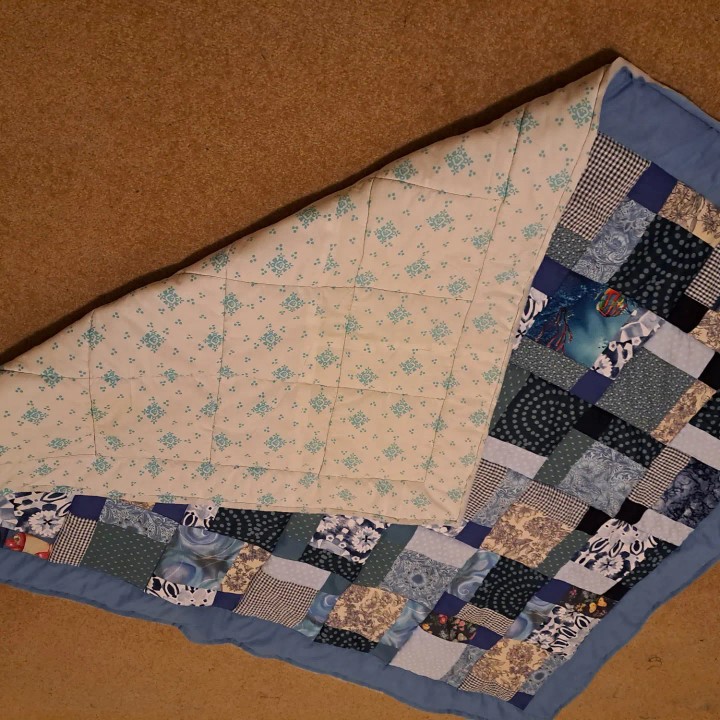
The squares were all salvaged scraps. The wadding was from an old polyester doona which I disassembled and reused. The plain edging was an old pillowcase and the backing came from a worn-out doona cover.

The final step was to add the binding. I cut and made my own bias binding from yet another piece of salvaged fabric.

Both of these items have been created entirely from fabric which was destined for landfill. We have so many resources already in circulation and it makes sense to utilise what we have.

Honouring the Handiwork

Leave a comment

I am regularly given pieces of fabric, garments and bed linen to use for upcycling into Boomerang bags and other projects. In recent months I have acquired a large quantity of these items from a local thrift shop. These are pieces that are deemed to be unsuitable for sale for a variety of reasons. The process of diverting them to our group assists in saving these pieces from going to landfill.

We have discovered that simply washing some articles makes them usable again. Thrift shops are not laundry services so it is important that anything you choose to donate is clean.

Some stained and torn articles yield sections of good fabric which we are able to use.

However, there is one group of items we receive that can be a challenge. These are the partly completed craft projects. I have received pieces of embroidery, patchwork pieces and even fabric painting at times. I feel an emotional responsibility to utilise these pieces if at all possible. They represent effort and skill from an unknown maker and deserve to be honoured.

Here are a couple of examples I have recently completed.

A piece of calico with fabric painted flowers has become the front of this bag. It is complemented by plain blue handles and back of the bag.

A contrasting inside pocket completes the bag.

Several small strips of patchwork provided me with another challenge. I joined them in an acceptable pattern before making the rest of the bag in a matching navy fabric from a doona cover. The contrasting handles are a similar fabric to the patchwork and were lurking in my stash from another donation.

I am so glad that I have been able to give these pieces of handiwork an outcome which is so much better than landfill.

Safely Salvaged

Leave a comment

I seem to have been gripped by a level of inertia which has been difficult to shake. I suppose you could call it writer’s block. I have plenty of material for blog posts but have simply not had the will or focus to actually write and publish them. Part of the problem has been the heavy focus on our upcoming federal government elections on Saturday. The other has been the weather. The rain was relentless for several days and even when it was not raining the humidity was 100%. Today was a little better but a return of the heavy rain is forecast for the next 3 days with a high likelihood of greater than 100mm (4 inches) over the weekend.

Anyway, enough of excuses and back to the title.

Today I want to address textile waste – garments, household linens and unused fabric.

As with anything, the best actions we can take to minimise waste are:

  1. Buy only what we actually need.
  2. Buy secondhand where possible.
  3. Take care of what we have to increase its longevity.
  4. Repair or upcycle if applicable.
  5. Ensure it is disposed of or recycled responsibly at the end of its useful life.

Most of us at some time have donated to or shopped at op shops but do you have any idea of what happens with the donations before they make it into the shop for sale?

Donations are received, sorted, priced and made available for sale. Many op shops are overwhelmed by donations and sadly, a portion of what is donated ends up as landfill. Donated items may be unsuitable, dangerous, damaged, soiled or otherwise unacceptable.

I routinely receive donated textiles which are otherwise destined for landfill and our local Boomerang Bags group are often able to use some of the fabric for making reusable bags.

However, sometimes I am surprised by some of what I receive. Remember, op shops do not provide a laundry service so it is make sure that your donations are in a state which is saleable. It is even a good idea to fold garments so that the volunteers can easily identify them as clean and cared-for clothing.

Today I soaked and laundered these three dresses which were in the last bundle saved from landfill. I can only only surmise that at least 2 of them had been deemed unacceptable due to the fact that they had not been laundered prior to donation.

They are all natural fibres (cotton and linen) and in good condition.

I have now sold 2 of them and the funds received have been donated to our local Waste Action group.

We should all do everything we can to ensure that we minimise what ends up in landfill.