What We Grow

Leave a comment

One of the by-products of growing your own food is a need for increased creativity when it comes to meals.  What we eat is at least somewhat dependent on what is available in the garden.

Bok choy, a type of chinese cabbage, is a quick-growing vegetable.  Commercial crops are harvested while they are relatively young and generally sold in bunches of three.  We ate some of our current crop while they were small, however, the few remaining plants are now quite mature and strongly flavoured.

New ways to use up the mature bok choy leaves and stems.

2020-06-07 01

Freshly picked leaves shredded and sauteed with cherry tomatoes, snow peas and mushrooms for breakfast.

2020-06-07 02

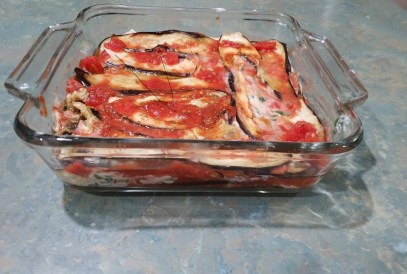
Tonight I made a vegetarian lasagne with layers of lightly roasted eggplant slices, bok choy mixed with ricotta and finally, crushed tomatoes.

2020-06-07 03

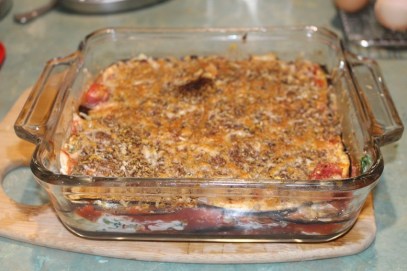
It was topped with a mixture of parmesan cheese, cheddar cheese and flaxseed meal.

2020-06-07 04

Served with beans and carrots.

2020-06-07 05

VEGETARIAN LASAGNE

1 large eggplant, sliced
1/2 onion, diced
Handful of large bok choy leaves and stems, sliced and shredded
180g ricotta cheese
Can of crushed tomatoes
Olive oil
1 teaspoon mixed herbs
Salt and pepper

TOPPING

1 tablespoon grated parmesan
1/4 cup grated cheddar cheese
2 tablespoons flaxseed meal

Place slices of eggplant on roasting tray.  Brush with a little olive oil and bake at 160C for about 10 minutes – until soft.

Saute diced onion and bok choy stems until soft, add shredded leaves and stir until wilted.  Add vegetable mixture to ricotta and combine.  Season with salt and pepper.  Add mixed herbs to crushed tomatoes.  Place a layer of eggplant slices in dish followed by the ricotta mixture then tomatoes.  Repeat until all ingredients are used.  Combine ingredients for topping and sprinkle over the lasagne.  Bake until heated through and browned on top.

This is not a definitive recipe but simply what I made today.  The quantities quoted would serve 3 adults.

A Trio of Firsts

23 Comments

Today is Monday, the first day of the working week.  It is also the first day of June and, here in Australia, the official first day of winter.

It is almost like a new year.  While most people restrict their attempts at resolutions to a new calendar year on the first of January, there are plenty of other opportunities to turn over a new leaf if you choose to look for them.  However, the midst of an ongoing global pandemic may not be the best time to consider starting afresh.  Or, perhaps it is.

I am thinking of ruling a line under the past few months and moving forward.

For almost 3 weeks I have added a blog post every day.  I have never made daily posts for an extended period previously and I have been writing this blog for over 9 years now.  It has been an experiment on several levels.  Could I maintain this level of engagement consistently now that I am retired?  Does self-isolation (mostly) make it easier to write blog posts every day?  Do I want to lock myself into writing every day?  Will I always have appropriate new content every day?  Are readers looking for new content every day?  Could I intersperse blog posts every 2-3 days with Instagram posts on a specific Organised Castle Instagram account?

Dear readers, I am really keen to hear your thoughts on the frequency, length, content and photos of my blog posts.  Also, do you go back and look at older material or click on the related links I sometimes provide?  I look forward to your honest thoughts and opinions.

Meanwhile, I am about to prepare the vegetables for dinner.  We are having one of our favourite cool weather meals – roast vegetables and gravy which I will serve with some green beans from the garden.

2020-06-01 01

While the oven is on, I will also make a Lemon Delicious and some more Cheese Scones to store in the freezer.  These are great for serving with a bowl of piping hot soup.

Last of the Autumn Salad

Leave a comment

You have heard of ‘Last of the Summer Wine’?  Well, this is a little different.

Our meal this evening was Zucchini and Corn Fritters.  You can find the recipe here.

2020-05-30 01

The accompanying salad was sourced entirely from our garden.  Lettuce, cherry tomatoes and coriander were picked today while the cucumber is the end of the last one which we picked about 3 weeks ago.

We found that cucumber stored really well in the crisper section of the refrigerator.  The lettuce is going to seed but in our mild climate there is a good chance that we will even have some more self-sown ones during the winter months.  There are still fruit on the various cherry tomato plants scattered throughout the garden.  We do not experience frosts here so it is likely that we will continue to harvest a few here and there but it will not abundance we have had during the summer and autumn.  Coriander has self-seeded throughout our garden area and we are thrilled as the flower heads are particularly loved by the bees.

I made the sweet chilli sauce from chillies from my sister’s garden.  The details and recipe are in an earlier post.

Seasonal eating means that we value and appreciate the produce from our garden.  It is probably about 5 months until I next eat cucumber and I know that by then I will be really looking forward to that first crisp crunch.

Money For Jam

2 Comments

We have all heard of the phrase, ‘money for jam’, this post is about jam for very little money.  Making your own jam is probably one of the best ways to save money.  Commercially prepared jams often contain very little in the way of fruit and ‘premium’ brands are ridiculously expensive.

In the blog post from yesterday I shared how I had sliced and soaked the homegrown grapefruit.

After being soaked for about 15 hours I was ready to make the marmalade.

2020-05-29 01

Like most jam recipes this one is very simple.  The original from Annabel Langbein is here.  I chose not to use the whiskey.

You will need equal quantities of fruit and sugar and an equivalent volume of water.

For example, I used:

1.2kg of grapefruit Scrubbed, quartered and thinly sliced
1.2 litres water
1.2kg sugar

Cut the unpeeled grapefruit into quarters, then slice finely by hand or using the slicing attachment of a food processor. Place in a wide, non-corrosive preserving pan and cover with 1.2 litres of water. Cover and leave to soak overnight.

The next day, place the pot over a high heat, bring to the boil and boil for 40 minutes. Lower the heat and add the sugar. Stir until the sugar is dissolved, then return to the boil and boil for an hour, stirring every 10 minutes or so to prevent the grapefruit from catching on the bottom – you want it to almost catch, but not burn. If you feel it starting to catch, remove it from the heat for a couple of minutes, giving it a gentle stir to stop it burning on the bottom, then continue boiling.

After 55 minutes do a ‘set test’ to check if your marmalade is ready. Chill a saucer in the fridge for a few minutes, then drop a teaspoonful of marmalade onto it. The marmalade is ready when it forms a skin that wrinkles when you hold the plate on an angle. At this point add the whiskey and boil for couple of minutes more to burn off the alcohol.

Pour straight into sterilised jars and seal with sterilised lids. If properly sealed Grapefruit Marmalade will last indefinitely.

To prepare your jars for preserving: For this recipe you will need a selection of jars that will hold just over 4 litres of marmalade. This is a great way of recycling, as the jars and their metal lids can be used over and over again. Wash the jars as usual, then remove the lids and place the lids and jars in the sink. Cover them well with boiling water then drain off the water. Pre-heat the oven to 100°C then pop the jars and lids in for 15 minutes to sterilise. Once removed from the oven, put the lids on the jars immediately so they remain sterile until you are ready to fill them.

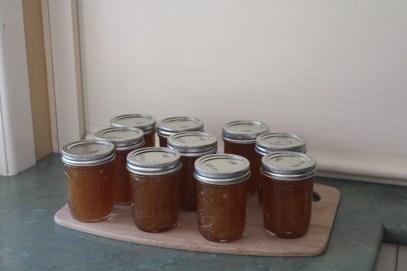
The end result of 1.2kg of homegrown fruit, 1.2kg of sugar and about 1.5 hours of my time and we have about 2.5kg of jam added to our stock cupboard.

2020-05-29 02

Garden Edge and Grapefruit

1 Comment

While there are plenty of photos of our vegetable garden there is much less evidence of the rest of the garden.  Some of it is quite naturalised and, in parts, overgrown.  We want to keep it as natural as possible but some areas require clearance of invasive weeds which are a real pest as they thrive in our high rainfall,  sub-tropical climate.  Little by little, we are planting native shrubs, in many cases, indigenous to the local area.

2020-05-28 01

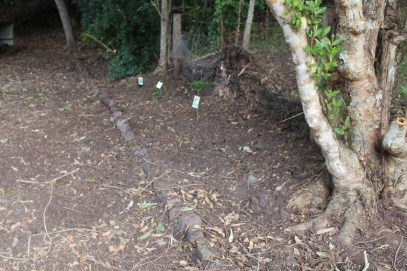
This area alongside our western boundary fence had long been neglected.  As part of the preparation for the soon to be assembled garden shed we cleared the area and have planted 3 new shrubs.  In order to be able to maintain the area we have placed a rock edge about 1.5 metres from the fence.  The rocks were all sourced from our property.  Rocks are an abundant resource here and we use them for a multitude of purposes.

2020-05-28 02

As I mentioned in this post we have an orchard of about 10 citrus trees and were unfortunate enough to have an infestation of citrus fruit piercing moth a couple of months ago.  Whether it is their lifecycle, the cold weather or simply a natural progression, they appear to have moved on and I think the Valencia oranges may have been spared as well as some of the grapefruit and the netted mandarin.

2020-05-28 03

Today I picked several grapefruit – enough to make a batch of marmalade.  I sliced and soaked the fruit and will be making the marmalade tomorrow so will post all of the details then.

I started to cut them by hand.

2020-05-28 04

However, that proved too difficult so I heeded the advice of the recipe and used the thin slicing blade of my food processor which made short work of the job.  It was a simple matter of retrieving the ends of the quarters and slcing the last bits by hand.

2020-05-28 05

Soaking overnight.

2020-05-28 06


Leftover Lasagne

1 Comment

Not lasagne that is leftover.  It is lasagne made from leftovers.

This post is not so much a recipe but a demonstration of what can be done to minimise food wastage.  A germ of an idea that grew……………….into dinner.

I make my own refried beans and for some reason 2 different containers were opened and in the refrigerator.  I decided that they needed to be used up.

From the freezer I sourced a small container of cooked brown rice and a bag of cherry tomatoes.  The tomatoes are from our garden – at least a year ago.

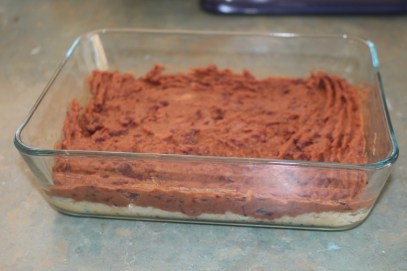
Once the rice was thawed, I heated it then added a beaten egg and pressed the mixture into the bottom of the dish.  Next was a layer of refried beans.

2020-05-25 01

Next, I headed to the garden to harvest one of the giant bok choy.  The stalks and leaves were chopped separately.  I wilted the shredded leaves in a pan and cooked the finely sliced stalks until tender.

Meanwhile, I made some white sauce.  I use potato starch and besan flour to thicken the mixture so that it is gluten free.  I then mixed in the bok choy.

The tomatoes were simmered and reduced, herbs and seasonings added.

2020-05-25 06

Then it was time to assemble the remainder.

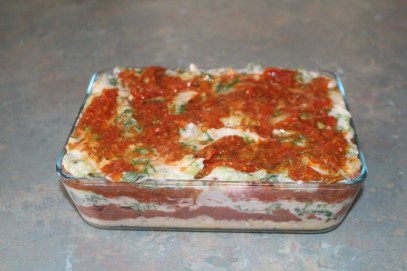
Half of the bok choy/white sauce mixture then half of the tomato mixture.

Repeat with refried beans, bok choy and tomatoes.

2020-05-25 07

The final step will be to sprinkle with crumbs and grated cheese and bake until heated through.  I use flaxseed meal instead of breadcrumbs for a nutritious and gluten-free alternative.

This will make 4 generous adult serves so we will have half of it for dinner and the remainder for another meal.


Pandemic and Packaging

6 Comments

As Plastic-Free July looms on the horizon, perhaps it is time consider one of the little-discussed ‘victims’ of the current COVID-19 pandemic.

For well over 20 years I have worked on reducing the packaging that comes into our home.  I take my own containers to buy dry goods (flour, nuts etc) from bulk bins.  I have been able to take my own bottles to the local Co-op to get them refilled with apple cider vinegar, tamari and olive oil.  The local IGA supermarket and butcher accepted my own containers for meat, fish and deli items including sun-dried tomatoes, olives and feta cheese.

However, everything changed as COVID-19 arrived.  I can still buy dry goods in my own jars as long as they are scrupulously clean and have no remnants of previous contents.  We eat very little meat so I have not been to the butcher since the pandemic began.  Neither the Co-op or IGA are accepting containers to refill at the moment.  Will this change back when things settle down?  Will it become the new normal and the years of action on single-use packaging be unravelled by one virus?  Only time will tell.

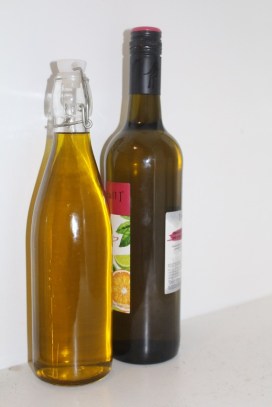
These changes have forced me to reconsider my shopping habits.  The item which has been impacted most significantly is olive oil.  I used to take a litre bottle to the Co-op for it to be refilled but now I am obliged to buy a new 750ml glass bottle for $2.95 each time I wish to buy the local, organic olive oil.

This bottle will simply be refilled from the drum of olive oil as required now.  No more bottles.

2020-05-19 01

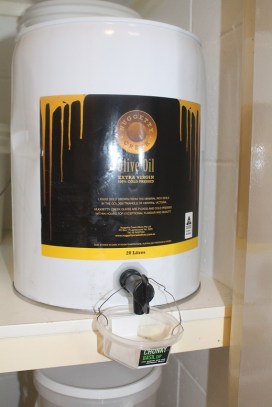
We use a significant amount of olive oil so my interest was piqued when I saw a sponsored post on Facebook from Nuggety Creek Olives.  After a bit of reading I discovered that I could buy a 20 litre drum of olive oil for $180.00 delivered to my door.  The extra virgin olive oil is produced from olives grown without chemicals and I believe the farm is currently being audited for organic certification.

The Nuggety Creek olive oil arrived safely and is now stored in a cool, dry cupboard.  I even made a drip catcher from an old dip container and a piece of wire salvaged from the shed.

2020-05-19 02

20 litres may sound like a lot of oil but I will be sharing it with at least 3 friends.  Thinking outside the box has allowed me to continue to minimise the packaging that we generate.

Bottles filled and ready for distribution to friends.

2020-05-19 03

I have not bought any of the other items I mentioned as yet but my next project is to look into a bulk source of olives.  While I understand that all foodstuffs must come in some sort of packaging or container, unless you produce it yourself, I am keen to buy in larger quantities, and therefore, minimise the impact.

Have you considered changing your shopping habits since the pandemic began?  Would community bulk-buying be an option for at least some products?

Refreshed and Updated

Leave a comment

It is now over 9 years since I began this blog.  There have been some hiccups along the way which included losing photos from the early blog posts.  Some have been restored and others have not.

After some time, I decided that an index was required as the recipes could be difficult to locate.  I created this but it was incomplete and certainly not up-to-date.  I have worked to rectify that but it will be an ongoing project.  The index contains hyperlinks to the posts containing recipes.  You will find the index under the tab labelled ‘Recipes – Food’ at the top of the blog.

2019-05-05 01

In an effort to make it easier for users to peruse the index, I have created various categories and listed the recipes in alphabetical order.

2018-08-09 02

There are over 70 recipes currently listed and include some which have been handed down through several generations as well as more recent acquisitions from friends and the internet and some of my own creations.  Many of the recipes are gluten-free or are able to be adapted to gluten-free as I began to eat a gluten-free diet early in 2012.

2020-01-13 06

In addition to the recipes I have also updated the blogroll on the right-hand side of the blog.  These are a selection of blogs that I find interesting and which have some similar themes to my own.  Blogs come and go so I have removed several which are no longer relevant or active and added others which have captured my interest more recently.  Please feel free to drop by and check them out.


Sweet Chilli Sauce

Leave a comment

As promised, here is the recipe for the sweet chilli sauce.

A couple of weeks ago my sister gave me these chillies.  They are milder than our birdseye chillies and she assured me that they are just perfect for making sweet chilli sauce.

2020-05-09 01

As always, I consulted Google for a recipe and found this one.  It is from the Australian Women’s Weekly and it was refreshing to find an Australian recipe that I did not have to interpret or substitute either ingredients or measurements.

I had enough ingredients for a half quantity so this is what I used.

Sweet Chilli Sauce

125 gram fresh long red chillies
375ml white vinegar
250ml water
1 cup raw sugar
1 teaspoon salt
3 cloves garlic, crushed

Remove green stems from chillies, chop chillies coarsely with their seeds. Process chilli until finely chopped.

Combine vinegar, water, sugar and salt in large saucepan. Stir over low heat, without boiling, until sugar dissolves. Add chilli, boil, uncovered, 20 minutes.
Add garlic; boil, uncovered, about 20 minutes or until mixture is reduced to 3 cups (375ml). The sauce will thicken on cooling. Stand sauce 10 minutes.
Pour hot sauce into hot sterilised bottles, seal immediately. Cool, refrigerate.
NOTE:
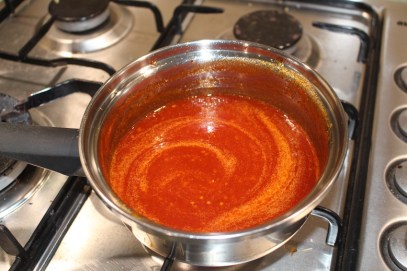
I probably boiled mine a bit too long.  I think the cooking times need to be reduced for the reduced quantity.  It looked and tasted wonderful when I poured it into the bottle but the seeds and skin were too hard and chewy.
I left it for about a week while I considered my options.
Yesterday I removed it from the bottle and added about another 125ml of water.  This all went into my high-speed blender which effectively blitzed the skin and seeds.  I then simmered it for about 5 minutes before re-bottling it.
2020-05-15 02
We had Zucchini and Corn Fritters last night and the sweet chilli sauce was the perfect accompaniment.  It is rather more opaque and smooth than the commercial varieties but the taste is second to none.
2020-05-14 03

Simply Delicious

4 Comments

Tonight I made zucchini and corn fritters for our dinner.  I checked out several recipes via Google and this is what I came up with.

Zucchini and Corn Fritters

350g potato (cooked and mashed)
1 and 1/2 zucchini (grated)
1 cup frozen corn kernels
1/3 cup chickpea (besan) flour
1 clove garlic (crushed)
Fresh rosemary and coriander (finely chopped)
1/4 teaspoon cumin
Black pepper and herb salt

2020-05-14 01

Combine all of the ingredients in a bowl.  Add spoonfuls to a hot frying pan with a little oil (I used coconut oil).  Cook on both sides until browned.  Remove to a warmed plate to serve.

2020-05-14 02

The quantity made 8 fritters.  We had 3 each for dinner served with beans from the garden and some homemade sweet chilli sauce.

2020-05-14 03

I will post the recipe for the sweet chilli sauce tomorrow.