As promised, here is the second instalment of our day out in Shepparton.
We went to the SPC Factory shop and I had no real idea of what to expect apart from hoping to buy some tinned tomatoes.
Well it was an absolute eye-opener as they had all sorts of packaged food, drinks and some household goods.
I did buy 3 large tins (2.95kg each) of chopped tomatoes. You can see them on the top shelf as I had put some of our haul away before I thought to photograph it.
I also bought the 12 bottles of passata, 2 packs of gluten free gnocchi as well as a couple of other packs of gluten free pasta shown here.
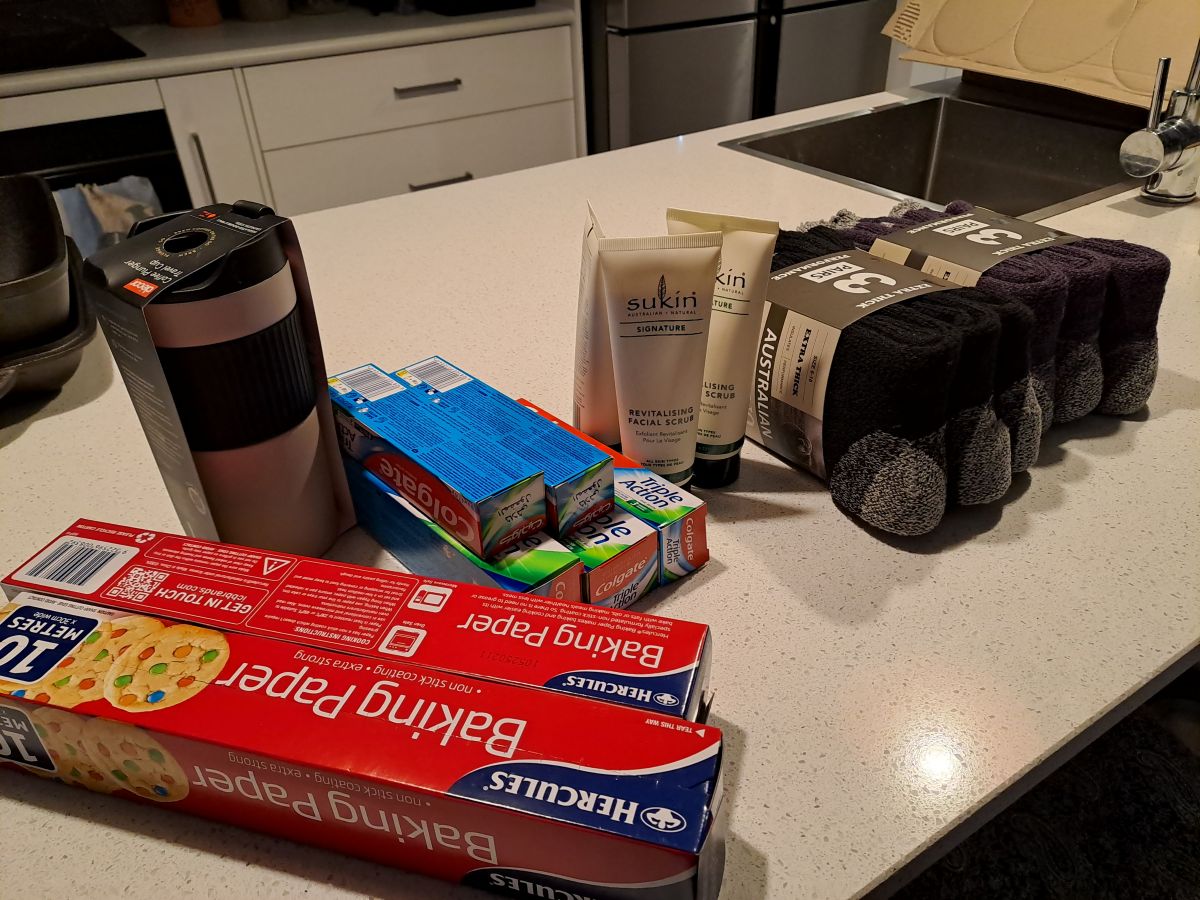
Other items were 6 pairs of socks, 2 rolls of baking paper, a travel coffee plunger/mug, several tubes of toothpaste and facial scrub.
Everything that I bought was needed and well-priced. It would be easy to go overboard and be sucked into buying things that you do not need. You also need to know that you can successfully use and/or store various items as well as being aware of the pricing in regular supermarkets or other sources.
I am confident that the $114 that we spent was good value. I certainly would not need to shop here regularly nor would I make the 2 hour drive just to shop here. However, it is good to know what is available should we happen to be in the area in the future.
Basil grows easily here during the summer and sometimes I am organised enough to make and freeze some pesto for use throughout the year.
However, I bought a large (800g) can of basil pesto a few weeks ago when I spotted it at Cheaper Buy Miles when were in Melbourne. There are several of these stores, predominantly in inner suburbs of Melbourne, where you can buy an amazing array of short-dated items.
Here is an image from their website.
You never know quite what you will find so it is quite an adventure. They often have a good selection of gluten-free and vegan foods, too.
Anyway, back to the basil pesto. I bought a 800g tin for $6 and based on the average price per 100g of basil pesto at Woolworths it is worth about $20!!
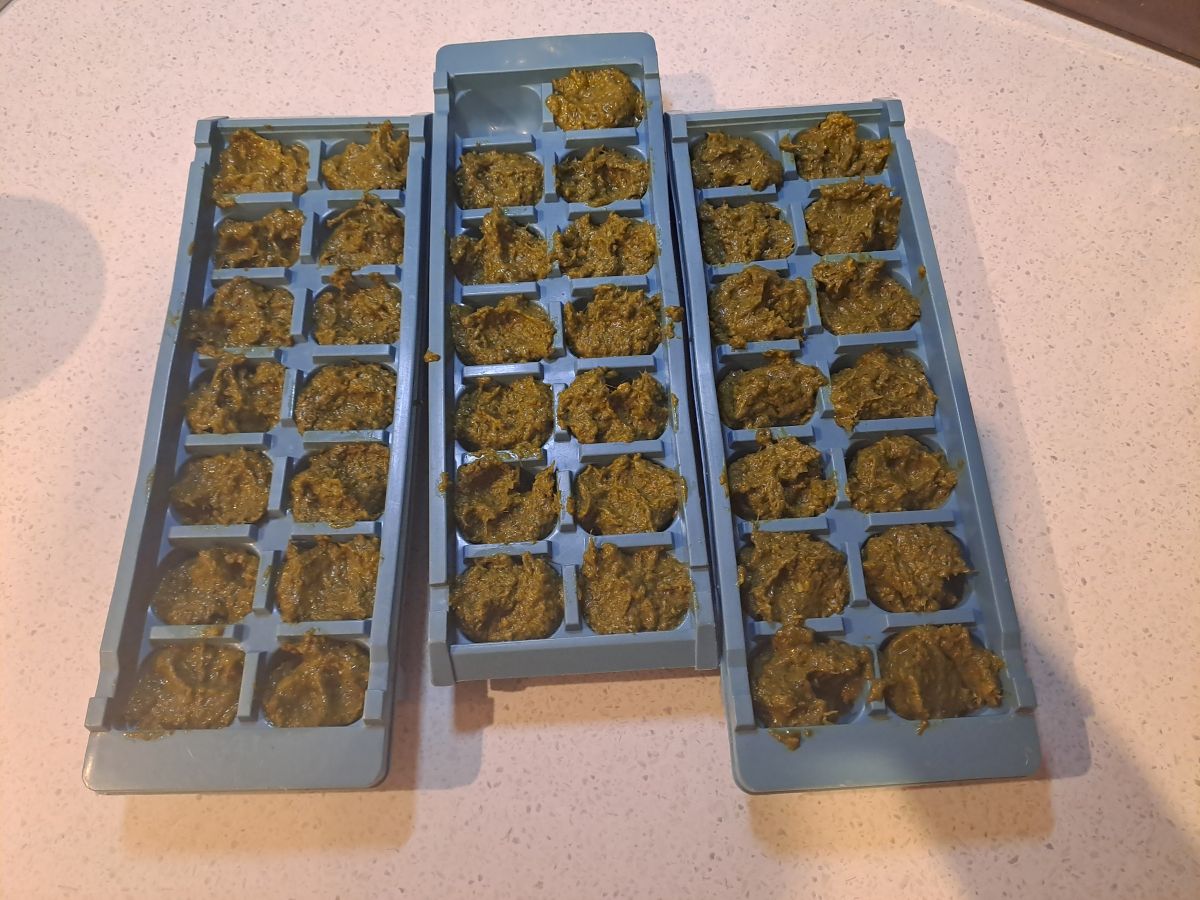
Of course, it can be quite daunting as to what to do with this kind of bulk quantity. I used some to make a creamy basil pesto and mushroom pasta dish for dinner the other night then I portioned the rest up in ice-cube trays and froze it.
I now have a bag of frozen cubes of basil pesto which will thaw quickly and easily for a multitude of uses.
I was contemplating writing this post yesterday and the first step was to consider what I had actually done in the past week that was blogworthy. I have been neither particularly busy nor lazy but just meandering along.
On Thursday we went to Melbourne to see Tim Minchin. It was a terrific show and we made the most of the trip by going shopping during the day. It was mostly stocking up on some food as well as buying descaler for the coffee machine and getting a key cut. Saturday evening was more socialising as we went to see a local band at a small bar in our town.
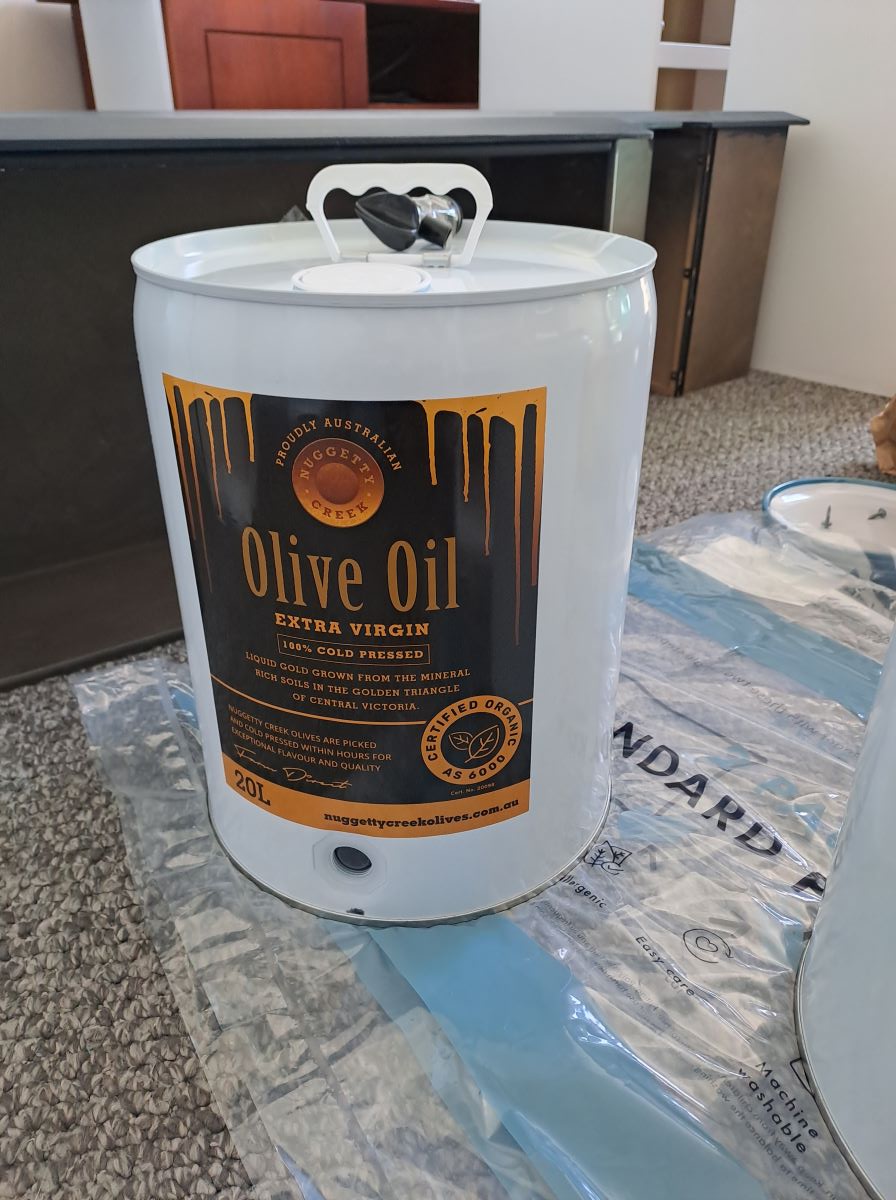
In other shopping news, I stocked up on some bulk items. I have managed to arrange to collect bulk olive oil from the farm gate about 30km from where we live. We picked up 2 x 20 litre drums of new season organic olive oil which we share with several friends. It is an economical and efficient way of purchasing a premium local product.
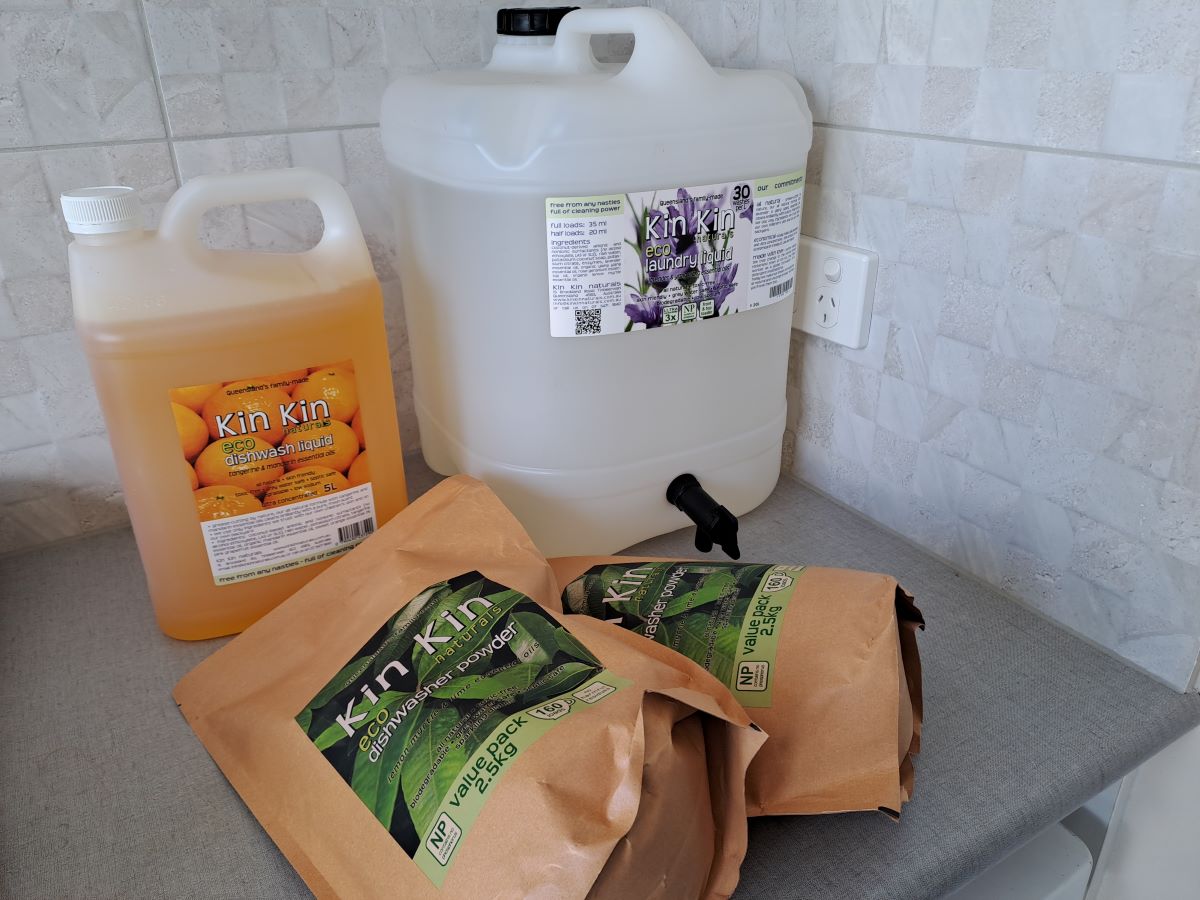
My other purchases were online. I have previously bought all of my dishwashing and laundry cleaning products from Kin Kin Naturals, a family business located in the Sunshine Coast hinterland. As it was relatively close to where we lived previously, I was able to buy directly from the manufacturer. I decided it was time to research my options for these products and found that I could buy bulk quantities online from Australian Organics so I stocked up. This was an easy decision as they offered $9.50 flat rate shipping. I found that the shipping costs often make online shopping an uneconomic proposition so this was a great find.
I have also ordered a 15 litre drum of hair and body wash from Envirocare which should arrive in the next day or two. This is another product I am familiar with using and it makes sense to buy a substantial quantity in one go.
Why do I buy in bulk? There are several reasons that make sense to me. It saves time, money and packaging as well as protecting against supply chain issues. I know it is not for everyone as you need to have space to store the larger quantities as well as money available for the upfront costs associated with buying bulk amounts. These are a couple of the reasons that I am happy to share the olive oil with some like-minded local friends. Perhaps I will extend to co-operative buying approach to some of the other products as well.
Over a number of years I have heard of many people choosing to do ‘no-spend’ days, weeks, months or even a year. It seems that there are as many different ‘rules’ as there are people undertaking this idea but the general premise is to not buy excess food and try to use what you have on hand but most importantly to eschew discretionary spending.
I have never consciously tried to not spend for a specified period of time but since we are halfway through January I thought it might be timely to review what I have spent this month. It is a relatively easy process as we track everything we spend.
We track our regular, fixed expenses on one spreadsheet. This allows us to see what subscriptions, insurances etc are due each month and we make sure there is money set aside for those.
The other spreadsheet is a month by month record of our variable spending. Some of this is discretionary such as eating out, books or clothing purchases but others are what I regard as essential. This category includes things like groceries and fuel.
This January certainly does not look like ‘no spend’ as our expenditure for the first 16 days of the month has been a little over $2000. So, let’s examine where the money has gone.
Our fixed expenses for all of January are $627.
We had planned and budgeted for an interstate holiday for 2.5 weeks which concluded when we arrived home on 6th January. Costs for the January portion of the holiday were $503.
In the 10 days since we arrived home we have spent $912.
$195 – Groceries
$148 – Fuel
$285 – Pet expenses
$100 – Health expenses
$134 – Home maintenance expenses
$50 – Entertainment expenses
Yes, the entertainment expenses are definitely discretionary and if I was strictly following a ‘no-spend’ regime that would have been foregone. Other than that and the holiday spending at the beginning of the month, everything else was necessary.
On balance, I think that our method of accurately tracking and recording our spending works well for us. I don’t feel any real need to try to artificially reduce our spending by pushing spending from one month into the following month.
Do you do ‘no-spend’ months? What are your ‘rules’? Do you feel that it makes a difference to your overall spending?
I look forward to hearing your thoughts and comments.
Things come in threes according to the old adage but I think I can top that.
Since we began to seriously consider listing our property for sale, it seemed like everything decided to fall apart. During the second half of 2022 we replaced the solar hot water system, the pump for our water tanks, the inverter for our solar panels and the back stairs.
Ongoing maintenance is something that needs to be accounted for in terms of time, energy and most significantly, money. These four items cost us in excess of $13,000. Being a homeowner is not a cheap adventure and thankfully we had the funds to cover these unexpected expenses.
Whilst it will not necessarily be a large amount, there will always be unexpected expenses that crop up from time to time. How you manage this will depend largely on your own circumstances but it is definitely not something that can be ignored.
You may also choose what is an absolute necessity and what can be delayed. For us, the pump for the water tanks was essential as no pump = no water. The back stairs could have been a lower priority as we do have stairs at the other end of the house. The hot water and the inverter could have been delayed because we have a hybrid solar system and could have resorted to the grid connection. However, this would have come at a substantial cost, particularly when utility prices are rising exponentially.
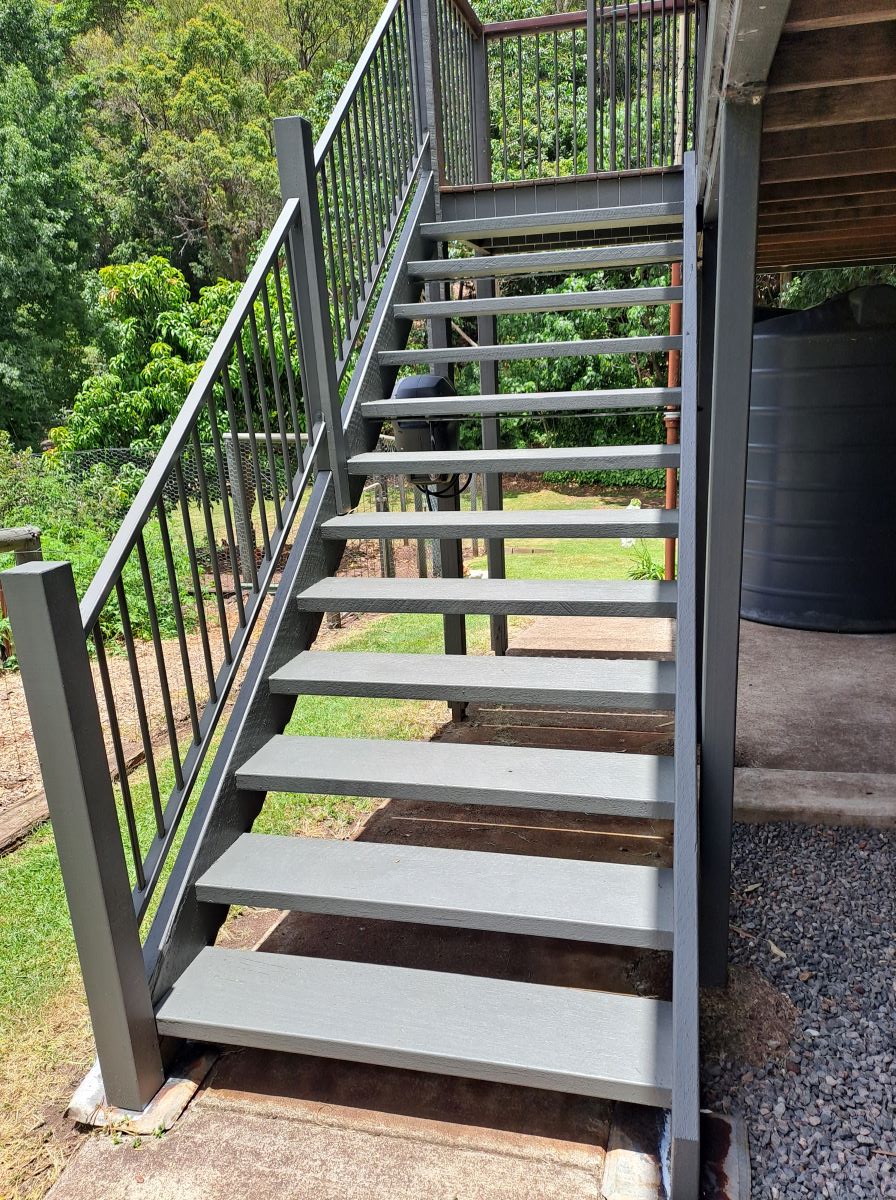
Most of the work does not warrant a photo but here are the new back stairs – freshly painted by GMan.
Yesterday we did some shopping at the supermarket and greengrocer.
As always, I scanned the shops for any particular bargains.
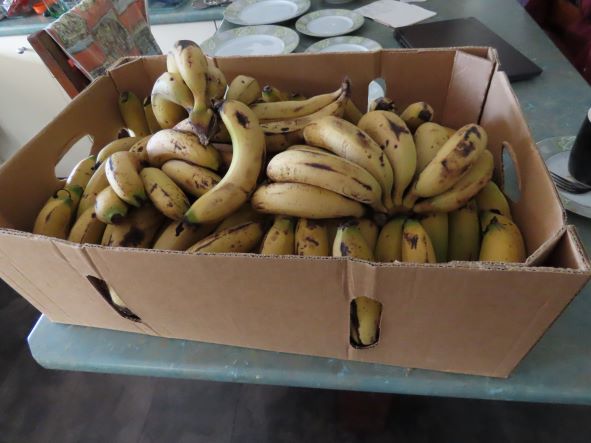
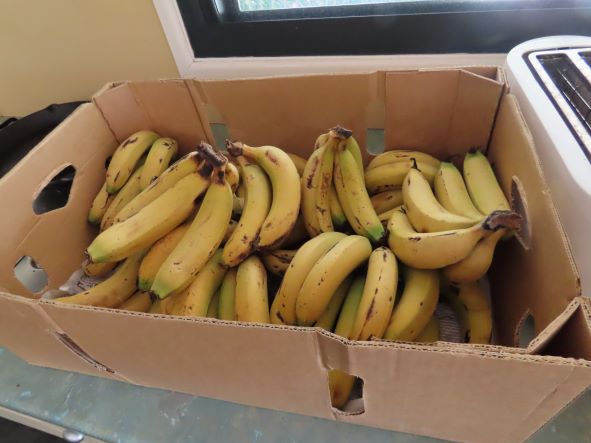
There were bananas for $1/kg so I prepared to fill a large bag. The owner asked if I wanted a whole box.
Yes, please!
We have sliced banana on our cereal each morning and it does not matter whether it is fresh or frozen.
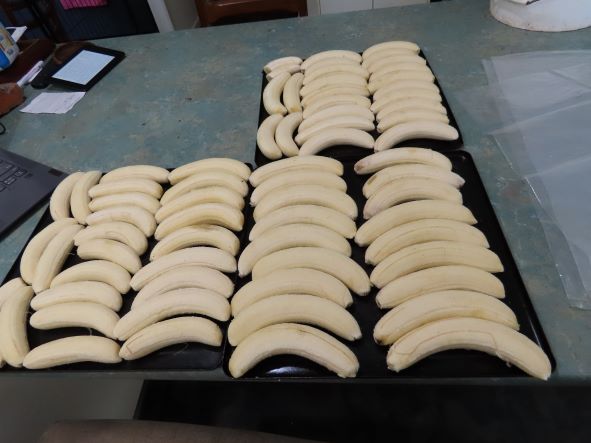
So, I peeled some and froze them on trays. Once they are frozen I will bag them up for future use. Banana cake, smoothies and banana ice-cream are other possible uses.
There are still plenty in the box so I will freeze them over coming days.
This is another example of being open and aware to bargains that may come your way.
The box full was $13 which worked out at slightly less than 9c/banana.
At the end of my last post I mentioned that I would share some details of the food preparation that I do.
In the past few weeks I have been fortunate to score some great bargains on fresh produce. A food bargain is only a bargain if you actually use the food. This can be a particular challenge with fresh produce but with a bit of know-how and some time you can make the most of bargains that may come your way.
Today I want to show you how I used and stored large quantities of cheap bananas, pineapples and tomatoes.
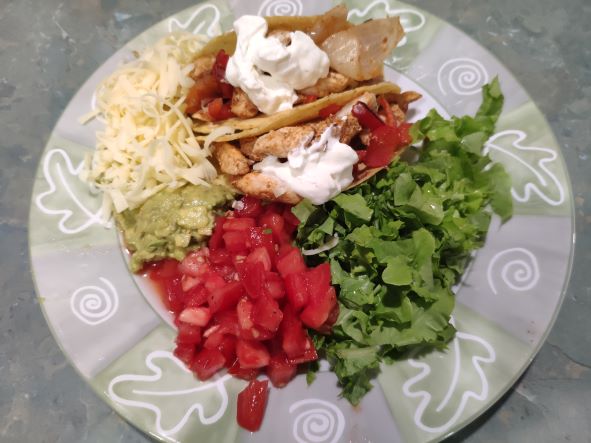
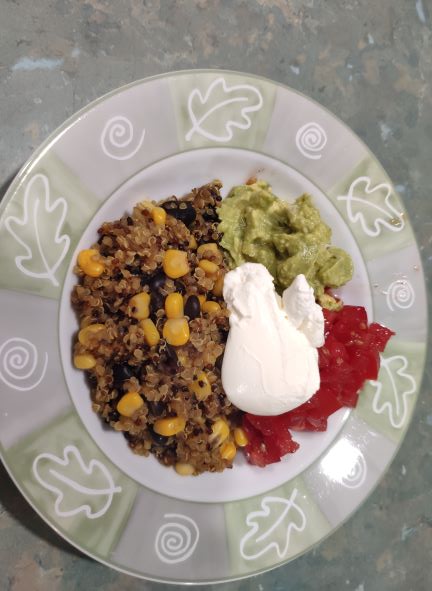
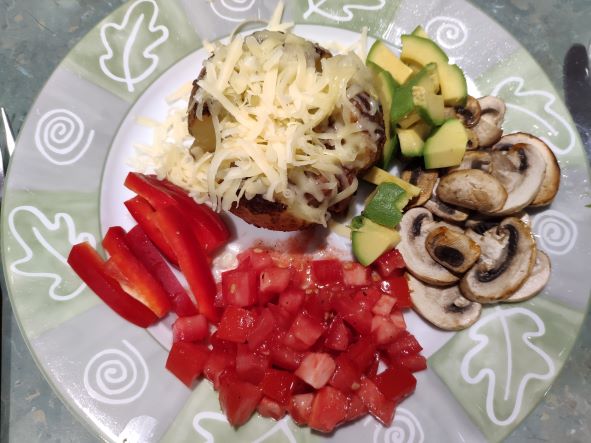
I bought a 10kg box of perfect, ripe Roma tomatoes for $10. $1/kg was too good to pass up. I could have bottled them straightaway but they were so firm, red and perfect that we decided to enjoy them fresh for as long as possible. I spread them out on a couple of racks so that would be able to easily identify any blemishes or potential rotten ones. Fresh tomato salsa was served with at least one and often two meals every day. Here is a selection of our meals.
L to R: Chicken tacos, Mexican quinoa and Baked potatoes with refried beans
This strategy worked well for just over 3 weeks which is testament to the perfect quality of the produce. In fact, I have no idea why they were being sold for $1/kg.
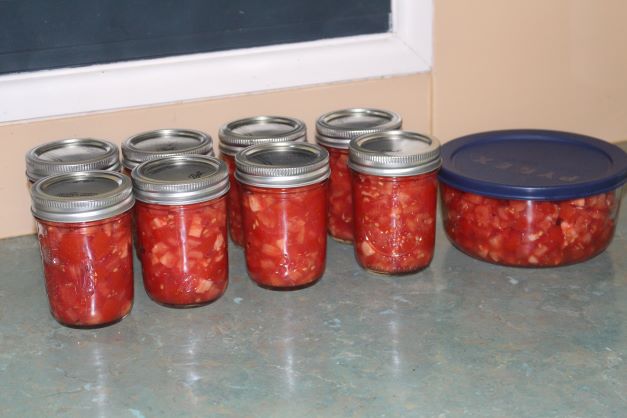
The remaining tomatoes were diced and packed into jars to go in the freezer. These will be added to casseroles and other dishes instead on buying canned tomatoes.
Next were the bananas. These were also $1/kg and I bought 12.5kg in a box. The bananas ranged from partly green to overripe but the majority were ripe and flavoursome although the skins were showing blemishes. We eat sliced banana on our cereal every day so about a dozen of the least ripe ones were added to fruit bowl to be eaten over the next week.
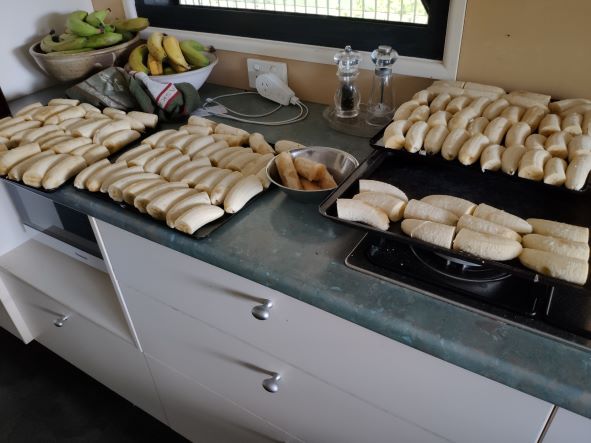
Two very ripe ones became banana cake and the remainder were peeled, cut in half and frozen on trays. They can be sliced and added to cereal with no further preparation.
You can see the less ripe bananas in the fruit bowls in the background as well as trays ready for the freezer and two bananas in the bowl which were about to be turned into banana cake.
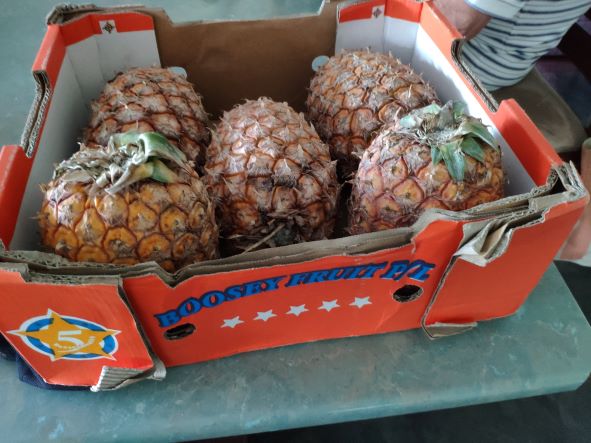
Finally, the pineapples. I spotted this box of 5 pineapples for $4 and knew exactly how I could use them.
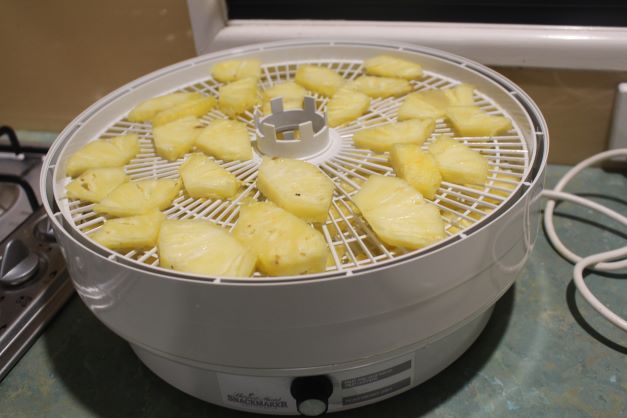
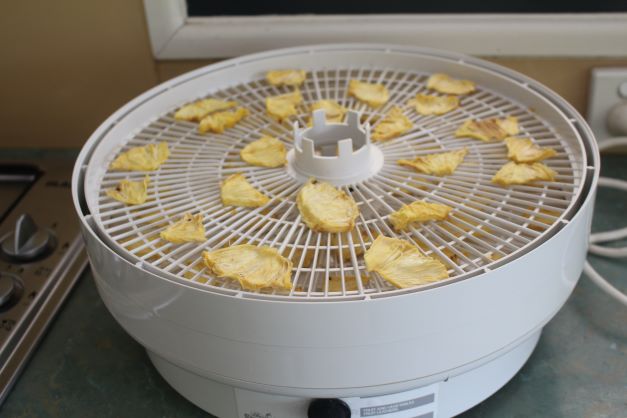
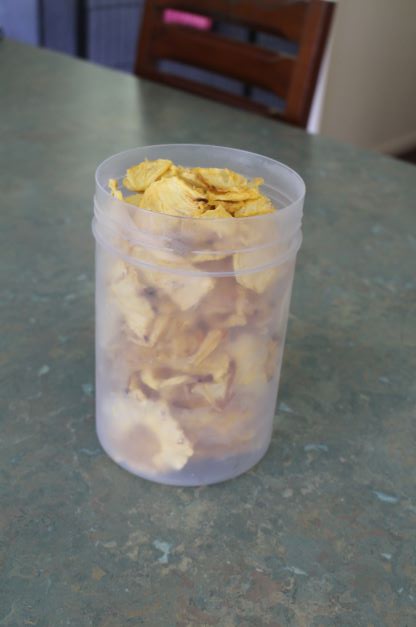
Dried pineapple is a delicious treat so it was a simple matter of peeling, coring and slicing the pineapple and then into the dehydrator. We like it semi-dried (a bit chewy but not crunchy). I store it in a container in the refrigerator.
L to R: Fresh pineapple ready to dehydrate, dried pineapple, ready to store in the refrigerator.
I would love to hear your stories of bargains or gluts and how you make sure they do not go to waste.
Most of us are trying to make the most of our grocery budget as food prices seem to be increasing on an almost daily basis. Extreme weather events driven by the impacts of climate change along with global conflicts are combining to disrupt supply chains.
This is the background upon which shoppers are doing their utmost to spend their food budget wisely.
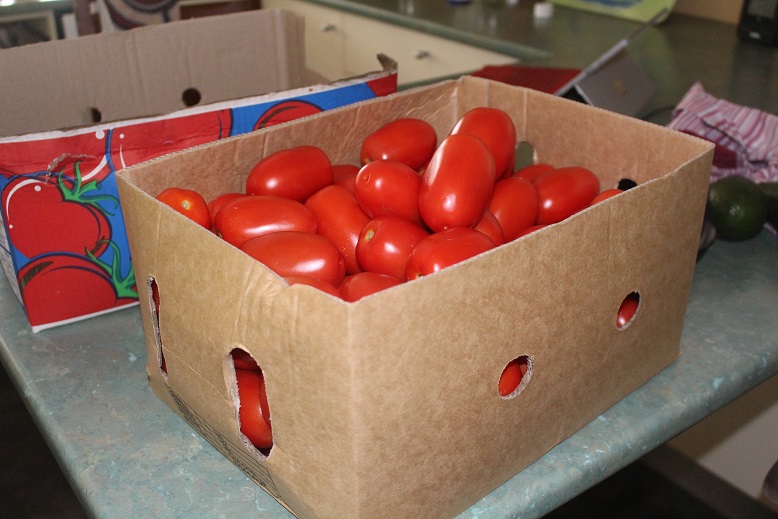
There are not many, if any, items which can regularly be purchased for $1/kg. So, when I spotted Roma tomatoes for $1/kg at our local greengrocer, I took advantage of the bargain. Although the tomatoes were loose on a display stand, I discovered that I could purchase an entire 10kg box for $10. This was too good to pass up.
Here is my haul.
Of course, a bargain is only a bargain if there is no wastage. I have spread the tomatoes out on the kitchen bench and there are no soft spots or blemishes – all absolutely perfect.
Tonight we will have slices of fresh tomato on our pizza. Tomorrow I will make salsa to have with our bean tacos and I am sure they will feature in other meals over the next week. Other than that, I may dehydrate some, make pasta sauce and bottle or freeze them whole.
Making the most of seasonal and often cheaper produce makes good sense as we try to stretch our budget a little further.
I have previously written about the importance of mindset. This can apply to many situations.
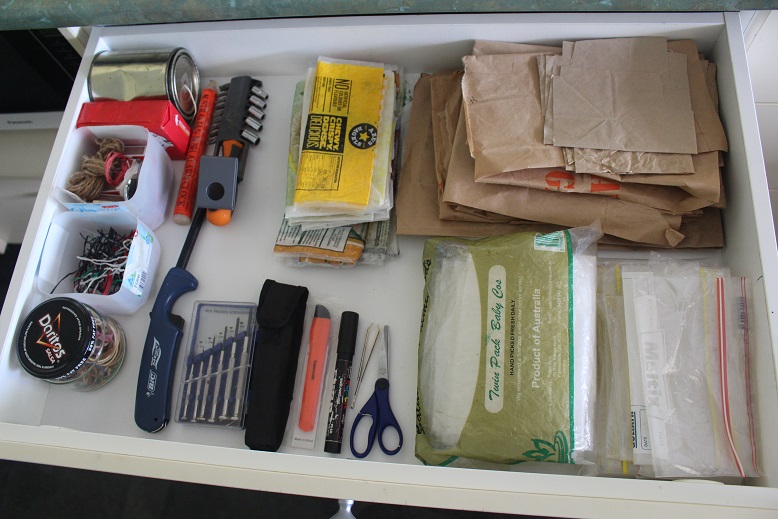
That drawer in the kitchen that many people refer to as the ‘junk drawer’? By calling it, even silently to myself, as the ‘useful drawer’ has helped me to ensure that it holds only useful items. It is not a place for junk and this aids in keeping it tidy and uncluttered.
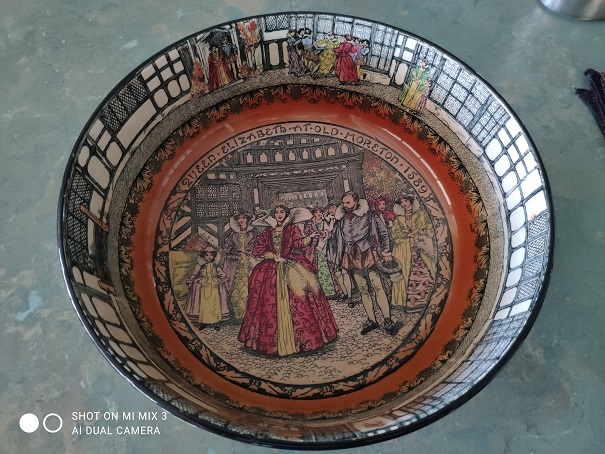
I don’t ‘get rid of stuff’ either. To get rid of something implies that it is rubbish and merely describing it as ‘stuff’ does not ascribe any inherent value to the item. That is fine if it is a piece of ripped paper but if you are struggling with great-grandma’s tea set it is much more difficult. Try saying to yourself that you are letting go of a beautiful item so that it can bring joy to someone else. You will immediately feel more positive and confident about it going to a new home.
Where I live we are currently being instructed to stay at home for all but necessary outings due to community transmission of cases of Covid-19. I recognise that this is difficult for many people and we all need to be aware of our mental health and that of those around us.
Once again, a little bit of positive self-talk and mindset can go a long way. I hear many people talking about being stuck at home and locked down. I prefer to appreciate the time I have been given with very few demands on my time. It can be an opportunity to begin, continue or even finish some of those multitude of projects which do not always make the cut in our normally full and demanding days.
Although our lockdown began at 6pm yesterday, my restrictions actually started first thing on Monday morning after I had a Covid test as I had woken with a very sore throat. Fortunately, the result was negative but I do have a heavy head cold and really do not feel like doing much.
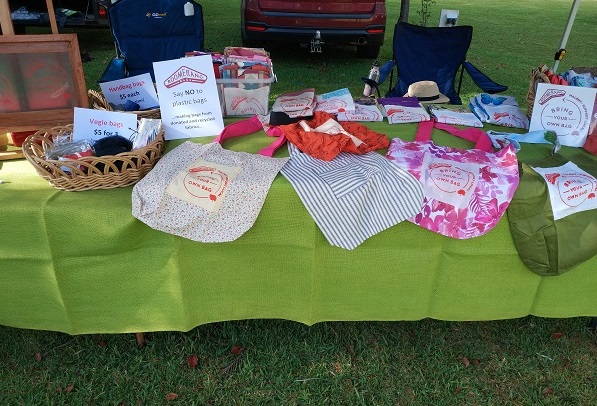
I am embracing the time and have chosen to sort and cull some of the thousands of digital photos I have on my device as well as making some more Boomerang bags and updating the budget.
Of course, I am using my skills and imagination to create meals making the most of the ingredients we have without any waste. Even though grocery shopping is an acceptable reason for leaving our home, I figure the more I stay home, the more I reduce my risk of coming in contact with Covid-19. Many people have become programmed to simply go shopping every few days. I try to maintain an acceptable level of supplies to sustain us for an extended period of time regardless of the reason.
How do you make the most of the situation in which you find yourself?
This morning we went out to do a couple of errands including picking up a few items from a nearby fruit and vegetable stall. Occasionally, there are boxes of cheap produce so it is worth keeping an eye out for a bargain.
Today I stumbled upon an amazing bargain. A box of passionfruit for FREE!! A quick look revealed that almost all of them had soft or rotten patches on them but I thought it might be worth seeing what I could salvage. I asked about whether I could have the whole box and my enquiry was greeted wholeheartedly. Here they are when we arrived home.
It was clear that I would need to process them straight away to prevent any further deterioration.
I simply cut them and salvaged the pulp from those that were OK. A small number were completely unusable.
The final haul was 2.5 litres of passionfruit pulp which is now in the freezer.
The trick is to be able to deal with bargains like this as soon as possible.