An Opportunist

Leave a comment

We were out and about this morning looking for some timber for our next outdoor project.  It was an area we do not usually frequent and I spied a flat-top truck parked by the side of the road.  It was piled with unpackaged fruit and vegetables so I quickly asked GMan to pull over so that I could see what was on offer.

I had bought fruit and vegetables 2 days ago which would probably last us at least 10 days but I was not about to pass up an opportunity.  There were zucchini, tomatoes, capsicums and lemons and everything was $2/kg.  It had been picked yesterday from a farm in an area about 3 hours drive to the north of where we live.  The tomatoes were not sufficiently ripe for me to consider them and we most definitely do not need lemons as we have 2 trees of our own.

Most of the capsicums were green but I selected a couple which were semi-coloured as well as several zucchini.

2020-06-20 01

This haul cost me $4.70.

While this was somewhat of an impulse buy, it was not without some consideration as to how I would use the produce.  The capsicums are quite large so I am going to cut one in half lengthwise and stuff them for dinner tonight and serve with a side of coleslaw.

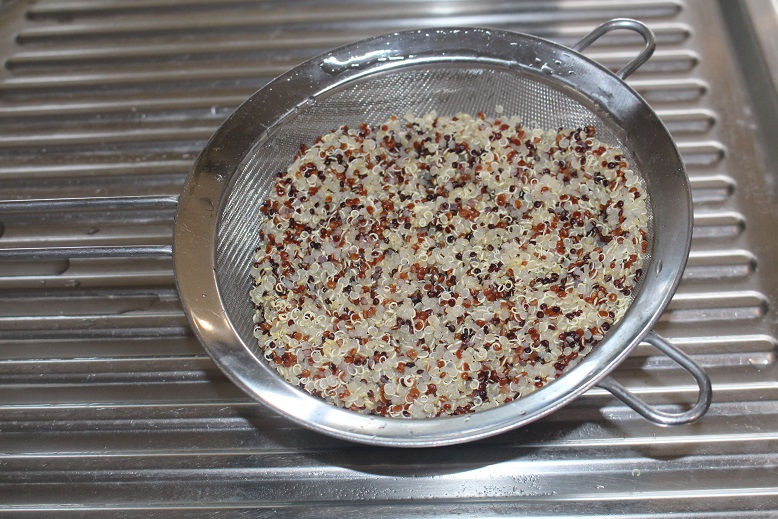
I have cooked some quinoa to use as the basis for the stuffing.

2020-06-20 02

The remaining capsicum will probably be used in a roasted vegetable salad along with some of the zucchini as well as eggplant and mushrooms that I bought on Thursday.

I intend to make another zucchini quiche which will use up a couple more of the zucchini.

It is great to be able to directly support farmers as well as snapping up a bargain.

Most importantly, nothing will go to waste.


New Creation

2 Comments

Our dinner last night was a previously untested creation.  GMan hailed it as a real success.  While there are recipes for Eggplant and Mushroom Stroganoff online, mine is a variation on the beef version I used to make a number of years ago.

Eggplant and Mushroom Stroganoff

1 onion, diced
1 clove of garlic, crushed
1/2 red capsicum, diced
1 medium eggplant, cubed
12 mushrooms, sliced
Olive oil
Sea salt
Freshly ground black pepper
1 teaspoon smoky paprika
2 teaspoons beef stock powder
60ml Worcestershire sauce
125g ricotta cheese
500ml water
2 teaspoons arrowroot

Spread the cubed eggplant on a roasting pan, drizzle with a little olive oil and sprinkle with salt.  Roast at 160C for about 15 minutes or until tender.

2020-06-19 01

Saute  onion and garlic in a frying pan.  Add capsicum, mushrooms and eggplant.  Add pepper, smoky paprika, beef stock powder, Worcestershire sauce and water.  Simmer gently for 10 minutes.  Add ricotta cheese stirring gently to combine.  Thicken with arrowroot blended with a little water.  Cook for a further 2 minutes.

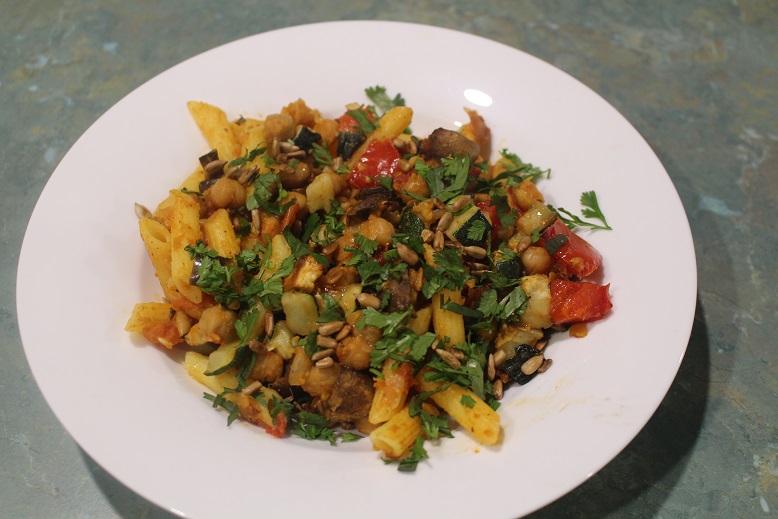
Serve over pasta of your choice.

2020-06-19 02

NOTES:

I added some finely shredded bok choy which I lightly sauteed before stirring into the stroganoff immediately before serving.

The ricotta cheese was used because it was what I had on hand.  You could substitute cream or evaporated milk to create the creamy sauce.

I used gluten free penne pasta.  Rice would be a suitable alternative to pasta.

This made 2 generous servings.


Lemon Curd – My Way

Leave a comment

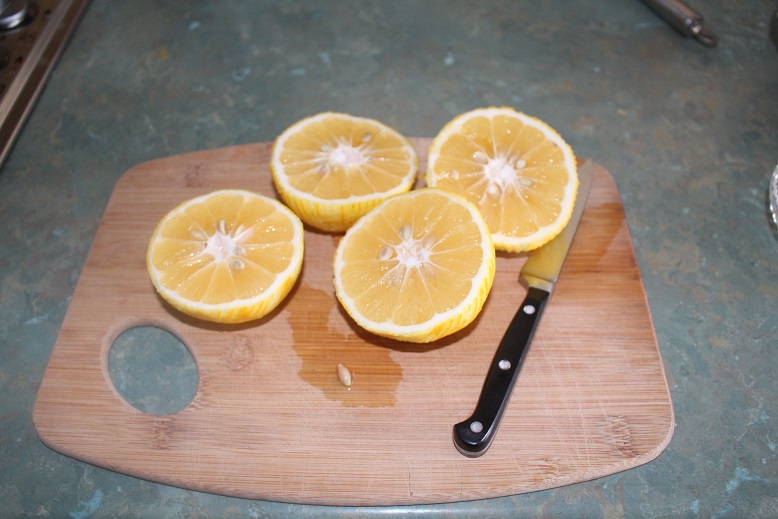
It is early winter where we live and that means we have citrus fruit in abundance.  The fruit on the Meyer lemon were ripe and we picked them all as this particular variety does not seem to hold well on the tree.

We gave away heaps as well as freezing some juice and using it generously in drinks and recipes.  GMan asked if I would make some lemon curd, also known as lemon butter.

Apart from wanting to use up some of the lemons, I was keen to find a reasonably ‘healthy’ version of this sweet treat.  So, I turned to the ever-useful Google.

This is an indication of the usual lemon butter offerings.

  • 4 eggs
  • 3/4 cup sugar
  • 1/2 cup lemon juice
  • 2 teaspoons lemon zest
  • 125g butter

After a bit more research I found a recipe which seemed to align with my goals.

  • 2 eggs
  • 1/2 cup sugar
  • Juice of 2 large lemons
  • 4 tablespoons lemon zest

I was keen to try it but moderately sceptical as the proportions are vastly different.

The full recipe is here.  My slightly amended version is below.

First I collected the utensils I needed.  You can read more about my kitchen utensils here.

This image has an empty alt attribute; its file name is 2020-06-14-01.jpg

Low Fat Lemon Curd

Ingredients

2 large lemons, juiced
Lemon zest from 2 large lemons
1/2 cup caster sugar
2 eggs

Grate the zest from the lemons and set aside.

2020-06-14 02

Juice the lemons.

2020-06-14 03

Place the strained juice and sugar in a small saucepan. Heat on low and stir until sugar has dissolved.

2020-06-14 05

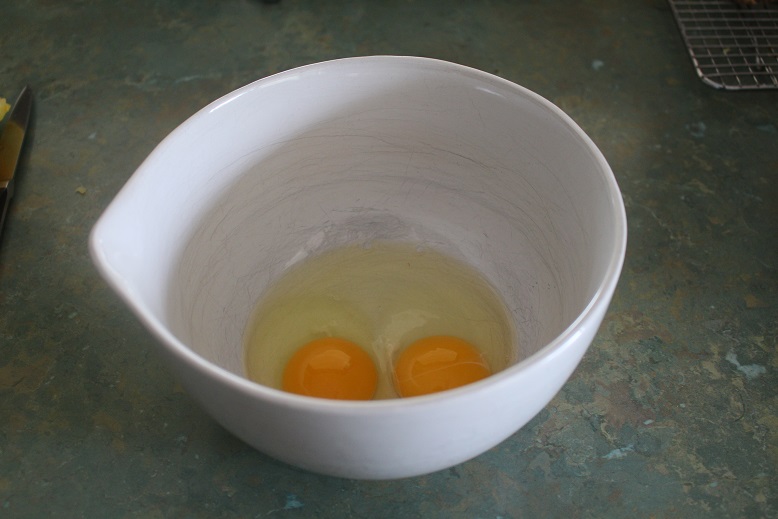
Lightly beat the eggs in a medium bowl.

2020-06-14 04

Remove lemon syrup from heat and pour slowly into beaten eggs while stirring the mixture with a whisk. Continue to whisk by hand for one minute.

2020-06-14 06

Return mixture to saucepan; add lemon zest, and heat on low until it thickens―about two minutes.

2020-06-14 07

 
Allow to cool then refrigerate.
 
NOTE:
 
My concerns were realised as the mixture did not thicken as much as I would have liked.  So, I resorted to my back-up plan.
 
2 teaspoons arrowroot blended with a little water.
 
Gently reheat the lemon curd until it reaches boiling point the stir. Add the arrowroot mixture slowly and continue stirring constantly.  Cook for one minute.  Cool and refrigerate .
 
2020-06-14 08
 
This version of lemon curd does not have the smooth richness that additional eggs and butter creates but I am very happy with the result.  It is definitely worth trying if you are looking for a healthier version of the traditional lemon curd recipe.

Easily Pleased

4 Comments

Those of you who know me well or have been following this blog for an extended period of time will be aware that shopping is not a great love of mine.  For the most part, I have pretty well everything I need.  However, my plastic spatula which I have owned for at least 20 years met an untimely end courtesy of the blades of the blender.  I realised that I definitely needed one so checked online and found that Big W had Pyrex brand large and small silicone spatulas on special so when we were out and about on Tuesday I attempted to get one of each size.  The small ones were sold out so I will look again another day as GMan is keen for a small one to use when making sourdough.

In the meantime, here is the new addition to my collection of kitchen utensils.

2020-06-11 01

Coincidentally, I had planned to clean out the utensil jars and drawer.  Each time I do this there is usually something which I decide is no longer required but I have culled my collection of utensils to a point that everything is worthy of its place in the kitchen.

Like all decluttering/streamlining projects, there is no ‘one size fits all’ as we all have different needs in the kitchen.

I have 2 utensil jars.  These hold the majority of frequently used utensils.

2020-06-11 02

Here they are laid out on the bench.

The hand beater lives in the side of the regular cutlery drawer.

2020-06-11 05

The contents of the utensil drawer.  These are generally too small or too sharp to stand in a utensil jar.  Some, such as the vegetable peeler and measuring spoons are used every day while most would be used at least once a month and a few less frequently.

2020-06-11 06

I have an expanding bamboo divider which helps to keep them in some sort of order.  Once I had wiped the drawer and the divider, I replaced all of the items.

2020-06-11 07

There is one item missing from these photos.  The pie slice which GMan is revarnishing the wooden handle.

I have not shown the sharp knives which I keep separately in a knife block.

I have multiples of a few things – measuring spoons, tongs, wooden spoons and pastry brushes but these are all used.

What are your essential kitchen utensils?  Have you reviewed or reduced what you have recently?

What We Grow

Leave a comment

One of the by-products of growing your own food is a need for increased creativity when it comes to meals.  What we eat is at least somewhat dependent on what is available in the garden.

Bok choy, a type of chinese cabbage, is a quick-growing vegetable.  Commercial crops are harvested while they are relatively young and generally sold in bunches of three.  We ate some of our current crop while they were small, however, the few remaining plants are now quite mature and strongly flavoured.

New ways to use up the mature bok choy leaves and stems.

2020-06-07 01

Freshly picked leaves shredded and sauteed with cherry tomatoes, snow peas and mushrooms for breakfast.

2020-06-07 02

Tonight I made a vegetarian lasagne with layers of lightly roasted eggplant slices, bok choy mixed with ricotta and finally, crushed tomatoes.

2020-06-07 03

It was topped with a mixture of parmesan cheese, cheddar cheese and flaxseed meal.

2020-06-07 04

Served with beans and carrots.

2020-06-07 05

VEGETARIAN LASAGNE

1 large eggplant, sliced
1/2 onion, diced
Handful of large bok choy leaves and stems, sliced and shredded
180g ricotta cheese
Can of crushed tomatoes
Olive oil
1 teaspoon mixed herbs
Salt and pepper

TOPPING

1 tablespoon grated parmesan
1/4 cup grated cheddar cheese
2 tablespoons flaxseed meal

Place slices of eggplant on roasting tray.  Brush with a little olive oil and bake at 160C for about 10 minutes – until soft.

Saute diced onion and bok choy stems until soft, add shredded leaves and stir until wilted.  Add vegetable mixture to ricotta and combine.  Season with salt and pepper.  Add mixed herbs to crushed tomatoes.  Place a layer of eggplant slices in dish followed by the ricotta mixture then tomatoes.  Repeat until all ingredients are used.  Combine ingredients for topping and sprinkle over the lasagne.  Bake until heated through and browned on top.

This is not a definitive recipe but simply what I made today.  The quantities quoted would serve 3 adults.

A Trio of Firsts

23 Comments

Today is Monday, the first day of the working week.  It is also the first day of June and, here in Australia, the official first day of winter.

It is almost like a new year.  While most people restrict their attempts at resolutions to a new calendar year on the first of January, there are plenty of other opportunities to turn over a new leaf if you choose to look for them.  However, the midst of an ongoing global pandemic may not be the best time to consider starting afresh.  Or, perhaps it is.

I am thinking of ruling a line under the past few months and moving forward.

For almost 3 weeks I have added a blog post every day.  I have never made daily posts for an extended period previously and I have been writing this blog for over 9 years now.  It has been an experiment on several levels.  Could I maintain this level of engagement consistently now that I am retired?  Does self-isolation (mostly) make it easier to write blog posts every day?  Do I want to lock myself into writing every day?  Will I always have appropriate new content every day?  Are readers looking for new content every day?  Could I intersperse blog posts every 2-3 days with Instagram posts on a specific Organised Castle Instagram account?

Dear readers, I am really keen to hear your thoughts on the frequency, length, content and photos of my blog posts.  Also, do you go back and look at older material or click on the related links I sometimes provide?  I look forward to your honest thoughts and opinions.

Meanwhile, I am about to prepare the vegetables for dinner.  We are having one of our favourite cool weather meals – roast vegetables and gravy which I will serve with some green beans from the garden.

2020-06-01 01

While the oven is on, I will also make a Lemon Delicious and some more Cheese Scones to store in the freezer.  These are great for serving with a bowl of piping hot soup.

Last of the Autumn Salad

Leave a comment

You have heard of ‘Last of the Summer Wine’?  Well, this is a little different.

Our meal this evening was Zucchini and Corn Fritters.  You can find the recipe here.

2020-05-30 01

The accompanying salad was sourced entirely from our garden.  Lettuce, cherry tomatoes and coriander were picked today while the cucumber is the end of the last one which we picked about 3 weeks ago.

We found that cucumber stored really well in the crisper section of the refrigerator.  The lettuce is going to seed but in our mild climate there is a good chance that we will even have some more self-sown ones during the winter months.  There are still fruit on the various cherry tomato plants scattered throughout the garden.  We do not experience frosts here so it is likely that we will continue to harvest a few here and there but it will not abundance we have had during the summer and autumn.  Coriander has self-seeded throughout our garden area and we are thrilled as the flower heads are particularly loved by the bees.

I made the sweet chilli sauce from chillies from my sister’s garden.  The details and recipe are in an earlier post.

Seasonal eating means that we value and appreciate the produce from our garden.  It is probably about 5 months until I next eat cucumber and I know that by then I will be really looking forward to that first crisp crunch.

Money For Jam

2 Comments

We have all heard of the phrase, ‘money for jam’, this post is about jam for very little money.  Making your own jam is probably one of the best ways to save money.  Commercially prepared jams often contain very little in the way of fruit and ‘premium’ brands are ridiculously expensive.

In the blog post from yesterday I shared how I had sliced and soaked the homegrown grapefruit.

After being soaked for about 15 hours I was ready to make the marmalade.

2020-05-29 01

Like most jam recipes this one is very simple.  The original from Annabel Langbein is here.  I chose not to use the whiskey.

You will need equal quantities of fruit and sugar and an equivalent volume of water.

For example, I used:

1.2kg of grapefruit Scrubbed, quartered and thinly sliced
1.2 litres water
1.2kg sugar

Cut the unpeeled grapefruit into quarters, then slice finely by hand or using the slicing attachment of a food processor. Place in a wide, non-corrosive preserving pan and cover with 1.2 litres of water. Cover and leave to soak overnight.

The next day, place the pot over a high heat, bring to the boil and boil for 40 minutes. Lower the heat and add the sugar. Stir until the sugar is dissolved, then return to the boil and boil for an hour, stirring every 10 minutes or so to prevent the grapefruit from catching on the bottom – you want it to almost catch, but not burn. If you feel it starting to catch, remove it from the heat for a couple of minutes, giving it a gentle stir to stop it burning on the bottom, then continue boiling.

After 55 minutes do a ‘set test’ to check if your marmalade is ready. Chill a saucer in the fridge for a few minutes, then drop a teaspoonful of marmalade onto it. The marmalade is ready when it forms a skin that wrinkles when you hold the plate on an angle. At this point add the whiskey and boil for couple of minutes more to burn off the alcohol.

Pour straight into sterilised jars and seal with sterilised lids. If properly sealed Grapefruit Marmalade will last indefinitely.

To prepare your jars for preserving: For this recipe you will need a selection of jars that will hold just over 4 litres of marmalade. This is a great way of recycling, as the jars and their metal lids can be used over and over again. Wash the jars as usual, then remove the lids and place the lids and jars in the sink. Cover them well with boiling water then drain off the water. Pre-heat the oven to 100°C then pop the jars and lids in for 15 minutes to sterilise. Once removed from the oven, put the lids on the jars immediately so they remain sterile until you are ready to fill them.

The end result of 1.2kg of homegrown fruit, 1.2kg of sugar and about 1.5 hours of my time and we have about 2.5kg of jam added to our stock cupboard.

2020-05-29 02

Garden Edge and Grapefruit

1 Comment

While there are plenty of photos of our vegetable garden there is much less evidence of the rest of the garden.  Some of it is quite naturalised and, in parts, overgrown.  We want to keep it as natural as possible but some areas require clearance of invasive weeds which are a real pest as they thrive in our high rainfall,  sub-tropical climate.  Little by little, we are planting native shrubs, in many cases, indigenous to the local area.

2020-05-28 01

This area alongside our western boundary fence had long been neglected.  As part of the preparation for the soon to be assembled garden shed we cleared the area and have planted 3 new shrubs.  In order to be able to maintain the area we have placed a rock edge about 1.5 metres from the fence.  The rocks were all sourced from our property.  Rocks are an abundant resource here and we use them for a multitude of purposes.

2020-05-28 02

As I mentioned in this post we have an orchard of about 10 citrus trees and were unfortunate enough to have an infestation of citrus fruit piercing moth a couple of months ago.  Whether it is their lifecycle, the cold weather or simply a natural progression, they appear to have moved on and I think the Valencia oranges may have been spared as well as some of the grapefruit and the netted mandarin.

2020-05-28 03

Today I picked several grapefruit – enough to make a batch of marmalade.  I sliced and soaked the fruit and will be making the marmalade tomorrow so will post all of the details then.

I started to cut them by hand.

2020-05-28 04

However, that proved too difficult so I heeded the advice of the recipe and used the thin slicing blade of my food processor which made short work of the job.  It was a simple matter of retrieving the ends of the quarters and slcing the last bits by hand.

2020-05-28 05

Soaking overnight.

2020-05-28 06


Leftover Lasagne

1 Comment

Not lasagne that is leftover.  It is lasagne made from leftovers.

This post is not so much a recipe but a demonstration of what can be done to minimise food wastage.  A germ of an idea that grew……………….into dinner.

I make my own refried beans and for some reason 2 different containers were opened and in the refrigerator.  I decided that they needed to be used up.

From the freezer I sourced a small container of cooked brown rice and a bag of cherry tomatoes.  The tomatoes are from our garden – at least a year ago.

Once the rice was thawed, I heated it then added a beaten egg and pressed the mixture into the bottom of the dish.  Next was a layer of refried beans.

2020-05-25 01

Next, I headed to the garden to harvest one of the giant bok choy.  The stalks and leaves were chopped separately.  I wilted the shredded leaves in a pan and cooked the finely sliced stalks until tender.

Meanwhile, I made some white sauce.  I use potato starch and besan flour to thicken the mixture so that it is gluten free.  I then mixed in the bok choy.

The tomatoes were simmered and reduced, herbs and seasonings added.

2020-05-25 06

Then it was time to assemble the remainder.

Half of the bok choy/white sauce mixture then half of the tomato mixture.

Repeat with refried beans, bok choy and tomatoes.

2020-05-25 07

The final step will be to sprinkle with crumbs and grated cheese and bake until heated through.  I use flaxseed meal instead of breadcrumbs for a nutritious and gluten-free alternative.

This will make 4 generous adult serves so we will have half of it for dinner and the remainder for another meal.