We have guests coming to stay next week and as well as the dedicated guest room I needed to set up another bed. There is a fold-out sofa bed in the third bedroom so I have unfolded it and made it up in readiness.
After I had done the bed it occurred to me that there was no side table in that room. After a bit of thought I decided that I could create one fairly easily with things we have one hand.
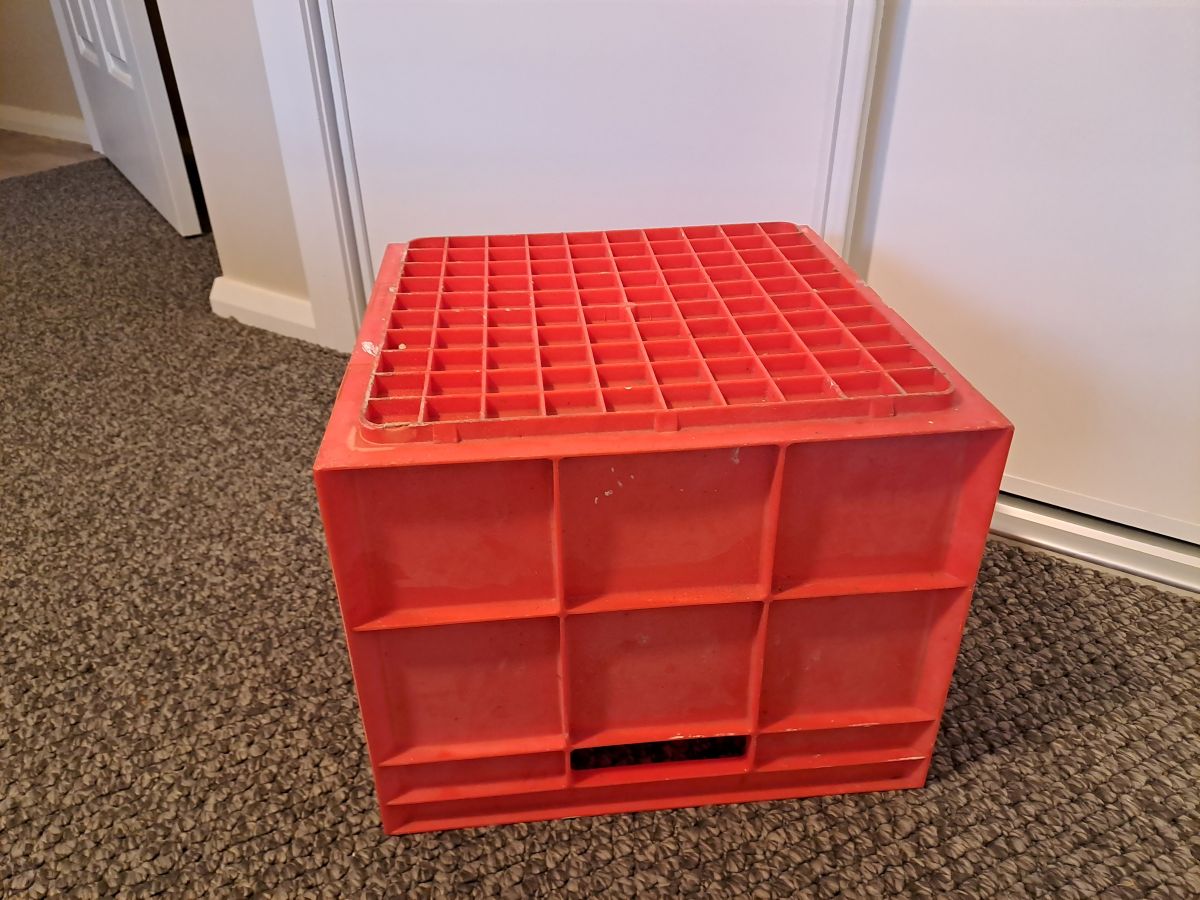
First……….a spare plastic crate from the shed. No modification needed apart from turning it upside down.
The next step was to add a solid top. GMan found a piece of melamine that was leftover from the pantry renovation and cut it to size. It is heavy enough to stay in place without any additional fixing.
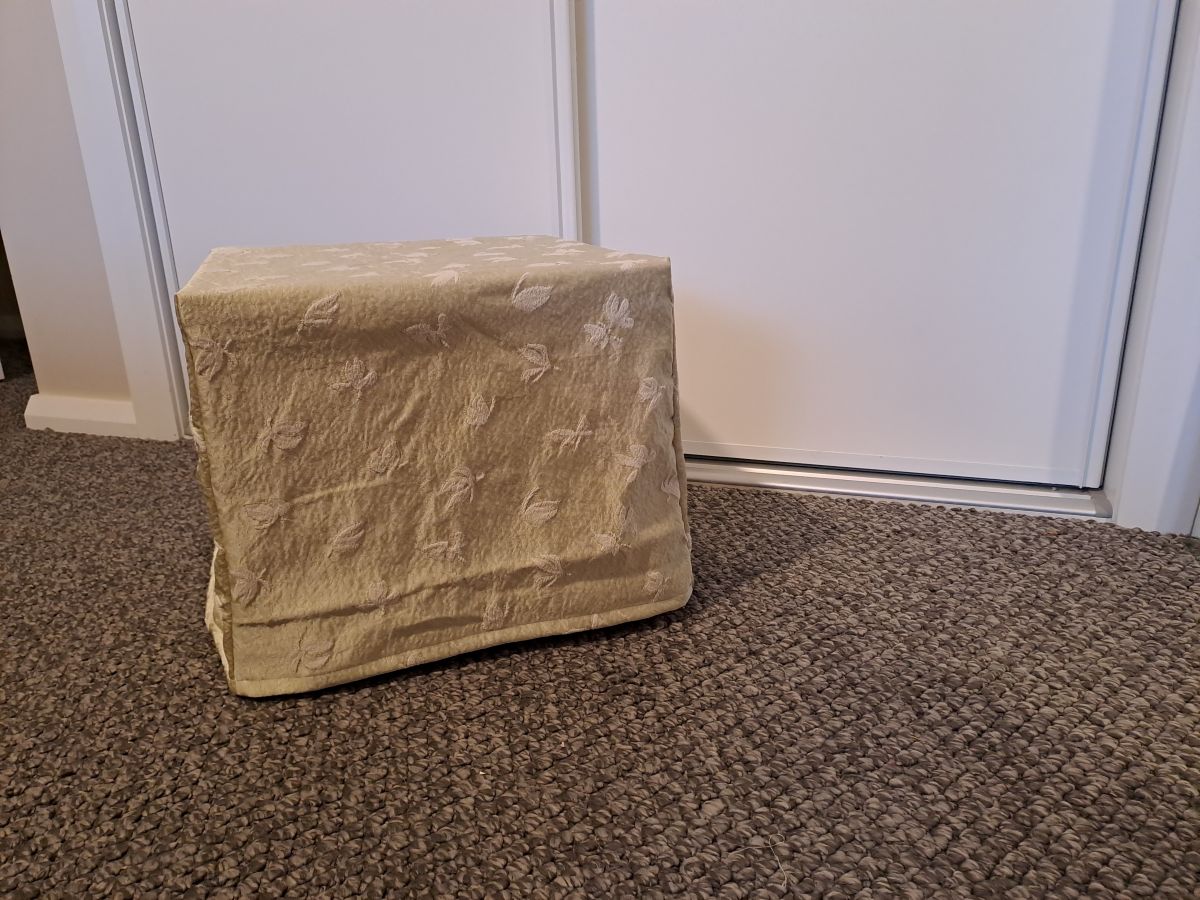
The next step was to find some suitable fabric in my stash to make a cover. I found a large piece of embroidered heavy satin which was originally one side of a thrifted doona cover and made a fitted cover.
The fitted cover in place.
The new side table in position and the room is ready for the guests.
The entire project took less than 2 hours to complete from the moment I first thought of the idea.
Decluttering and minimalism are all about eschewing ‘stuff’ and some people seem to think that life is bland and missing something without possessions.
Now, I am not suggesting for one moment that I do not have stuff or that I am even a minimalist although I certainly do have less possessions than many people.
Experiences are valuable and mean much more to me than a house filled with possessions. Travel is always high on my list of experiences. Sometimes we travel specifically for art experiences and at other times we find cultural experiences along the way.
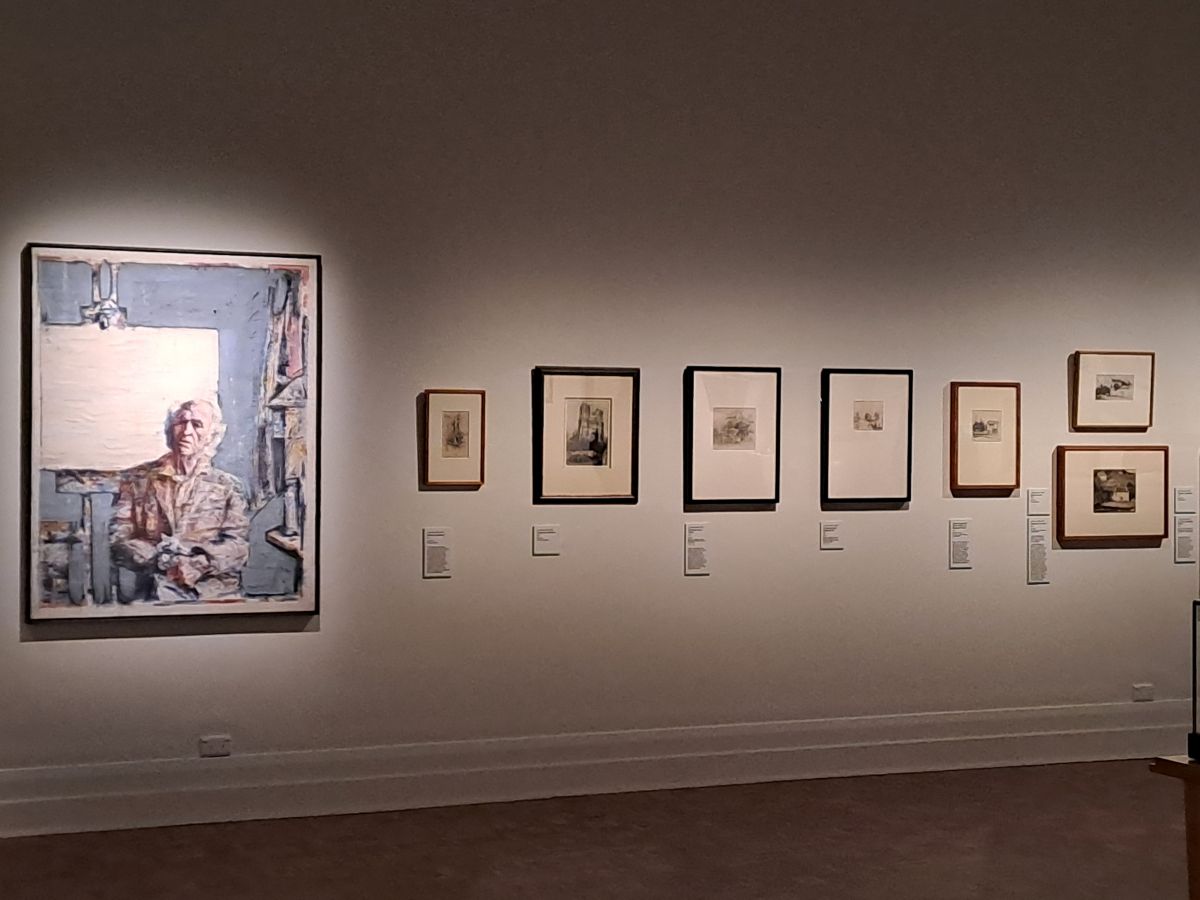
Just 12 months ago we went to Hobart for the express purpose of going to an exhibition titled ‘Lands of Light’ by Lloyd Rees at the Tasmanian Museum and Art Gallery.
We discovered a very different but equally interesting exhibition in the adjacent gallery.
The next few months are filled with various artistic and cultural events. Some are very local, such as the Maldon Portrait Prize which celebrates local artists. We plan to view the entries at a local gallery sometime in the next week. Other planned trips include Bendigo to see the Frida Kahlo exhibition and well as going to the National Gallery of Victoria in Melbourne to see ‘French Impressionism’ from the Museum of Fine Arts in Boston. We are also going further afield over the next couple of months to Gippsland Art Gallery in Sale to see ‘Turner and Australia’ which explores the influence of JMW Turner on the Australian art scene and the Art Gallery of South Australia for an exhibition titled, ‘Dangerously Modern: Australian Women Artists in Europe 1890 – 1940’.
Of course, art encompasses some many other mediums and we have tickets to several performances over the next few months beginning with our younger daughter’s dance concert tomorrow afternoon. Two live theatre productions round out our adventures for July. Live theatre is one of my great loves and I am looking forward to seeing Justine Clarke in a one-woman play, ‘Julia’ about Julia Gillard, Australia’s first (and so far, only female Prime Minister). The other is called Mother Play which premiered on Broadway in 2024. This version stars on of my favourite Australian actresses, Sigrid Thornton.
The opportunity to experience such diverse cultural experiences is worth more to me than a cupboard full of things.
The last week of May ran away while I wasn’t looking so welcome to a new month and the first official day of winter here in the southern hemisphere.
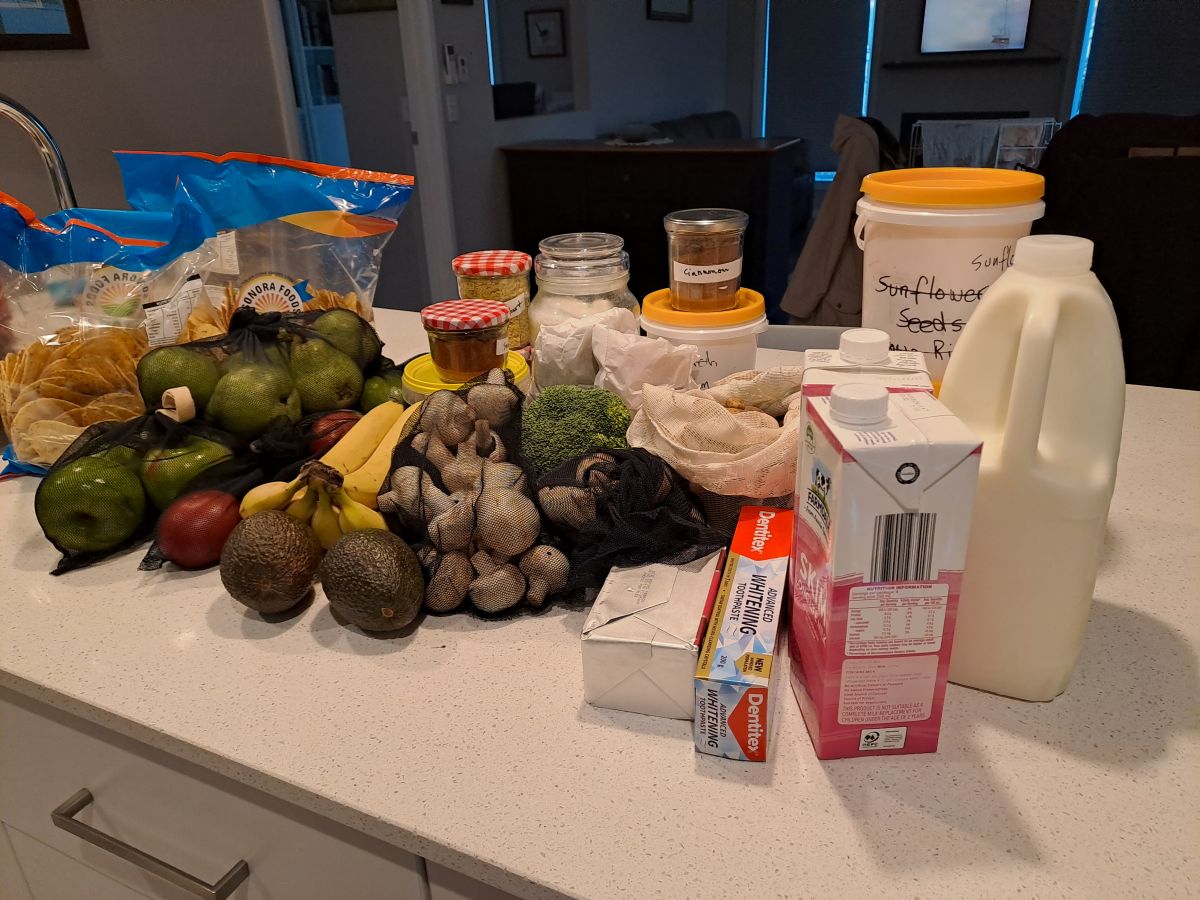
Towards the end of last year I picked a good crop of garlic that I grew. In fact, I harvested 1.7kg of garlic. I have replanted some, given some away and used it as required for the past 6 months. There was still a substantial quantity left so I decided to make my own garlic salt.
I spent a good few hours carefully peeling and thinly slicing the cloves.
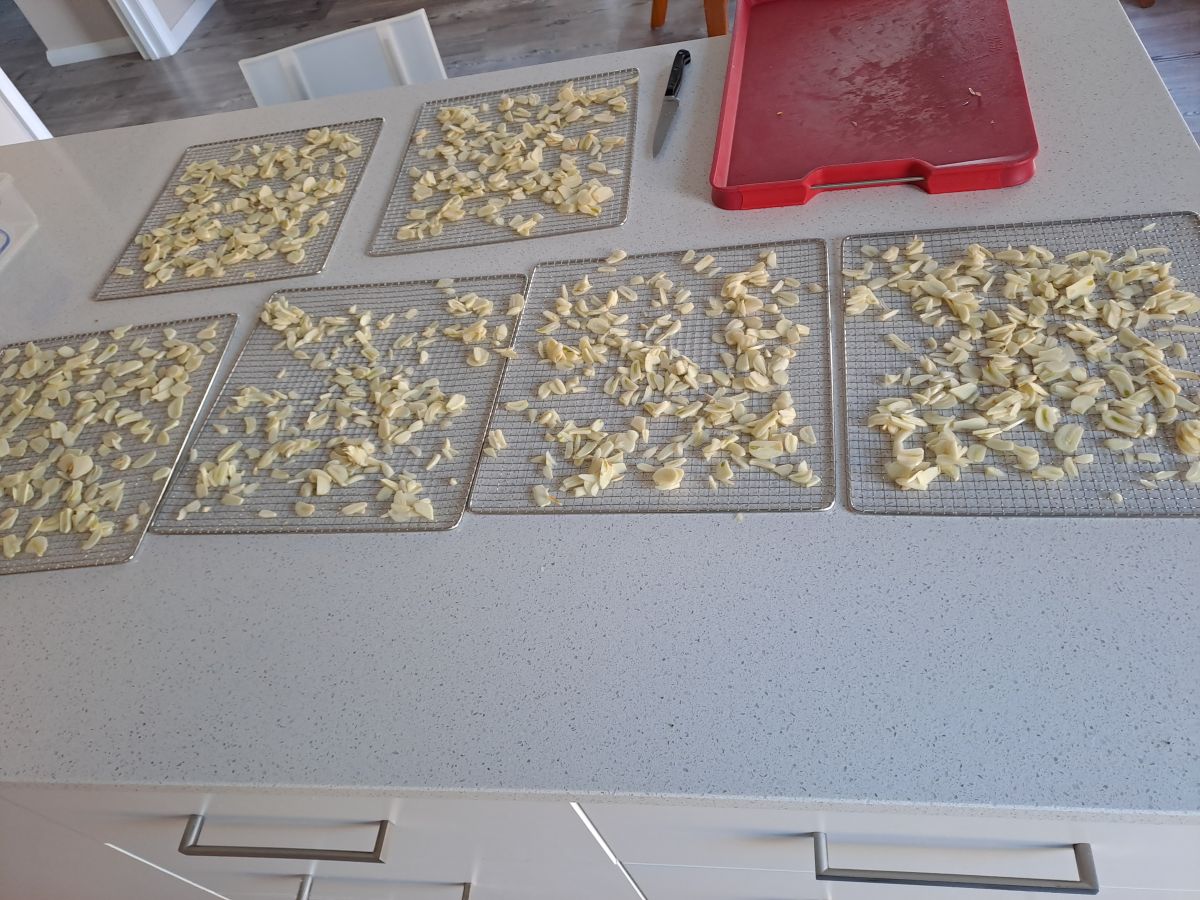
Here they are laid out on the racks and ready to go in the dehydrator.
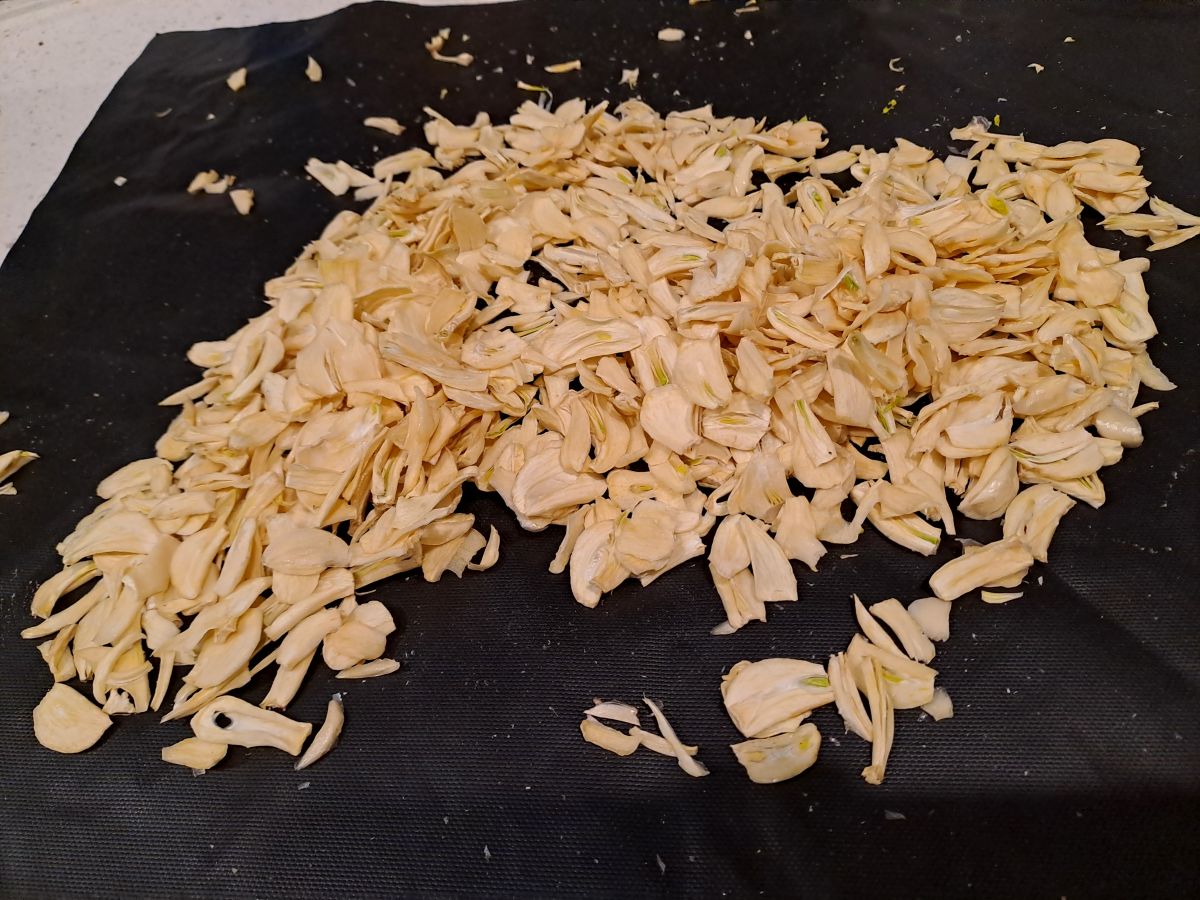
15 hours later the pieces were dry and crunchy. Here is some of the results.
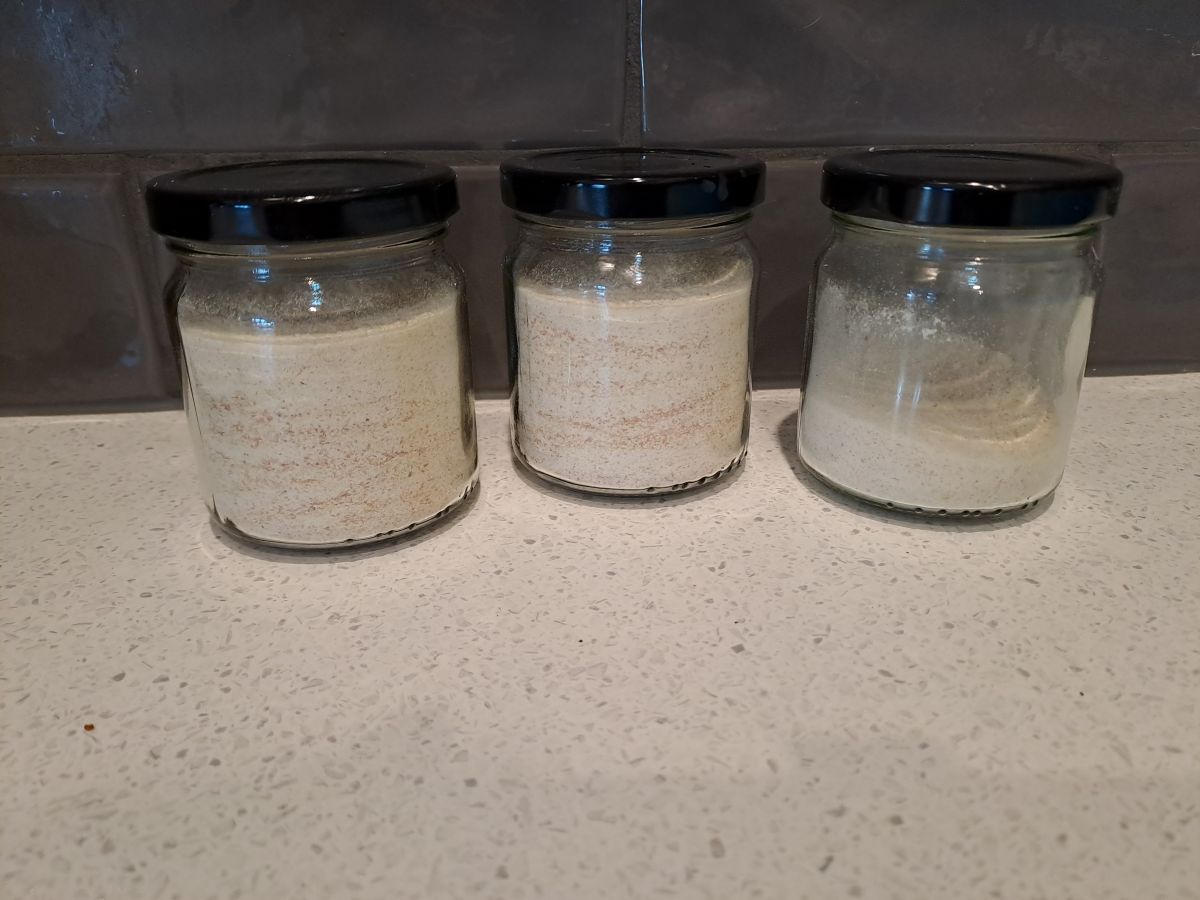
I then ground the dried garlic pieces to a powder and mixed them with an equal weight of salt.
This is the 300g of garlic salt which I now have ready to use in cooking as needed.
Although it was a fairly time-consuming project, I feel that this was definitely worthwhile.
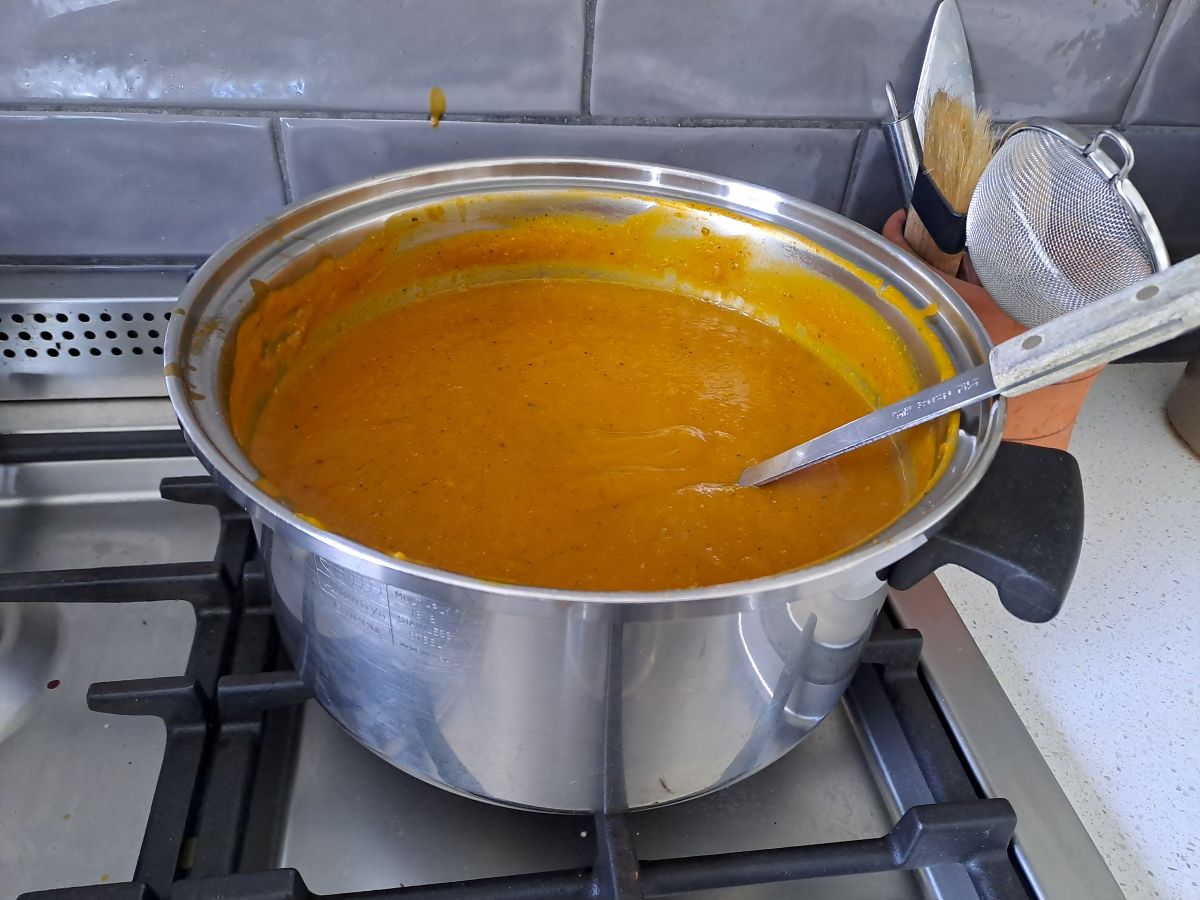
It almost 2 years since I wrote this post with a recipe for pumpkin soup. After a long, hot summer we are finally experiencing some slightly cooler days.
Like all of my cooking escapades there is plenty of room for variation. A couple of days ago GMan was baking a couple of loaves of sourdough bread so I decided to make use of the oven being on to roast the pumpkin while the oven was heating up to the temperature required for the bread.
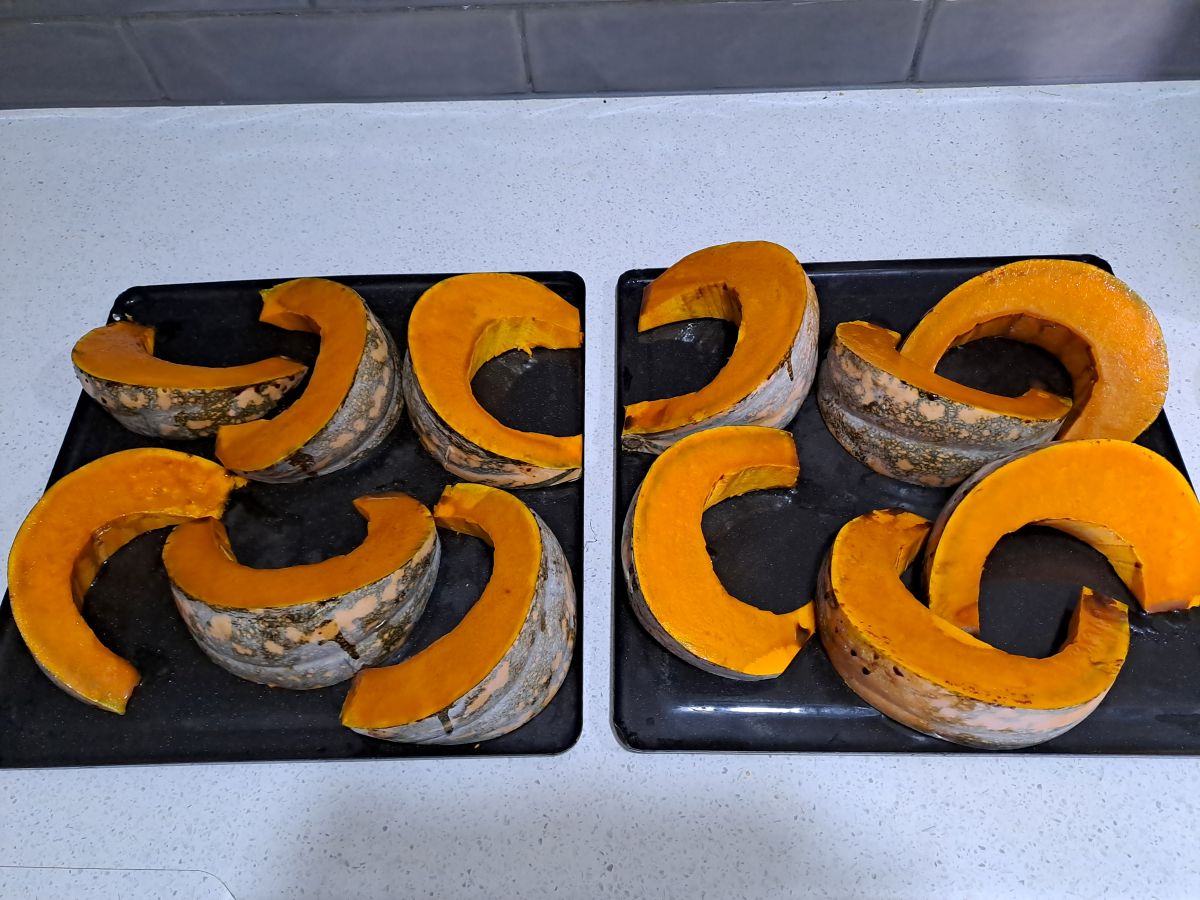
Pumpkin wedges brushed with a mix of balsamic syrup and olive oil.
After roasting the skin peels off easily.
A pot of deliciousness.
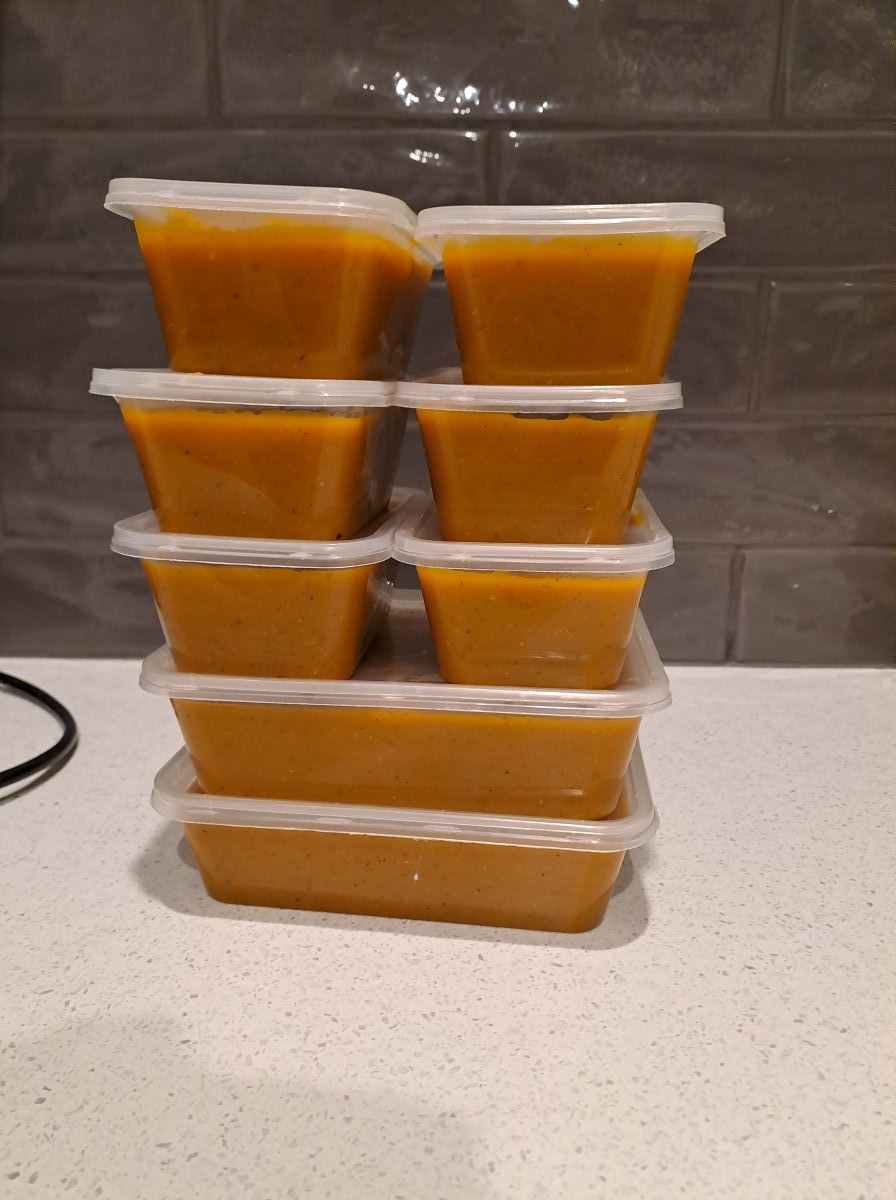
We had soup for dinner and there were another 10 serves to go in the freezer for future meals.
It was a productive kitchen day as I had also made a new batch of spreadable butter, deyhdrated the pumpkin seeds and some root ginger which had been in the freezer for a couple of years and GMan made the bread.
I have been occupied with some non-blogworthy business so not a lot to share at the moment.
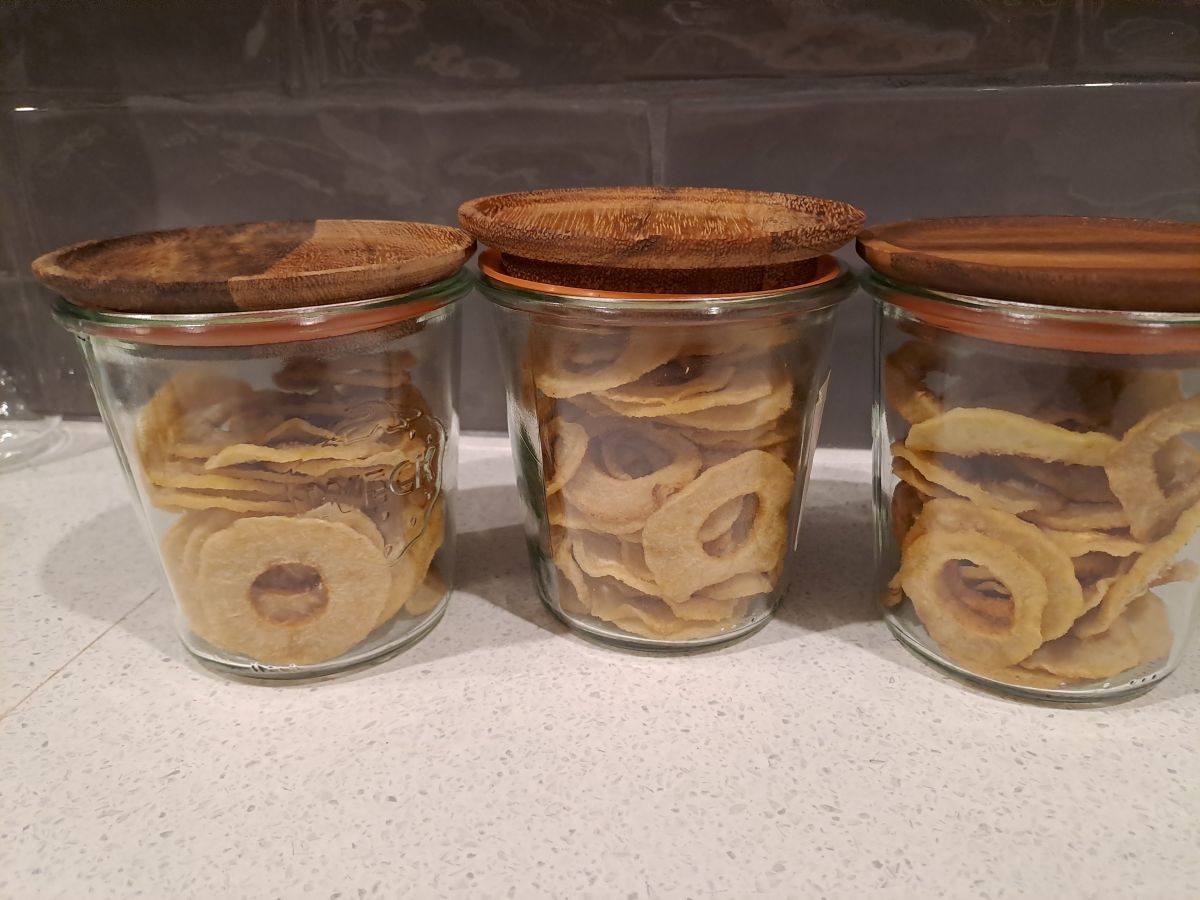
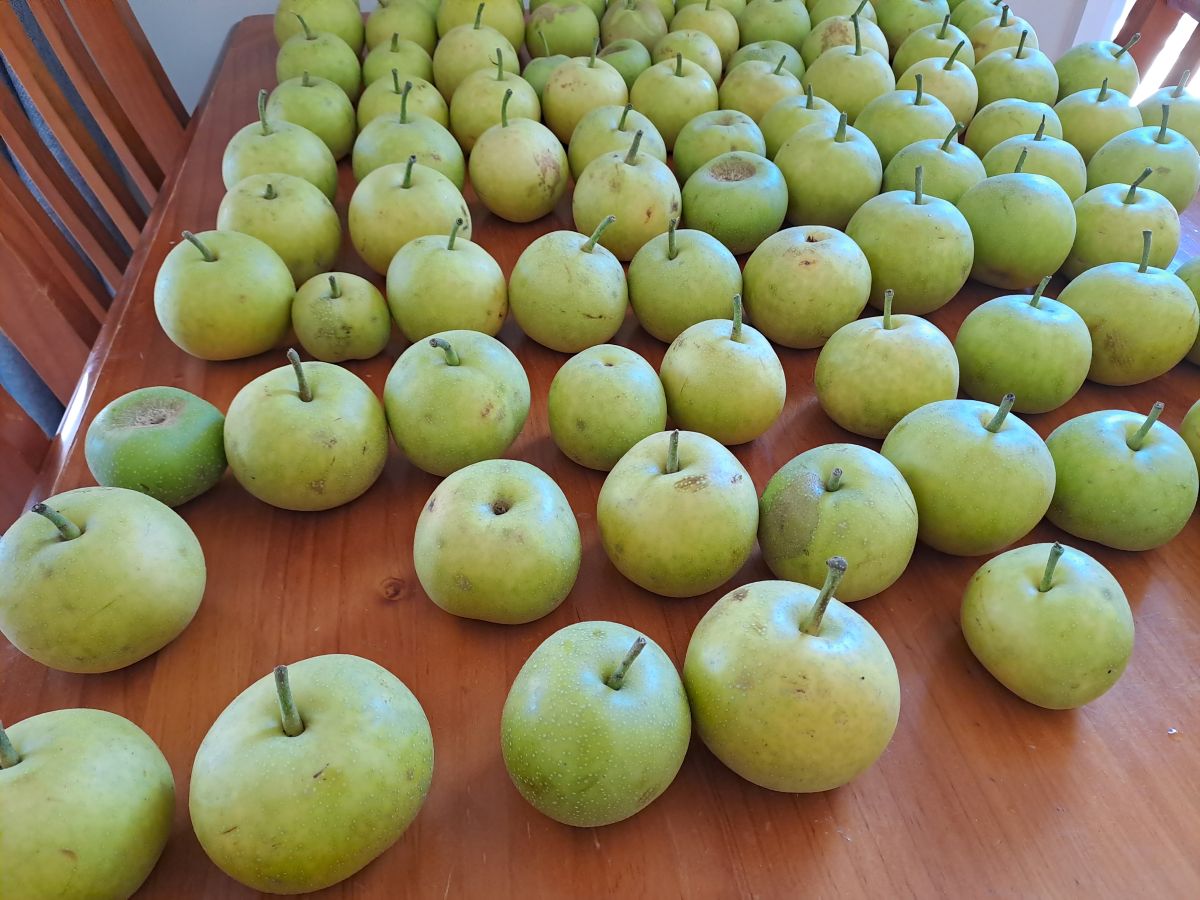
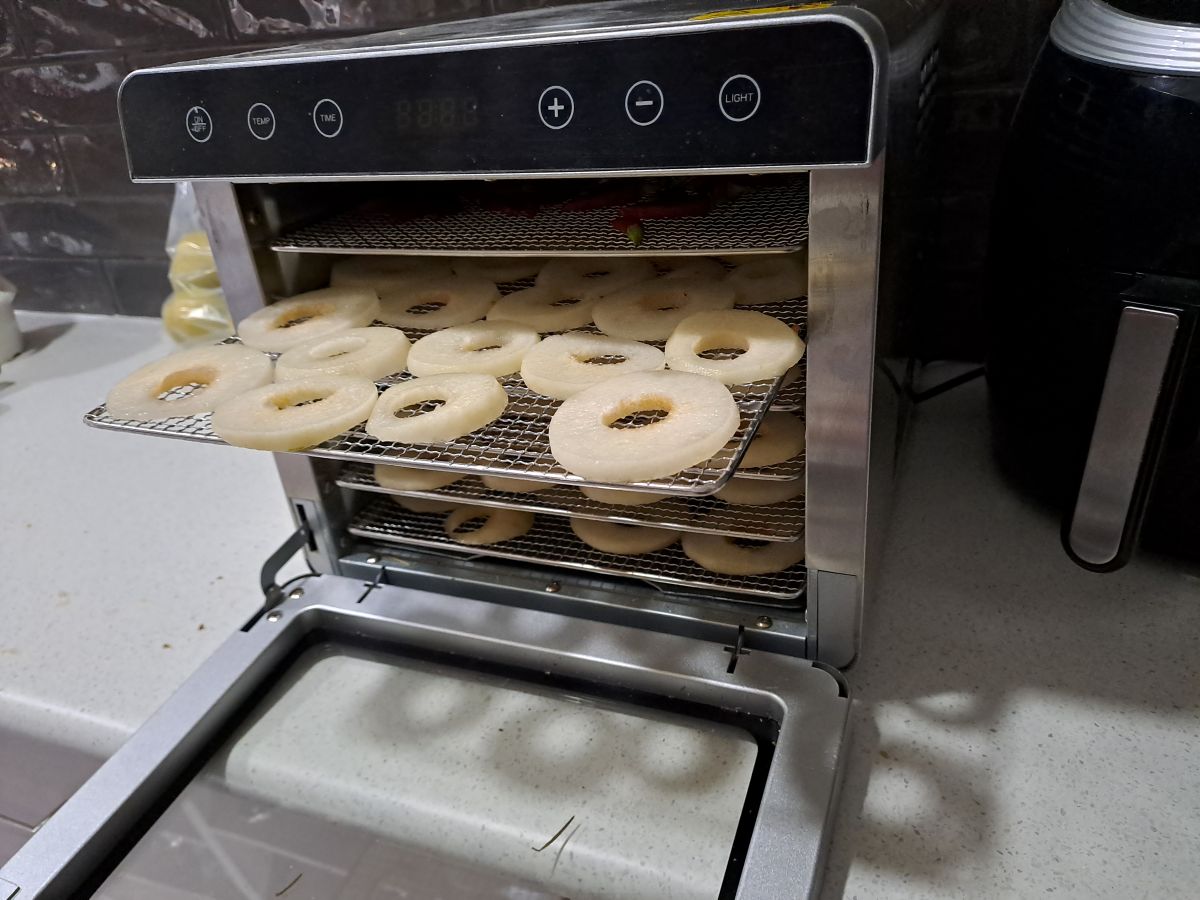
However, the dehydrator has been working overtime as I dried a couple of lots of sliced nashi pears. This has been a raging success and I will definitely be some more over the next few days. The pile of fruit spread on the dining table is gradually reducing.
This is what they look like.
More importantly they taste absolutely delicious.
We went out to lunch with friends today and had our main meal so didn’t need too much for dinner. I did not take a photo but we had a small platter of crackers, dip, camembert cheese and the dried pears which was very tasty indeed.
I showed you a few months ago in this post that we had netted the entirety of our three espaliered fruit trees – one nectarine and two nashi pears. That decision proved to be really successfully with us not losing any fruit to the birds and other wildlife.
We have removed it gradually as the fruit ripened on each tree. First, were the nectarines, then one nashi and a couple of days ago we removed the netting completely and picked the nashi pears from the last tree.
There were well over 100 fruit.
GMan had stewed and frozen all of the fruit from the first tree and did about another 40 of these. I am now experimenting with dehydrating slices of them for snacks and have given some to the Community Pantry.
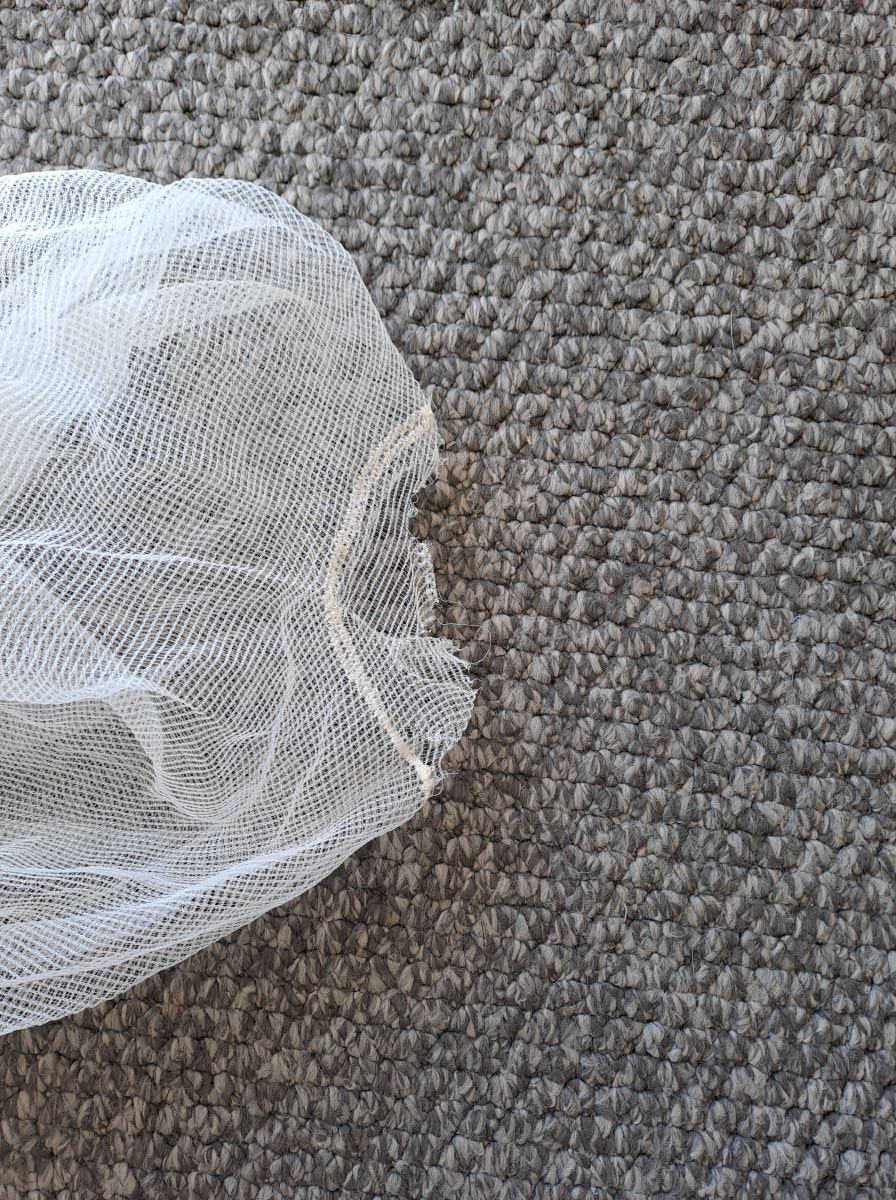
The next job was to fold the netting up and put it away for next season. We spread it out so that we could remover any leaves or debris and it noticed a jagged hole of about 8cm across in the middle of the netting. I am not sure whether it was caused by an errant branch growing through or a possum munching through it.
Anyway, I decided to mend the hole before packing the netting up. It is nothing fancy but will work well.
A few days ago I saw an ad on Facebook for a hands-on workshop on ‘Summer Fruit Tree Pruning’ in a town about 45 minutes from us. This seemed like a perfect opportunity so GMan has signed up and is going along on Friday. Hopefully, he will be able to apply his new-found knowledge to our trees.
I have had my head down working on an admin project for a volunteer job that I am doing so there is not too much to report on the home front just at the moment.
However, our next door neighbour kindly dropped in a box of home-grown tomatoes and a zucchini a couple of days ago. I plan to make some more sauce with the tomatoes and the zucchini will be used in a meal in the next day or two.
Meanwhile, I took a break today and we went to Castlemaine to do a couple of things and I had time to pop into one of my favourite op shops. I found these small glass serving plates for $1 each. There are 7 of them and I will use them at a function next week at the local film society. Other than that, I think they can live in my sideboard and certainly get some use. They could be perfect for those occasions when a huge serving platter is not really required or appropriate.
The other thing to note is that we are finally enjoying some more moderate weather than the heatwave conditions we have endured recently. In fact, the forecast for tomorrow is only 17C which is much better than 37C (or more). The next 7 days are looking rather pleasant though some rain would be nice for the garden.
There are many things that we can repair, mend or upcycle ourselves but some are just beyond our range.
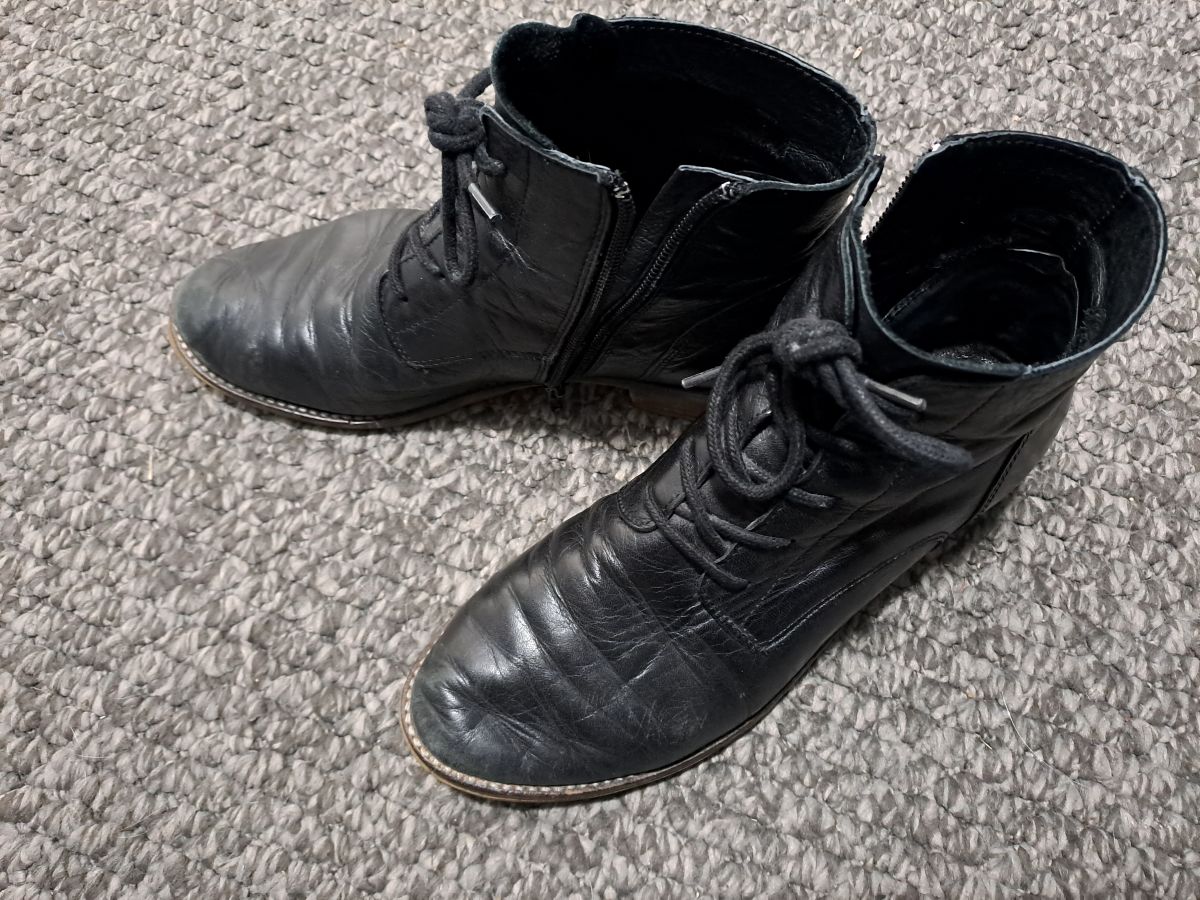
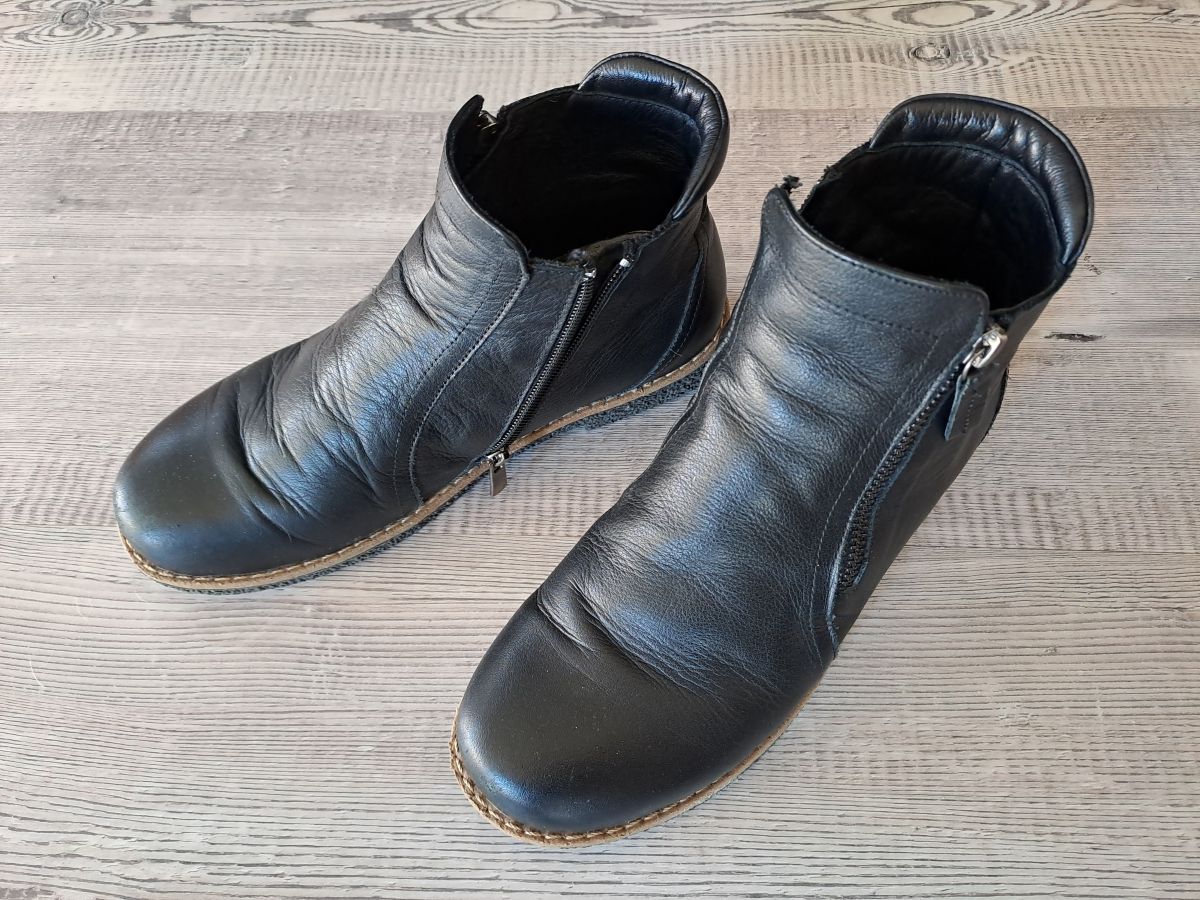
What do you do with shoes that are no longer wearable? This was GMan’s dilemma recently. The first step is to examine them and understand why they can no longer be worn. A pair of casual leather shoes looked to be in perfectly good nick at first glance but the soles had worn to the stage where there was no remaining grip on the soles and they were positively dangerous. So, a full retread was in order.
We have had this sort of work done on a couple of other pairs of shoes previously, however, we have moved interstate since then so it was a matter of finding a quality bootmaker/cobbler in Melbourne who could do the work. GMan was fortunate to find The Cobbler’s Last. They have turned these shoes that were only good for the bin into wearable footwear with a long life ahead of it.
The cost of this work was $95 which is not insignificant, however, that is about half of the price of a replacing them with a similar shoe. Additionally, the savings created by not seeing these end up in landfill is immeasurable.
Tonight I want to show you a couple of recent projects that GMan has been working on.
First, a rack of hooks for our walk-in wardrobe. These were in the wardrobe when we moved in but we removed them before the recent remodelling of the pantry and wardrobe. I decided that I wanted to retain them but in a slightly different position. They are very handy for half-worn clothes as well as the occasional belt or scarf. GMan removed the hooks from the original backing board as it was damaged, bought a new piece of timber and did all of the necessary preparation and painting before reattaching the hooks. This was quite difficult by all accounts. Today it was replaced in its new position. The only thing left to do is filling the screw holes but that can wait for another day.
The other job was creating a permanent barrier between the shed and the back fence. It had previously been blocked up by a piece of metal which is needed for some other garden landscaping so it was time to attach an offcut of Colorbond sheeting which had been set aside for the purpose.
The photo does not do it justice but there were several steps, including attaching a timber support to the back fence as well as adding a timber baseboard to account for the slight slope. The sheeting was cut to size and screwed to the timber support and the corner of the shed.
The reason for needing this area blocked off is to prevent the dog gaining access to the driveway and front garden. Her domain is restricted to the backyard.
Speaking of animals, I will finish this post with a photo I took this evening as we were coming home for our walk. We live in the town but the local wildlife are frequently in evidence around the streets. This has been particularly so in recent times as it is very dry at the moment and the kangaroos are looking for reliable sources of water.
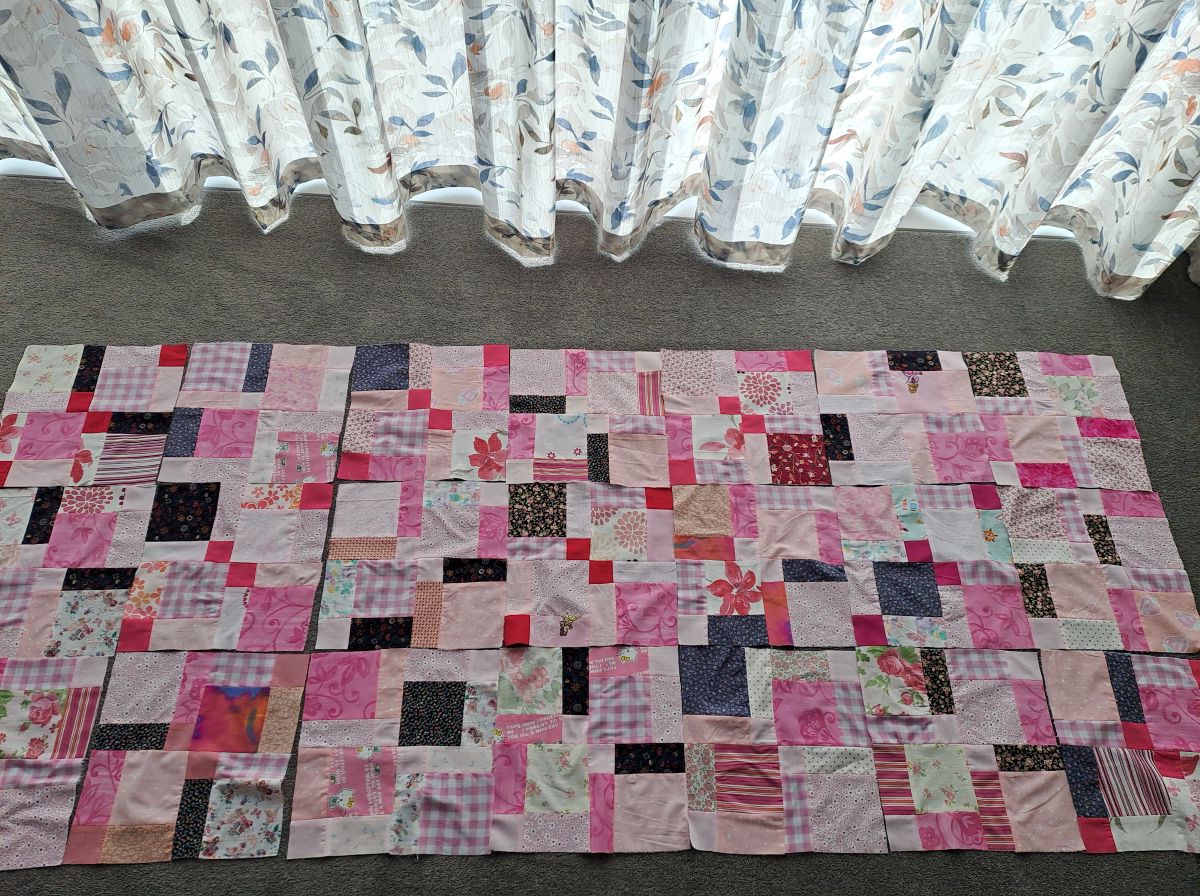
I began a new sewing project today. This is the first block of a patchwork quilt I am making for my elder granddaughter. It is for her 18th birthday in December. One block done, 41 to go.
Most of the fabric has been randomly collected from op shops and offcuts from various previous sewing adventures. However, there will be some from a particularly special piece. The small pale pink squares have history. They are from some leftover fabric from a dress which my mother made for herself – probably close to 30 years ago. From those leftovers I made a dress for my granddaughter which she wore on her first birthday.
This is not a great photo but you get the general idea. It was from an Enid Gilchrist pattern which I had made many time before and numerous times since.
The other patchwork was for the boxer shorts which I mentioned in my last post. I had rather optimistically thought that it would be a simple matter of adding a strip of fabric into the side seams and a bit at the top to extend the overall length of the crotch.
As I began to unpick the side seams it became obvious that the construction method was appalling and regardless of any alterations that I might make, the existing seams were not robust enough to stand up to much wear at all. So, I altered my plan and unpicked the entire garment. By this time it became obvious why they were not a great fit. The pieces bore only minimal resemblance to the pattern I had.
I used the excess length of the original trousers to add pieces to be able to recut all of the pieces for the boxer shorts using my own pattern. I used flat felled seams for joining the extra pieces as well as the main construction as I always do. These seams are great as there are no raw edges on the inside as well as being extra strong due to the two rows of stitching.
This photo shows the randomly joined pieces of fabric before I cut out the pattern pieces. I did not have enough fabric nor the desire to match the pattern.
It was a bit of a fiddle but I now have a pair of boxers which are comfortable. The various joins are really barely visible.